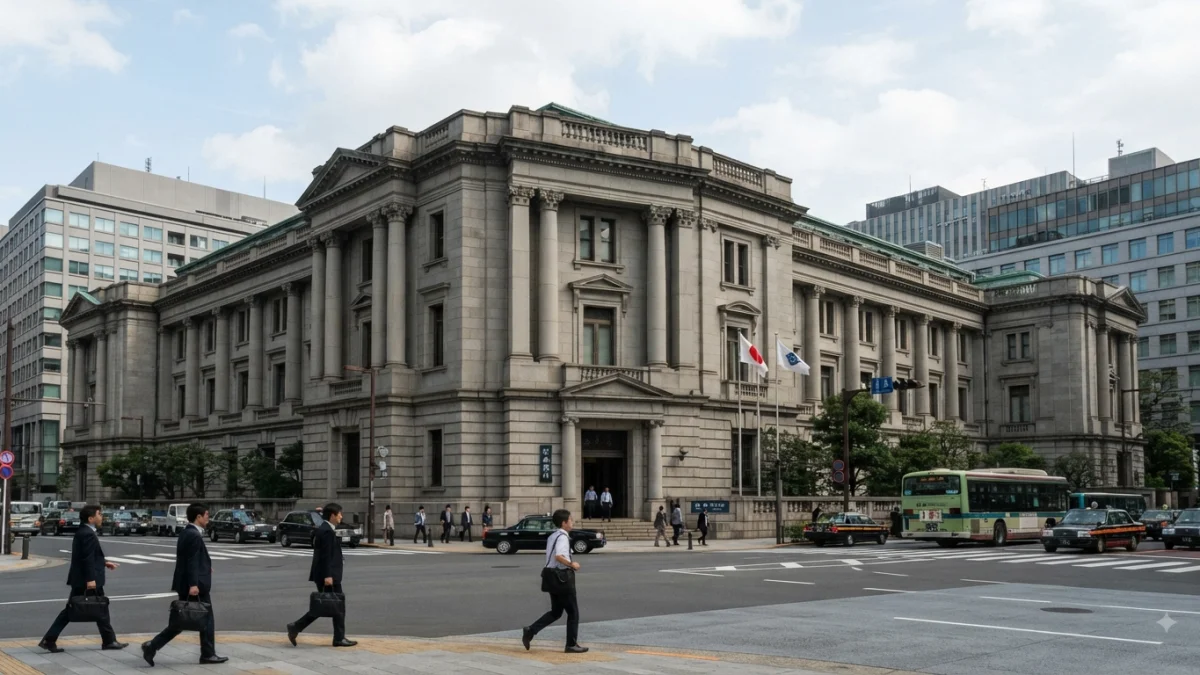


TOKYO — The Bank of Japan faces mounting pressure over the timing of its next interest-rate increase, with policymakers showing greater concern about inflation risks while the government remains wary of rising bond yields and borrowing costs.
The BOJ kept its policy rate at 1% at its July 30-31 meeting, but its latest summary of opinions showed that at least three of its nine board members favored a faster pace of tightening. One policymaker argued for raising the rate to 1.25%, while others said the bank should be prepared to respond more quickly if inflation risks increase.


The debate has strengthened expectations of a possible rate increase at the BOJ's Sept. 17-18 meeting. Governor Kazuo Ueda has said the bank will examine inflation and economic conditions before deciding its next move, while upcoming public appearances by several board members are expected to provide further clues on the policy outlook.
The pressure comes as Japan continues to contend with a weak yen, higher import costs and elevated fuel prices. The BOJ's July discussions highlighted concern that underlying inflation could exceed its 2% target, while policymakers also pointed to stronger demand in parts of the economy.
At the same time, the central bank faces pressure over the government bond market. Ten-year Japanese government bond yields reached 2.805% on Aug. 10, according to Reuters data, approaching levels that some investors view as potentially disruptive. Prime Minister Sanae Takaichi has urged the BOJ to consider increasing bond purchases when necessary to contain sharp rises in long-term yields, according to a Jiji report cited by Reuters.
The BOJ has sought to normalize monetary policy after ending its yield-curve-control program in 2024 and beginning to reduce its bond purchases. It has said additional buying would be considered mainly if bond-market movements became disorderly and threatened financial stability.
The competing pressures leave the BOJ balancing inflation risks against concerns about financial-market stability and the government's rising debt-servicing costs. The next scheduled monetary policy meeting is Sept. 17-18, when the nine-member Policy Board will assess whether conditions warrant another increase.