

WASHINGTON — The Trump administration has imposed a 15% tariff on imported polysilicon and related products, adding new trade barriers to a material used in solar panels and semiconductors as the United States seeks to strengthen domestic supply chains and reduce reliance on China.
The measures, announced by President Donald Trump on Aug. 6, were taken under Section 232 of the Trade Expansion Act of 1962 following a Commerce Department national security investigation into polysilicon and its derivatives. The new rules are scheduled to take effect on Dec. 4.


In addition to the 15% tariff, the administration established minimum import prices for polysilicon and products further along the solar supply chain. The floors include $21 per kilogram for polysilicon, $100 per kilogram for ingots and wafers, 22 cents per watt for solar cells and 38 cents per watt for solar modules, according to details of the administration's action.
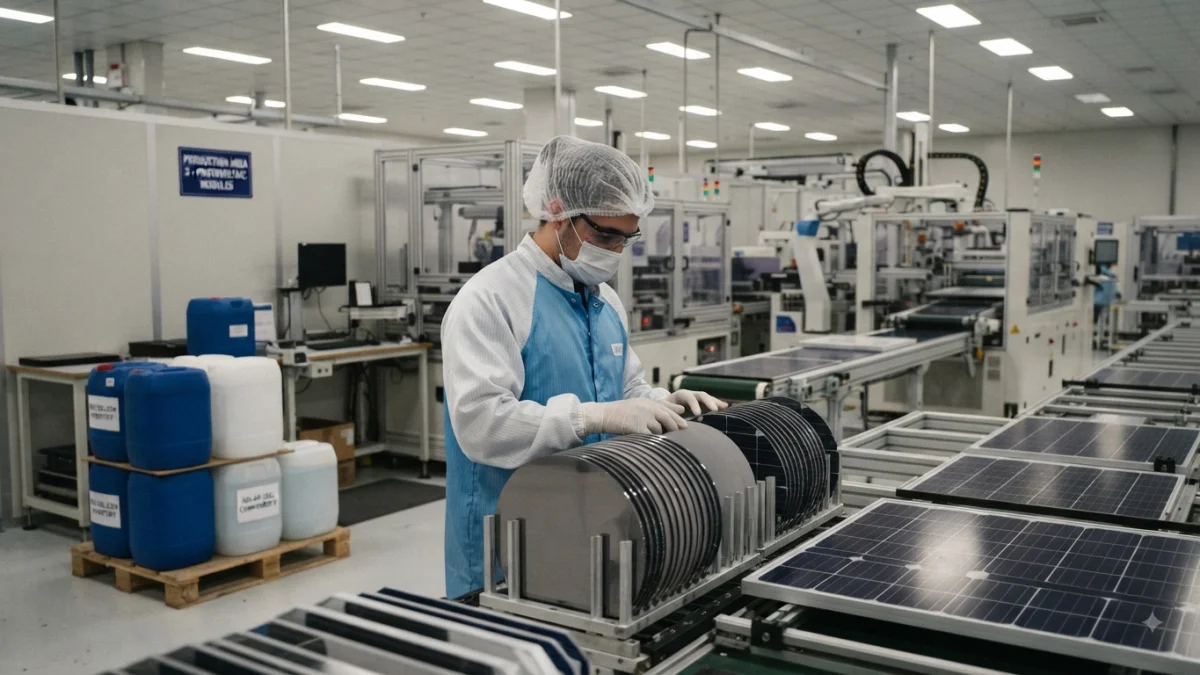
Polysilicon is a key input for crystalline silicon solar cells and is also used in semiconductor manufacturing. China dominates global polysilicon production, making the material a focus of U.S. efforts to diversify supply chains for technologies considered strategically important.
The administration has said the measures are intended to support U.S. manufacturing and address national-security concerns associated with dependence on foreign supplies. The action is expected to affect solar manufacturers that rely on imported polysilicon, wafers, cells and modules, while also targeting material used in semiconductor production.
U.S. polysilicon producers, including Hemlock Semiconductor in Michigan and Wacker Chemie's Tennessee operation, are positioned to benefit from higher import costs. Solar manufacturers including First Solar, T1 Energy and Qcells have also backed the measures, citing their potential to support domestic production and investment.
The policy comes as Washington has expanded trade measures aimed at Chinese-linked solar manufacturing and has sought to prevent producers from shifting supply chains through third countries to avoid existing duties. The new approach reaches further upstream by targeting polysilicon and its derivatives rather than relying solely on tariffs against finished solar products.
The tariffs and price floors are due to begin on Dec. 4, giving importers and manufacturers several months before the new requirements take effect.