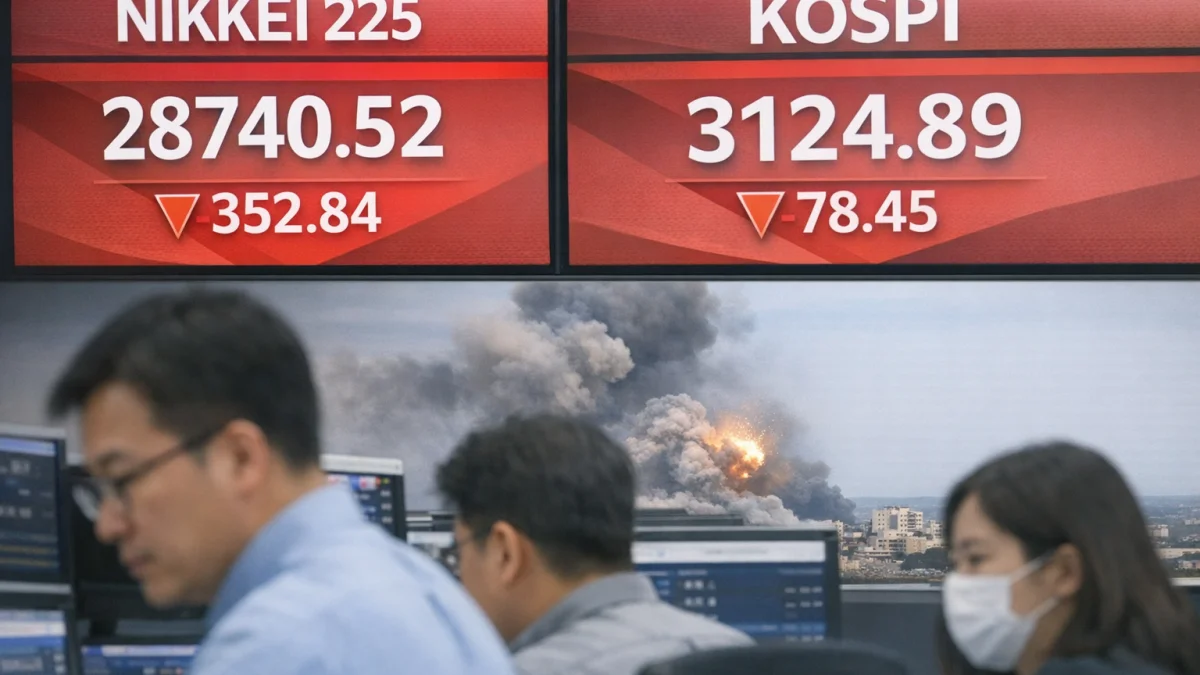


TOKYO — Asian stock markets declined Monday as escalating tensions in the Middle East, including disruptions to oil shipments through the Strait of Hormuz, heightened investor concerns over energy costs and global economic growth.
Japan's Nikkei 225 fell more than 1 percent in early trading, while South Korea's Kospi index dropped around 1.5 percent. Hong Kong's Hang Seng index declined about 1.2 percent, and mainland China's Shanghai Composite index edged lower by 0.3 percent, according to market data. The broad MSCI Asia-Pacific index excluding Japan also posted losses.


The sell-off follows a sharp rise in oil prices, with Brent crude trading above $115 per barrel after Iranian actions reduced tanker traffic in the Strait of Hormuz. The waterway, which carries about one-fifth of global oil and liquefied natural gas shipments, has seen significantly lower volumes since the conflict intensified in early March. Higher energy costs raise inflation risks and could pressure corporate earnings, particularly for import-dependent economies in Asia.
The regional conflict began on Feb. 28 with U.S. and Israeli airstrikes on Iranian military and nuclear sites. It has since spread, with Israeli ground operations continuing in southern Lebanon against Hezbollah and Houthi forces in Yemen launching missiles toward Israel. Diplomatic talks hosted by Pakistan in Islamabad have not yet produced a ceasefire agreement.
Asian economies, many of which are major oil importers, face potential impacts from sustained high energy prices. Export-oriented sectors such as technology and manufacturing have been among the hardest hit in recent sessions, with chipmakers and automakers recording notable declines. Energy-related stocks have provided some offset amid the higher crude prices.
The downturn adds to broader volatility in global markets since the conflict started. Preliminary trading data indicate losses across several sessions in March, though specific year-to-date figures vary by index.
As of Monday afternoon in Asia, trading remained cautious with no major recovery signals. Diplomatic efforts continue in Islamabad, while U.S. military forces maintain a heightened presence in the Middle East. Oil prices and developments in the Persian Gulf are expected to influence market sentiment in the coming sessions.