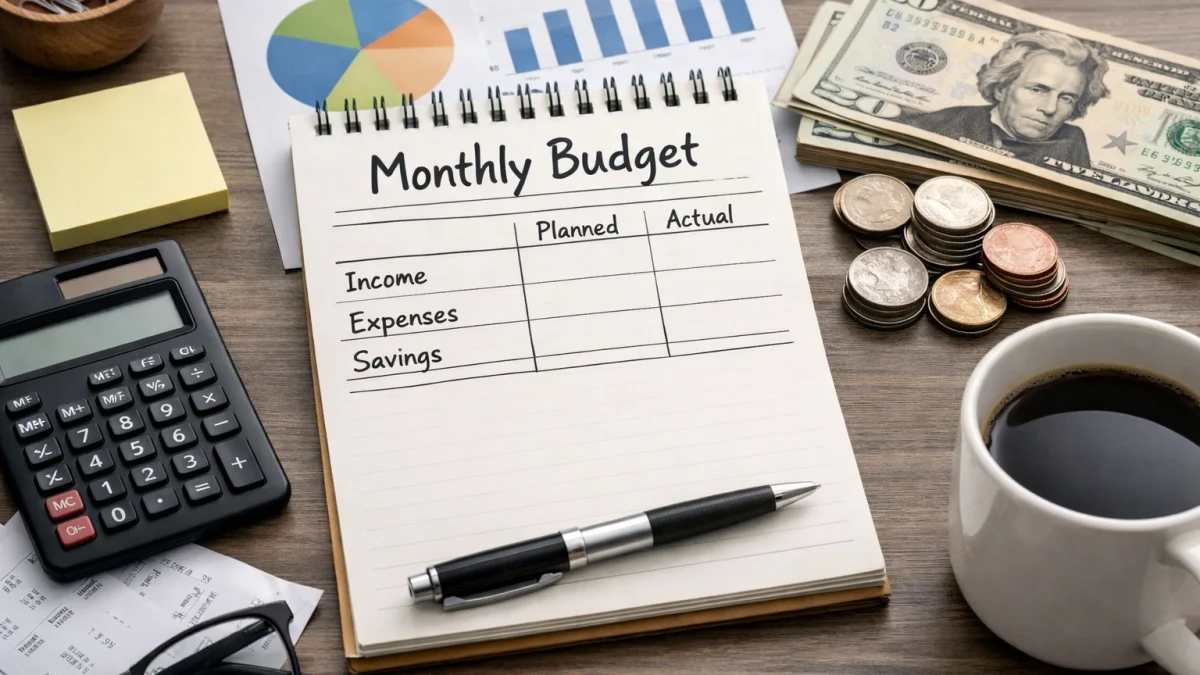


Managing everyday expenses can become more difficult when spending habits are unclear or inconsistent. A simple monthly budget may help households track income, plan regular expenses, and reduce financial uncertainty. While budgeting methods vary between individuals, many effective systems focus on realistic planning and regular review rather than detailed financial complexity.
1. Calculate total monthly income


The first step in building a budget is identifying how much money is available each month. This may include salaries, freelance earnings, business income, government support, or other regular sources of funds.
For people with irregular income, reviewing several recent months may help create a more realistic average estimate. Conservative estimates are often useful when income changes frequently.
2. List fixed monthly expenses
Fixed expenses are payments that generally remain consistent each month. Identifying these costs first may help establish the minimum amount needed for essential obligations.
Common fixed expenses may include:
• Rent or mortgage payments
• Utility bills
• Insurance costs
• Loan or credit payments
• Internet or phone services
Recording these expenses clearly may help reduce missed payments and improve overall planning.
3. Estimate variable everyday spending
Variable expenses can change from month to month and are often harder to predict without tracking habits carefully.
Examples may include:
• Groceries
• Transportation
• Dining out
• Entertainment
• Household supplies
• Personal shopping
Reviewing previous bank statements or receipts may help estimate more accurate spending amounts in these categories.
4. Separate needs from non-essential spending
A budget often becomes easier to manage when essential expenses are prioritized before optional purchases. Basic needs such as housing, food, transportation, and healthcare are usually treated as higher priorities within monthly planning.
Non-essential spending may still be included in the budget, but assigning limits may help reduce unnecessary financial pressure.
Examples may include:
• Entertainment subscriptions
• Restaurant meals
• Impulse purchases
• Recreational shopping
The goal is generally to create balance rather than eliminate all discretionary spending.
5. Include savings in the monthly plan
Savings are often easier to maintain when treated as a regular budget category instead of relying only on leftover income at the end of the month.
Savings goals may include:
• Emergency funds
• Education expenses
• Home repairs
• Travel costs
• Long-term financial planning
Even small, consistent contributions may help improve financial stability over time.
6. Track spending throughout the month
Creating a budget is usually more effective when spending is monitored regularly. Tracking purchases may help identify categories where spending consistently exceeds expectations.
People use different tracking methods, including:
• Budgeting applications
• Bank account tools
• Spreadsheets
• Written notebooks
The specific system is often less important than maintaining consistent records.
7. Adjust the budget when necessary
Monthly expenses may change because of inflation, unexpected bills, job changes, or family needs. Budgets often require periodic adjustments rather than remaining fixed permanently.
Reviewing the budget regularly may help:
• Identify overspending patterns
• Reduce unnecessary expenses
• Update savings goals
• Prepare for upcoming costs
Flexible budgeting may be easier to maintain than systems built around unrealistic spending restrictions.
8. Avoid making the budget overly complicated
Complex budgeting systems can become difficult to follow consistently, particularly for people managing busy schedules or multiple responsibilities.
Simple budgets often focus on:
• Total income
• Essential expenses
• Everyday spending categories
• Savings goals
A manageable system may improve long-term consistency more effectively than highly detailed tracking methods that are difficult to maintain.
Building a simple monthly budget often depends on regular review, realistic planning, and consistent tracking habits. While budgeting may not prevent all financial challenges, it can help households better understand spending patterns, prepare for routine expenses, and make more informed financial decisions over time.