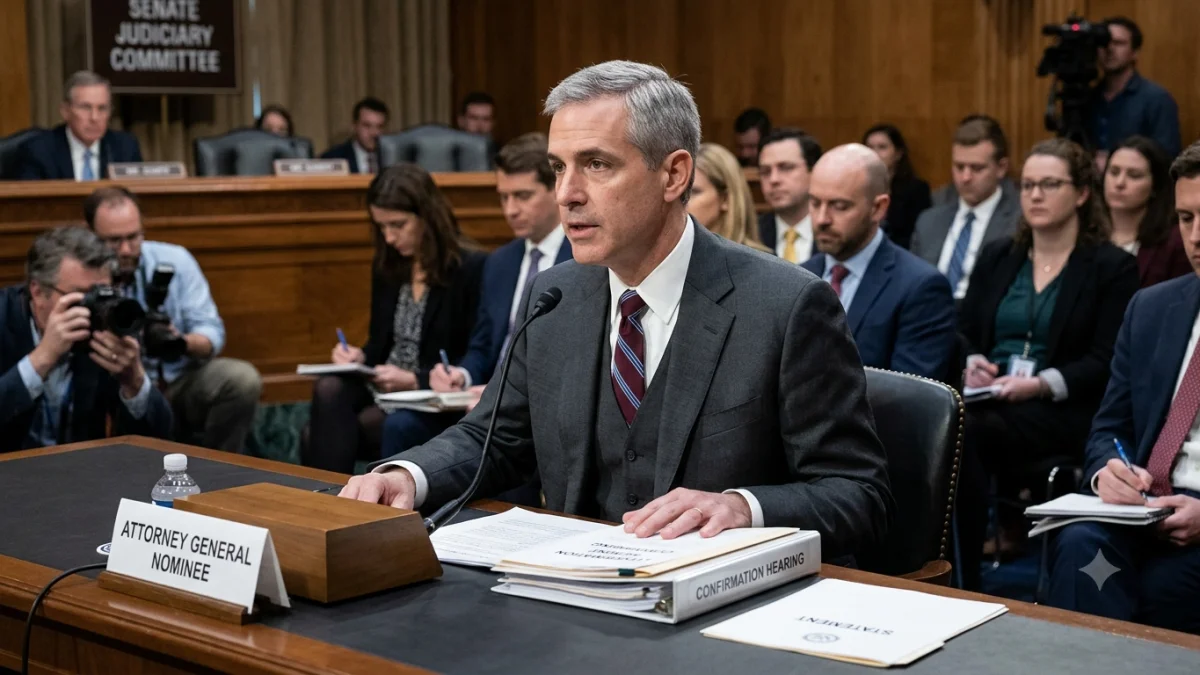


Todd Blanche's nomination to become U.S. attorney general moved significantly closer to confirmation on Aug. 4 after he formally rescinded a controversial Justice Department "anti-weaponization" fund, removing the principal obstacle that had threatened to divide Senate Republicans. The decision persuaded key Republican senators who had withheld support, allowing Blanche to clear a critical procedural hurdle in the Senate Judiciary Committee and improving the prospects for a confirmation vote by the full Senate.
The development matters beyond the fate of a single nominee. It illustrates how Senate oversight can influence executive branch decisions even when the president's party controls the confirmation process. It also underscores the political and legal sensitivities surrounding the Justice Department's independence, particularly when its leadership has close personal or professional ties to the president.


The controversy centered on a Justice Department settlement reached earlier this year in litigation brought by President Donald Trump against the Internal Revenue Service over the disclosure of his tax information. As part of that agreement, the department announced plans to establish a roughly $1.8 billion "anti-weaponization" fund intended to compensate individuals who claimed they had been improperly targeted by government investigations or prosecutions. The settlement also included provisions concerning IRS audits of Trump, members of his family and related business entities.
From the outset, the proposal generated bipartisan concern. Democratic lawmakers argued that the fund represented an unprecedented use of public money linked to a politically sensitive settlement involving the sitting president. Some Republicans voiced different concerns, questioning whether the arrangement could undermine confidence in the Justice Department or expose the administration to legal challenges. Federal lawsuits challenging the legality of the fund followed, and judges questioned whether executive statements declaring the program inactive were legally sufficient without formal rescission.
Blanche repeatedly stated during congressional testimony that the fund would not proceed. However, several Republican senators sought legally enforceable assurances rather than verbal commitments before agreeing to advance his nomination. Their position reflected broader concerns about whether future administrations—or even the current administration—could revive the initiative absent formal action.
The formal rescission addressed those concerns directly. Senators John Cornyn of Texas and Thom Tillis of North Carolina subsequently announced their support, removing a significant procedural obstacle within the Judiciary Committee. Their backing demonstrated that even nominees supported by the White House can face meaningful conditions from members of the president's own party when confirmation depends on a narrow Senate majority.
The agreement, however, did not eliminate every point of contention. Blanche also narrowed the scope of controversial tax-audit protections associated with the settlement, stating that any protection applies only to specified past tax matters rather than future audits. That clarification addressed one concern raised by Republican senators but did not satisfy many Democratic critics or outside advocacy organizations, which continue to question whether the underlying settlement leaves open legal or procedural issues requiring further review.
Those remaining objections highlight a broader institutional issue confronting the Justice Department. Attorneys general traditionally are expected to maintain operational independence from the White House despite serving in a presidential administration. Blanche's previous role as Trump's personal attorney has made that expectation a recurring focus throughout the confirmation process. During his hearings, senators from both parties questioned whether he could exercise independent judgment in politically sensitive investigations and prosecutions. Blanche rejected suggestions that he would simply carry out presidential directives without independent legal assessment.
The episode also demonstrates how confirmation politics can intersect with ongoing litigation and executive policymaking. Rather than focusing solely on Blanche's qualifications, senators used the nomination process to secure policy changes with broader institutional implications. Such negotiations are not unprecedented in Senate confirmations, but the direct connection between a Justice Department settlement, pending litigation and an attorney general nomination is unusual.
Legal observers note that the rescission may reduce, but not necessarily eliminate, litigation surrounding the original settlement. Some challengers have argued that formal written action—not simply public statements—is necessary to ensure the fund cannot be revived. Others continue to scrutinize the settlement's remaining provisions and the legal authority under which they were negotiated. Courts may ultimately determine whether additional clarification or modification is required.
For the Trump administration, advancing Blanche's confirmation would provide greater stability atop the Justice Department after months of controversy surrounding the acting leadership. Confirmed attorneys general generally carry stronger institutional authority than acting officials, particularly when overseeing major federal investigations, litigation and departmental policy.
As of Aug. 4, the confirmed development is that Blanche's formal rescission of the anti-weaponization fund has secured the support needed to move his nomination forward in the Senate. Questions remain regarding the continuing legal challenges to elements of the original settlement and the extent to which the Justice Department can reassure critics about its future independence. Those issues, along with the Senate's final confirmation vote and any subsequent judicial proceedings, remain the principal developments being officially monitored.