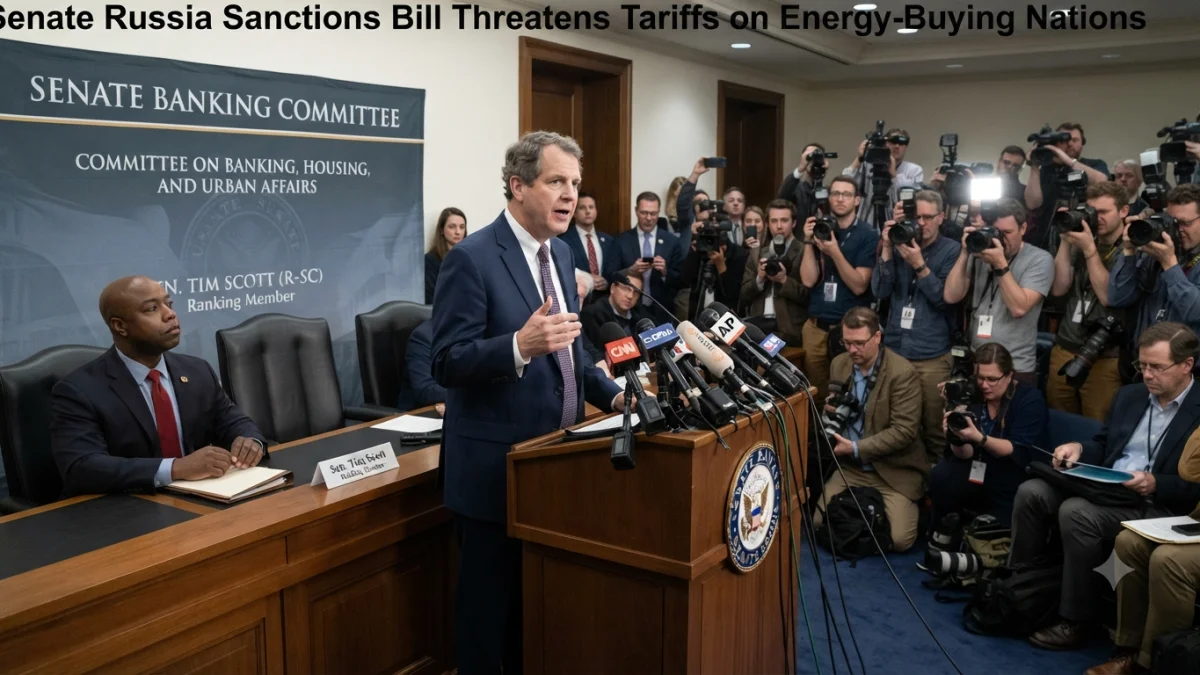


The U.S. Senate’s overwhelming passage of a Russia sanctions package has moved Washington closer to using tariffs against some of the world’s biggest buyers of Russian energy, turning what has largely been a sanctions policy aimed at Moscow into a broader test of U.S. leverage over international trade.
The Lindsey O. Graham Sanctioning Russia and Iran Act of 2026 passed the Senate 86-11 on Aug. 7, giving President Donald Trump authority to impose tariffs of up to 100% on imports from countries that rank among the five largest purchasers of Russian crude oil or natural gas, or among the five leading countries helping Russia evade energy sanctions. The measure now moves to the House of Representatives, where lawmakers have raised concerns about the scope of the presidential tariff authority.


The significance extends beyond the immediate threat to Russia’s energy revenues. The legislation would create a mechanism for Washington to penalize third countries for maintaining commercial ties with Moscow, effectively making access to the U.S. market part of the pressure campaign against Russia. China and India are widely viewed as the most consequential potential targets because of their large purchases of Russian oil, while Japan and some European countries could also face exposure depending on how the law is implemented.
That represents a notable evolution in Western sanctions policy since Russia’s 2022 invasion of Ukraine. The United States and its allies have sought to restrict Russian oil revenues while avoiding a disruption severe enough to destabilize global energy markets. The new Senate measure instead places greater emphasis on the behavior of major buyers, using the threat of tariffs on their exports to the United States as an indirect means of reducing demand for Russian energy.
The bill is substantially narrower than earlier versions. An earlier proposal contemplated tariffs as high as 500%, a figure repeatedly cited by Graham as he pressed for tougher action against countries continuing to buy Russian oil. The revised legislation caps the tariff authority at 100% and limits it to the five largest importers of Russian crude oil or natural gas and the five leading sanctions-evasion jurisdictions. The legislation also provides exceptions under certain circumstances for countries reducing their dependence on Russian energy.
That narrowing was important to the bill’s bipartisan progress. Senators Richard Blumenthal, Darline Graham, Katie Britt, Jeanne Shaheen, Roger Wicker and Jim Risch announced in July that the legislation would focus its tariff authority on a limited group of major Russian energy purchasers and sanctions-evasion countries. The same package includes sanctions targeting Russian officials, oligarchs, financial institutions, energy projects and the so-called shadow fleet of vessels used to move Russian oil outside conventional sanctions channels.
The economic consequences, however, will depend less on the Senate vote than on whether the House accepts the tariff mechanism and, ultimately, how the administration uses it. Reuters reported that House lawmakers have expressed concern that expanded tariff authority could raise costs for U.S. consumers and importers and give the president broad discretion over trade policy. Those concerns are significant because the legislation does not automatically impose the maximum tariff. It gives the president authority to determine whether and how the measure is used.
There is also a broader question over the effectiveness of secondary pressure. Russia has continued exporting large volumes of energy despite Western restrictions, relying on alternative buyers, shipping networks and trading arrangements. Targeting those buyers could reduce Moscow’s ability to preserve export revenues, but it could also encourage affected governments and companies to seek alternative suppliers, restructure trade routes or negotiate exemptions. The legislation’s effectiveness will therefore depend on enforcement, coordination with other governments and the willingness of the administration to accept potential trade and energy-market costs.
The United States has already demonstrated that tariffs linked to Russian oil purchases can be used as a diplomatic instrument. In 2025, Trump imposed an additional 25% tariff on Indian imports because of India’s purchases of Russian oil. The White House later removed that additional duty after saying India had committed to stop purchasing Russian oil. That episode illustrates both the leverage such tariffs can provide and their dependence on broader negotiations.
For Russia, the measure could add pressure to an energy sector that remains central to government revenues. For major buyers, the issue is more complicated: reducing Russian purchases may satisfy U.S. strategic demands but can alter procurement costs, refinery economics and established supply relationships. For Washington, meanwhile, the potential trade-off is between increasing pressure on Moscow and imposing higher costs or diplomatic friction elsewhere.
The Senate vote therefore marks an important legislative step but not yet a new tariff regime. The House must still consider the measure, and any final law would leave substantial implementation decisions to the administration. The immediate issues to be monitored are whether the House retains the 100% tariff authority, how exemptions and country classifications are defined, and whether the administration ultimately uses the authority against major Russian energy buyers. Until those questions are resolved, the Senate action represents a significant escalation in the potential reach of U.S. Russia sanctions rather than an immediate imposition of new tariffs.