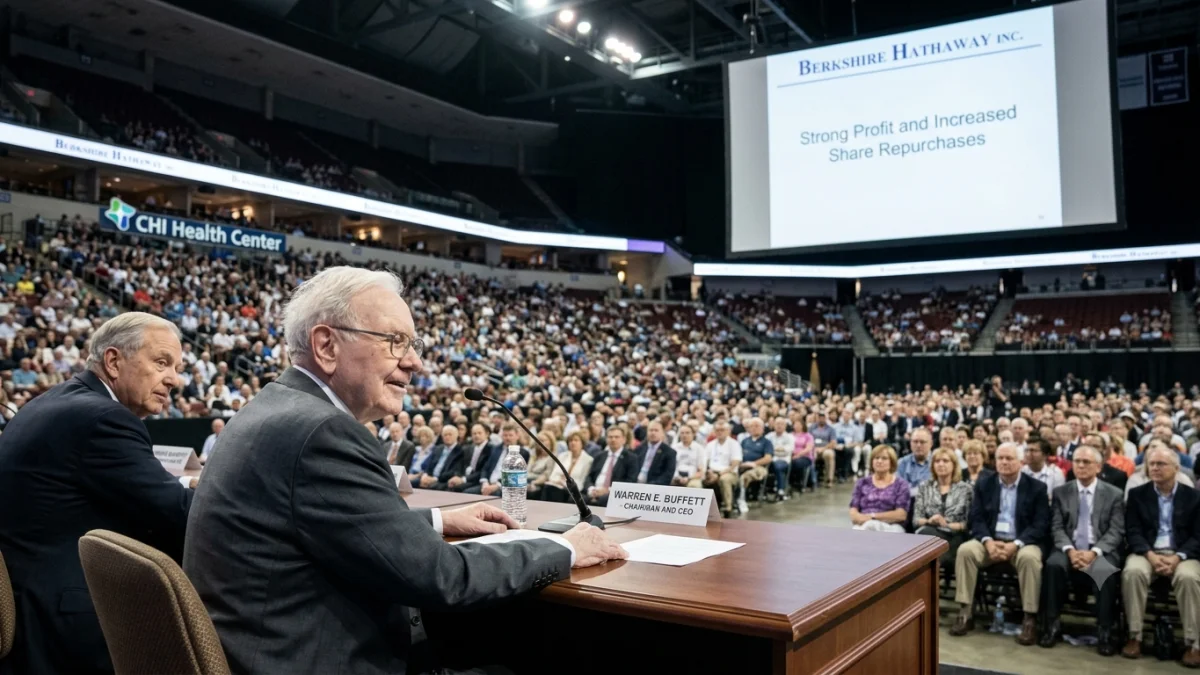


OMAHA — Berkshire Hathaway reported a 16% increase in second-quarter operating earnings on Saturday and sharply increased share repurchases, while new Chief Executive Greg Abel put more of the conglomerate’s large cash reserves to work in stocks.
Operating earnings, which exclude investment gains and losses, rose to $12.98 billion from $11.16 billion a year earlier, according to Berkshire’s quarterly results. Revenue increased about 10% to $101.8 billion. Net earnings attributable to Berkshire shareholders more than doubled to $25.67 billion, reflecting gains in the company’s investment portfolio as well as stronger operating results.


Berkshire repurchased about $4.5 billion of its own shares during the quarter, a substantial increase from the $235 million spent in the first quarter. The latest figure was among the company’s largest quarterly buyback totals in recent years.
The results mark a significant deployment of capital under Abel, who became Berkshire’s chief executive at the start of 2026 while Warren Buffett remained chairman. Berkshire also became a net buyer of equities during the quarter, purchasing nearly $20 billion more in stocks than it sold after a prolonged period of net selling.
The company’s cash, cash equivalents and U.S. Treasury bills declined to about $365.5 billion at June 30 from roughly $397.4 billion three months earlier. The reduction reflected share repurchases, stock purchases and other capital deployment, including Berkshire’s acquisition of homebuilder Taylor Morrison.
Among Berkshire’s operating businesses, its railroad, energy and manufacturing, service and retail operations contributed to the earnings increase, helping offset weaker insurance results. The company’s diversified operations include insurance and reinsurance, freight rail, utilities and energy, manufacturing, services and retailing.
The investment activity included roughly $10 billion of Alphabet shares, making the technology company one of Berkshire’s largest equity holdings. The purchases ended a 14-quarter stretch in which Berkshire had been a net seller of equities.
Berkshire’s latest results provide the first substantial quarterly indication of capital-allocation decisions under Abel’s leadership. The company has not indicated that its higher pace of repurchases will continue at the same level in future quarters.