

MOSCOW — Residents in parts of Moscow reported what they described as “black rain” and oily residue following a drone strike on a major oil refinery this week, while city authorities disputed claims that contaminated rainfall had fallen across the Russian capital.
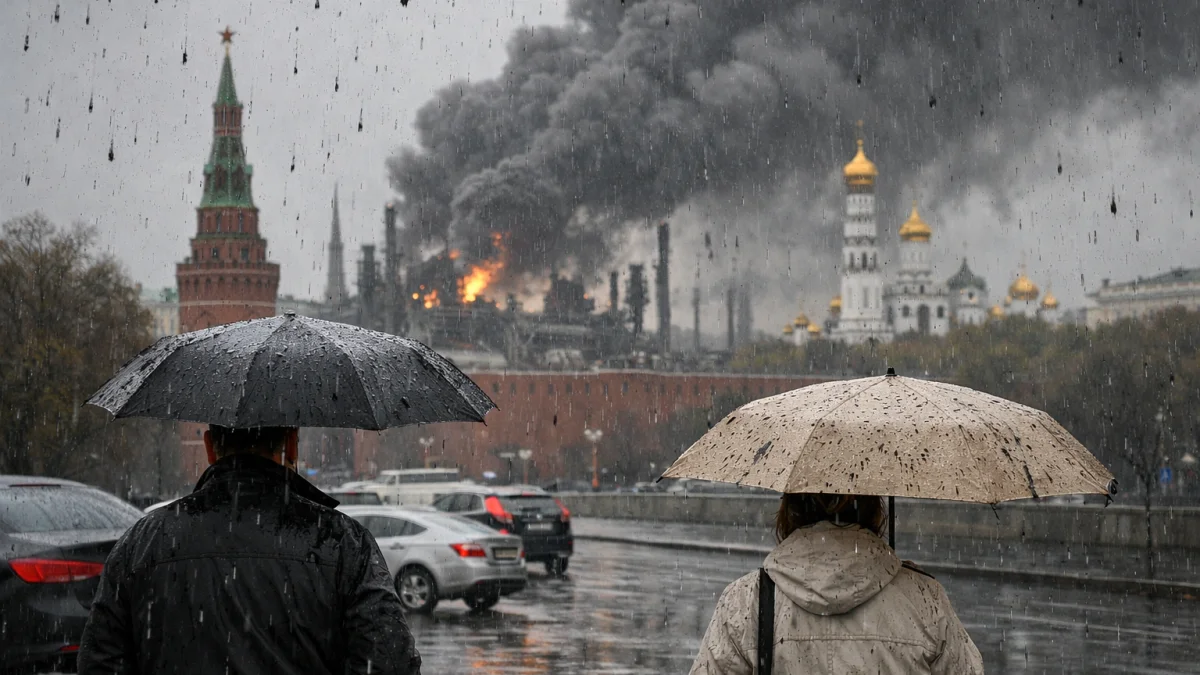
The complaints emerged on Thursday after Ukrainian drones struck the Gazprom Neft-operated Moscow oil refinery in the city’s southeast for the second time in three days, causing fires and damage to refining units, according to industry sources and Russian officials. Witness videos verified by Reuters showed large plumes of black smoke rising above the facility after the attack.


Residents in southeastern districts reported dark spots appearing on clothing, vehicles and outdoor surfaces after light rainfall, according to accounts cited by media reports and social media postings. Details about the extent of the reported fallout remain unclear, and independent verification of all complaints was not immediately available.
Moscow authorities rejected suggestions that oil-contaminated rain had fallen over the city. Officials said environmental monitoring showed no dangerous concentrations of pollutants in the atmosphere and urged residents to rely on information from official sources. Authorities did not immediately provide detailed findings from air-quality measurements.
The refinery, one of the largest fuel suppliers serving the Moscow region, was first hit on June 16 and was struck again on June 18 during what Russian officials described as one of the largest drone attacks on the capital in recent years. Industry sources told Reuters that key refining units were damaged, while local emergency services said fires at the site had been extinguished.
Moscow Mayor Sergei Sobyanin said earlier this week that a refinery facility had been damaged by a drone strike but reported no casualties. Ukrainian officials publicly acknowledged targeting Russian energy infrastructure, describing such operations as part of a broader campaign against facilities supporting Russia’s military and industrial activities.
Environmental specialists note that soot and combustion particles from large industrial fires can settle on surfaces and mix with precipitation under certain conditions. However, no official assessment linking the reported residue in Moscow directly to rainfall contamination had been released as of Friday. Similar reports of “black rain” have surfaced in other Russian regions following major refinery fires, though environmental impacts have varied by incident.
As of Friday, refinery operators had not publicly commented on the residents’ complaints. Authorities said monitoring of air quality and environmental conditions around the affected area was continuing while repairs at the refinery remained under way.