

Acting Attorney General Todd Blanche has formally rescinded the Justice Department's proposed Anti-Weaponization Fund, eliminating one of the principal obstacles to his confirmation as U.S. attorney general and underscoring the influence that a small group of Senate Republicans continues to exercise over key executive branch appointments. The decision comes just before a scheduled Senate Judiciary Committee vote and follows weeks of negotiations with Republican Senators John Cornyn of Texas and Thom Tillis of North Carolina, who had withheld support unless the administration permanently abandoned the initiative.
The move is significant because it illustrates that political resistance to the fund extended beyond Democratic criticism and reached into the president's own party. Although the proposal originated as part of a Justice Department settlement resolving President Donald Trump's lawsuit against the Internal Revenue Service over the disclosure of his tax returns, concerns increasingly focused on the broader legal and constitutional implications of establishing a multibillion-dollar compensation mechanism through executive action rather than congressional appropriation.


The Anti-Weaponization Fund was announced in May as part of the settlement agreement in Trump v. Internal Revenue Service. Under the Justice Department's original framework, approximately $1.8 billion from the federal Judgment Fund would have been available to compensate individuals who claimed they had been subjected to politically motivated government investigations or prosecutions. Department officials argued that the program would create an orderly process to address alleged government misconduct and cited previous federal compensation programs as precedent.
However, critics questioned both the legal basis and the practical administration of the proposal. Lawmakers from both parties argued that the settlement appeared to authorize a large compensation program without direct congressional approval and raised concerns that beneficiaries could include Trump allies or individuals connected to the January 6, 2021, attack on the U.S. Capitol, although the administration maintained that no partisan eligibility requirements had been established. Those criticisms transformed what began as a legal settlement into a broader dispute over executive authority, federal spending and political accountability.
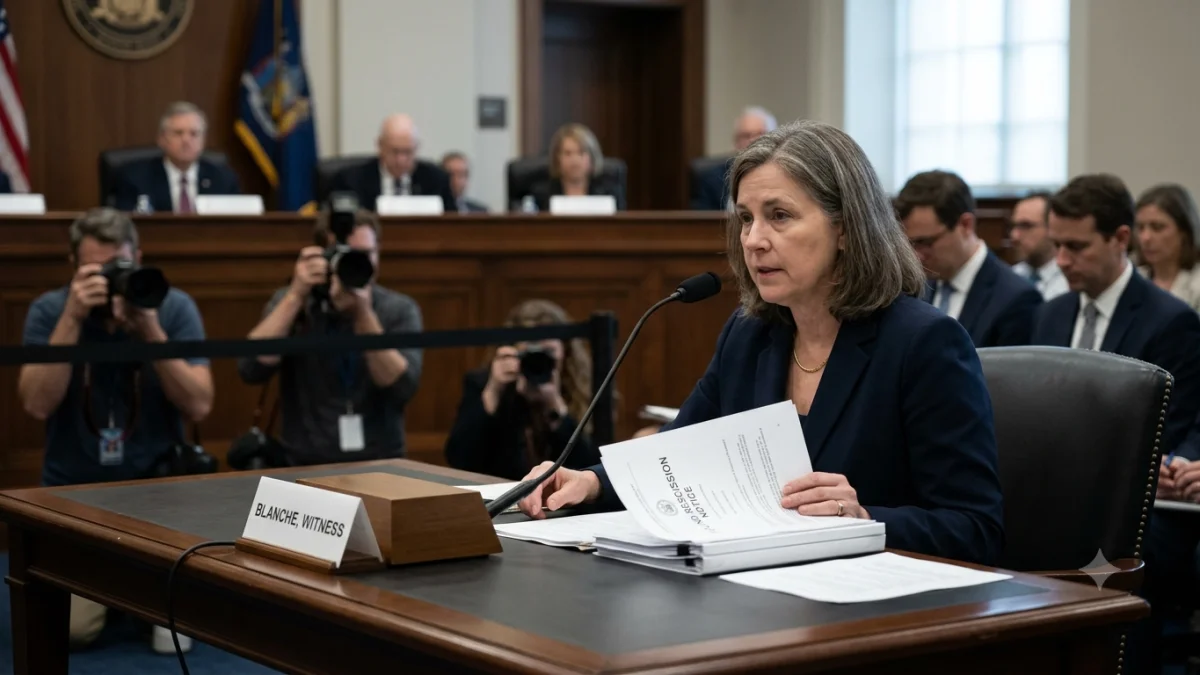
Blanche had already attempted to defuse the controversy in June, telling lawmakers that the department would not move forward with the fund. Court filings and congressional testimony subsequently repeated that position, and federal judges considering lawsuits against the program accepted the government's representation that the proposal had effectively been abandoned. Nevertheless, the absence of a formal rescission left uncertainty over whether a future attorney general could revive the initiative under the existing settlement framework. Sunday's written order was designed to eliminate that ambiguity by declaring the May order establishing the fund to have "no force or effect."
The timing also reflects the institutional role of the Senate confirmation process. Cornyn and Tillis used their positions on the Judiciary Committee to seek written commitments not only regarding the fund but also concerning provisions in the IRS settlement that appeared to limit certain tax audit authorities. According to the Justice Department, Blanche also clarified that protections related to tax examinations apply only to specified past matters and do not prevent future audits, addressing another major concern raised during negotiations.
For Blanche personally, the decision highlights the challenge of separating his responsibilities as acting attorney general from his previous role as Trump's personal defense lawyer. His nomination has drawn scrutiny over whether actions taken by the Justice Department could be viewed as advancing the president's personal interests. By formally rescinding the fund, Blanche appears to have sought to reassure skeptical Republican senators that he is prepared to modify or abandon controversial initiatives that threaten broader institutional support for the department. Whether that reassurance proves sufficient will be reflected in the Senate confirmation process.
The episode also demonstrates how divisions within the Republican Party continue to shape executive branch policymaking. While President Trump has continued to express support for compensating individuals whom he believes were subjected to politically motivated investigations and has indicated that he would pursue similar legislation through Congress, several Republican senators concluded that the existing mechanism presented unacceptable legal and political risks. Their objections ultimately produced a policy reversal before the confirmation vote.
From a governance perspective, the controversy illustrates the continuing debate over the scope of executive authority in resolving litigation involving the federal government. Although administrations have historically used settlements to conclude complex legal disputes, the proposed Anti-Weaponization Fund raised broader questions about whether settlement authority can be used to establish large-scale compensation programs that resemble public policy initiatives. Legal scholars and lawmakers are likely to continue examining those issues regardless of the outcome of Blanche's nomination.
The immediate outcome is clear: the Justice Department has formally rescinded the Anti-Weaponization Fund, officials state that no money was transferred, no governing board was appointed and no claims were processed, and Blanche's nomination now faces the Senate with one of its most contentious issues formally addressed. Remaining questions center on whether the revised settlement language will withstand any future legal scrutiny, whether Congress pursues related legislative proposals, and whether Blanche secures Senate confirmation following the Judiciary Committee's consideration.