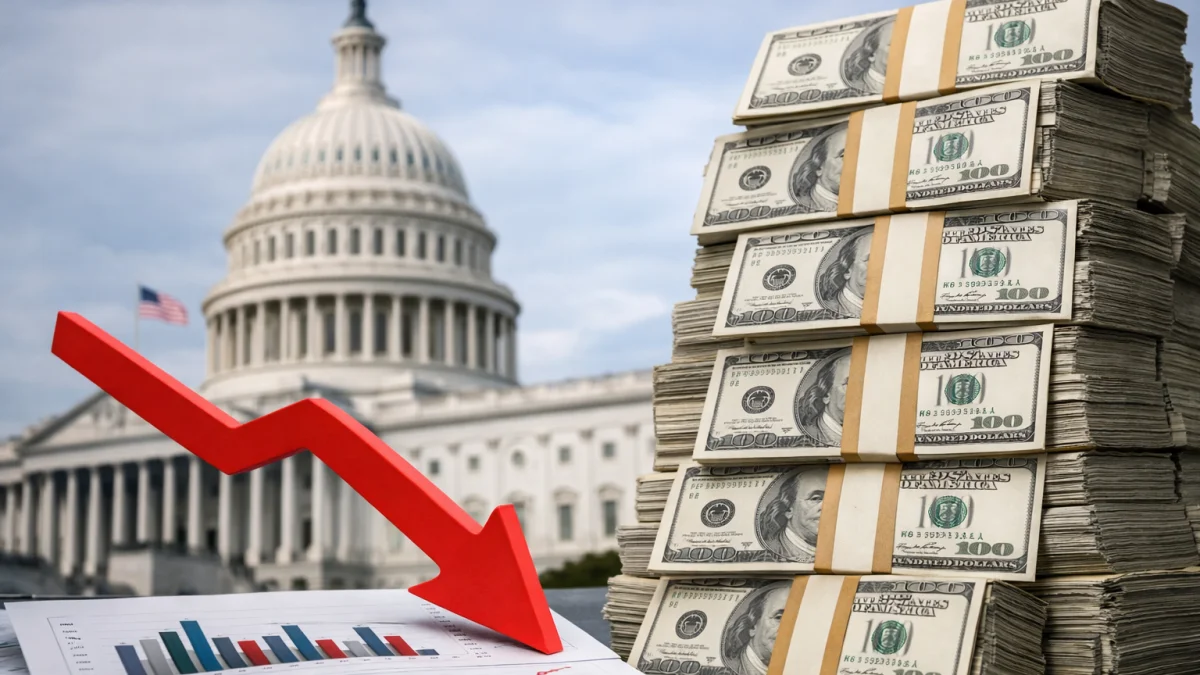


WASHINGTON — The Congressional Budget Office (CBO) said federal deficits are projected to increase by about $3.4 trillion over the next decade as a result of legislative changes enacted since early 2025, according to updated budget projections released by the nonpartisan agency.
In its latest budget outlook, the CBO reported that legislative revisions added an estimated $3.4 trillion to cumulative federal deficits over the 2026–2035 period. The agency said most of the increase stemmed from a 2025 reconciliation law that modified tax provisions and federal spending programs. The projections were published as lawmakers and administration officials continued to debate fiscal policy and long-term debt levels.


The CBO said the legislation is expected to reduce federal revenues while also lowering certain mandatory spending programs to a lesser extent. According to the agency, the net effect is a significant increase in projected deficits over the coming decade.
“On net, those legislative revisions added $0.5 trillion to the deficit projected for 2026 and a total of $3.4 trillion to the deficits projected for the 2026–2035 period,” the CBO said in its report.
The agency’s broader forecast projects a federal budget deficit of about $1.9 trillion in fiscal year 2026, rising to approximately $3.1 trillion by 2036 under current law. Federal debt held by the public is projected to increase from roughly 101% of gross domestic product in 2026 to about 120% by 2036, according to the report.
The CBO said rising interest costs remain a major factor in the long-term fiscal outlook. Net interest payments are projected to exceed $1 trillion in 2026 and continue increasing over the decade as borrowing grows.
Republican supporters of the 2025 legislation have argued that tax reductions and other provisions could support economic activity and investment. Critics, including some Democratic lawmakers and fiscal policy groups, have expressed concern that the law will add substantially to federal borrowing despite spending reductions included in the package. Details of future legislative responses remain unclear.
The CBO also noted that other factors affected its projections. Economic changes increased projected deficits, while technical revisions, including higher projected customs-duty revenues linked to tariff policies, partially offset the overall increase.
As of Friday, the CBO’s February 2026 outlook remained its latest comprehensive baseline forecast. No major revisions to the agency’s long-term deficit projections had been announced.