

The latest surge in Chandipura virus-linked deaths in western India has renewed scrutiny of the country's preparedness for recurring outbreaks of a rare but highly lethal infection that primarily affects children. Health authorities in Gujarat reported that 22 suspected deaths had been recorded over the past month, while laboratory confirmation remained pending in several cases, underscoring the challenge of responding rapidly to acute encephalitis outbreaks in which early diagnosis is difficult and clinical deterioration can occur within days.
The outbreak has become significant not only because of the reported fatalities but because it highlights persistent vulnerabilities in surveillance, laboratory capacity, vector control and pediatric critical care despite previous Chandipura virus outbreaks in India. Although the virus is uncommon, its history of causing severe neurological disease with high fatality rates among young children has made each resurgence a test of public health systems' ability to detect cases quickly and prevent wider transmission.


Officials in Gujarat have reported 35 laboratory-confirmed infections from a substantially larger number of suspected cases during the current monsoon season, while many additional samples remain under investigation. The concentration of cases among children is consistent with previous outbreaks, reinforcing long-standing epidemiological evidence that younger age groups are particularly vulnerable to severe disease.
Chandipura virus, first identified in India in 1965, belongs to the Rhabdoviridae family and is transmitted primarily through infected sandflies. The disease can initially resemble common viral illnesses with fever before progressing rapidly to acute encephalitis, causing inflammation of the brain. Public health experts have long noted that this rapid clinical progression narrows the window for effective supportive treatment and places particular importance on early recognition by frontline healthcare workers.
Unlike respiratory viruses capable of sustained human-to-human spread, Chandipura virus outbreaks are generally associated with vector transmission and seasonal environmental conditions. The World Health Organization has previously noted that no human-to-human transmission has been documented. Consequently, outbreak control depends heavily on vector management, environmental interventions, community awareness and rapid identification of suspected cases rather than quarantine measures directed at interpersonal transmission.
The current outbreak has also demonstrated how localized infectious disease events can produce wider regional consequences. Neighboring Rajasthan strengthened surveillance along its border with Gujarat after confirmed infections and deaths involving children from the state who received treatment in Gujarat. Health authorities expanded monitoring in border districts and increased preparedness for potential additional cases, illustrating how state governments coordinate responses even when transmission remains geographically concentrated.
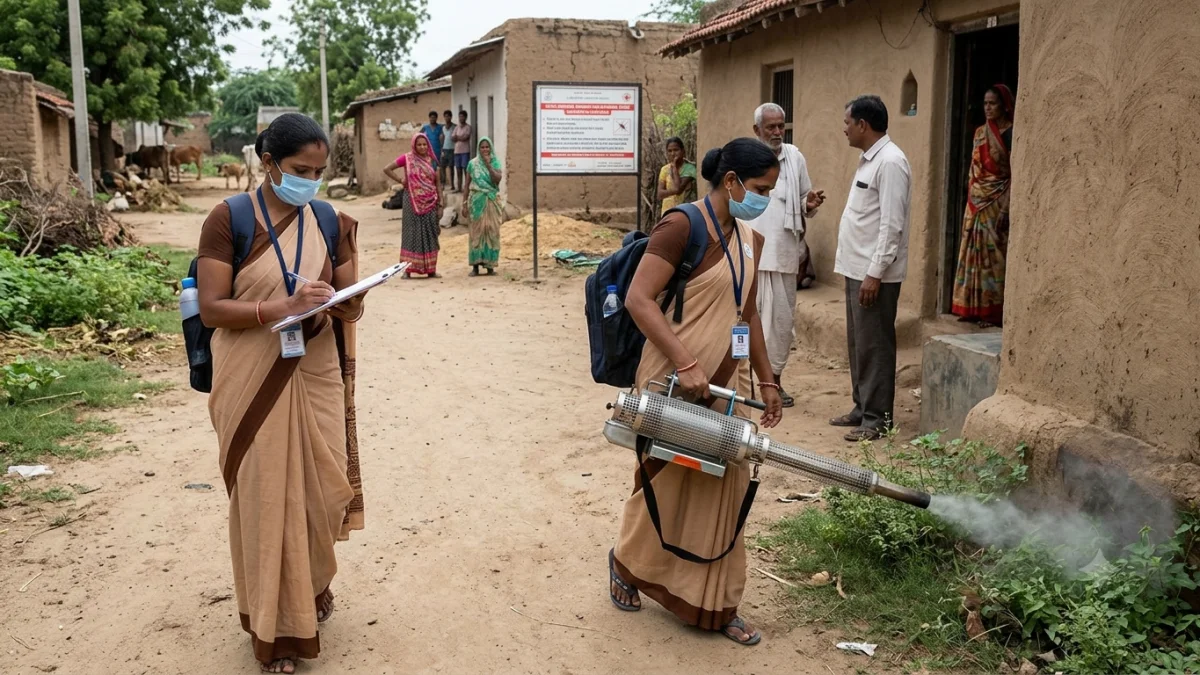
Authorities in Gujarat have responded by expanding door-to-door surveillance, accelerating laboratory testing, increasing insecticide spraying and issuing clinical guidance to pediatric specialists and private practitioners. State officials have instructed smaller healthcare facilities to stabilize suspected patients before promptly referring them to hospitals equipped with oxygen and intensive care support, reflecting recognition that rapid clinical deterioration requires specialized treatment capacity.
The response builds on experience gained during previous outbreaks. India's National Centre for Disease Control documented the deployment of multidisciplinary investigation teams during earlier Chandipura outbreaks to support epidemiological investigations, entomological surveillance and coordination with state authorities. Those investigations emphasized the importance of integrated surveillance systems capable of linking laboratory confirmation, field epidemiology and vector monitoring across affected districts.
Historical experience also provides perspective on the recurring challenge. During the larger 2024 outbreak, India reported hundreds of acute encephalitis syndrome cases, with dozens of laboratory-confirmed Chandipura virus infections concentrated mainly in Gujarat and Rajasthan. National authorities, supported by central public health teams, implemented enhanced surveillance and outbreak response measures. While the earlier outbreak eventually subsided, the recurrence during the 2026 monsoon season illustrates that seasonal environmental conditions and vector ecology continue to create conditions favorable for renewed transmission.
The latest outbreak therefore raises broader questions about preparedness rather than introducing an entirely new public health threat. Public health specialists generally view recurring vector-borne outbreaks as a measure of how effectively surveillance systems identify unusual neurological illnesses, how quickly laboratories can distinguish Chandipura virus from other causes of acute encephalitis syndrome, and whether healthcare systems can deliver timely supportive care in rural and underserved communities. Because no specific antiviral treatment or widely available vaccine exists, prevention and early clinical management remain the principal tools for reducing mortality.
The confirmed situation remains fluid as laboratory investigations continue and health authorities assess additional suspected cases. Officials are monitoring diagnostic results, the geographic distribution of infections, the effectiveness of intensified surveillance and vector-control operations, and whether transmission remains confined to affected districts or expands further during the monsoon season. Until additional testing is completed, authorities continue to distinguish between suspected and laboratory-confirmed cases while maintaining enhanced public health surveillance.