

BEIJING — China’s export growth eased slightly in July from the previous month but remained stronger than expected as robust global demand for artificial intelligence-related products, semiconductors and other high-tech goods continued to support overseas shipments despite persistent trade tensions and weaker domestic demand.
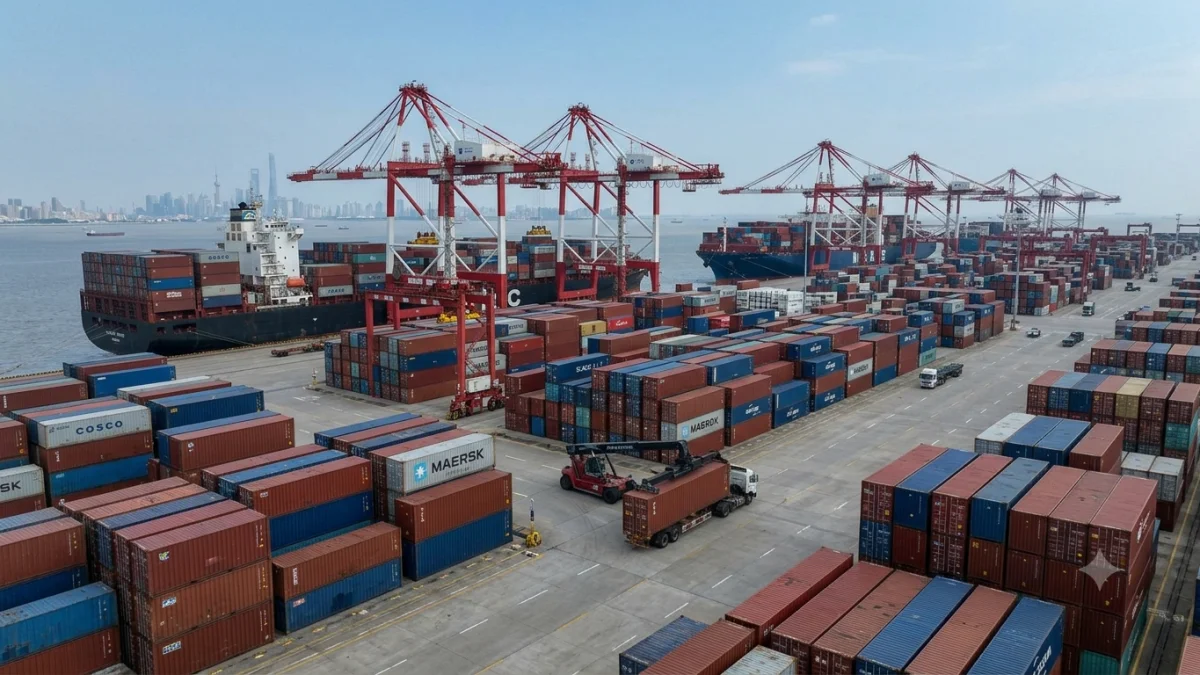
Exports rose 23.9% in U.S. dollar terms from a year earlier in July, slowing from June’s 27.0% increase, according to data released on Friday by the General Administration of Customs. Imports increased 27.5% year-on-year, down from June’s 36.0% gain, while China’s monthly trade surplus narrowed to about $112.5 billion.


The trade figures exceeded economists’ expectations and underscored the resilience of China’s export sector, which has become an increasingly important driver of growth as policymakers seek to offset subdued consumer spending and continued weakness in the property market.
Customs data showed high-tech exports remained a key source of momentum. Shipments of semiconductors surged from a year earlier, while broader high-tech exports rose about 40.7% in July. For the first seven months of 2026, exports of high-tech products increased roughly 41%, reflecting strong overseas demand for AI infrastructure, electronics and advanced manufacturing equipment.
Vehicle exports also continued to expand strongly, helping offset declines in some traditional manufacturing sectors. At the same time, exports of products such as toys and ceramics weakened, highlighting uneven demand across industries.
Trade with the United States remained constrained by tariffs and technology restrictions, although exports to the U.S. continued to grow at a slower pace than shipments to other major markets. Stronger trade with the European Union and Southeast Asian economies helped cushion the impact of ongoing bilateral tensions.
Analysts said the AI investment cycle has provided an important boost for Chinese manufacturers, with rising global demand for chips and computing equipment supporting factory output even as domestic consumption remains soft. However, they cautioned that escalating trade frictions and new restrictions on technology exports could pose risks to future growth.
Beijing has relied on manufacturing and exports to support economic activity while pursuing targeted measures to bolster growth rather than broad-based stimulus. Policymakers have continued to prioritize high-tech industries as China seeks to upgrade its industrial base and maintain economic momentum through the remainder of the year.