

MIAMI — Coastal authorities across the Caribbean, Gulf of Mexico and parts of the southeastern United States are preparing for increased accumulations of sargassum seaweed after monitoring systems reported unusually high levels of the floating algae across the Atlantic basin, officials and researchers said on Monday.
Satellite data compiled by the University of South Florida’s Sargassum Watch System and cited by regional monitoring agencies indicate that sargassum concentrations reached record levels during the spring, with large masses spread across the Caribbean Sea, tropical Atlantic and portions of the Gulf of Mexico. Researchers have warned that 2026 could become one of the most significant sargassum seasons on record.


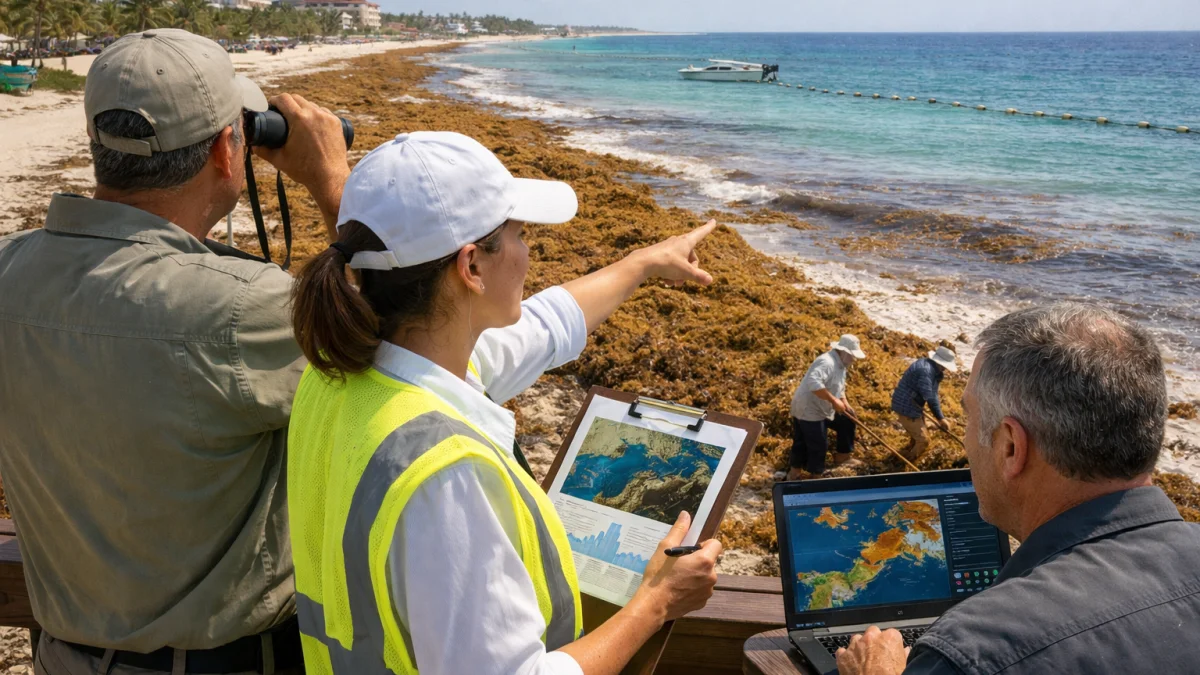
Government agencies, tourism authorities and local municipalities in affected regions have expanded beach-cleaning operations and monitoring programs ahead of the peak accumulation period, which typically occurs between May and August. Several Caribbean nations have also issued public advisories and increased surveillance of coastal areas vulnerable to large beaching events.
According to the University of South Florida monitoring system, sargassum biomass across the Atlantic basin reached approximately 28 million tonnes in April and increased further in May, setting monthly records for much of the region. The algae has expanded across nearly all monitored areas of the Caribbean and Gulf of Mexico.
“Sargassum has expanded across the entire Caribbean basin and into the Gulf of Mexico,” the monitoring system reported in its latest regional update.
The phenomenon has affected beaches from Mexico’s Caribbean coast and the Lesser Antilles to Florida and other Gulf Coast locations. In Mexico’s Quintana Roo state, local monitoring agencies reported significant beach accumulations in recent weeks, while officials in several Caribbean territories have stepped up response measures to limit impacts on tourism, fishing and coastal access.
Sargassum is a naturally occurring brown seaweed that provides habitat for marine life while floating offshore. However, large quantities washing ashore can create strong odors as the algae decomposes and may affect recreational beaches, ports and nearshore ecosystems, according to environmental agencies and marine researchers.
The National Oceanic and Atmospheric Administration has enhanced monitoring tools used to assess shoreline risk, while local authorities continue to track conditions and coordinate cleanup efforts. Officials in several coastal jurisdictions said preparations include increased equipment deployment, daily monitoring and contingency planning for heavier arrivals during the summer months.
As of Monday, scientists said sargassum levels remained elevated across much of the Atlantic-Caribbean region. Forecasts indicate that additional accumulations are likely during the coming weeks, although the timing and severity of individual beaching events will depend on local currents, winds and weather conditions.