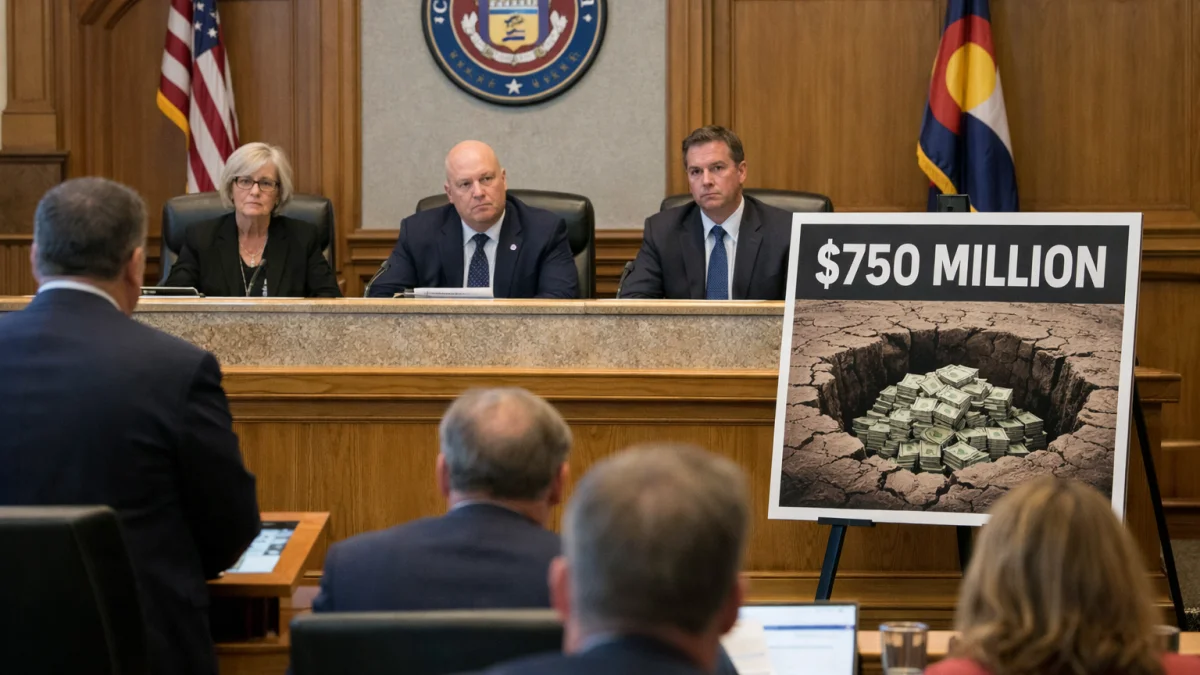


DENVER — Colorado lawmakers and budget officials are grappling with an estimated $750 million revenue shortfall linked to the state’s automatic conformity with changes in federal tax law, a gap that has emerged as one of the most significant fiscal challenges facing the state government.
State economists and legislative staff have said the shortfall stems largely from federal tax code changes enacted through a Republican-backed tax and spending package approved by Congress and signed into law in 2025. Because Colorado’s tax system is closely tied to federal taxable income through a policy known as “rolling conformity,” federal tax changes can automatically affect state revenues without additional action by the legislature.


Colorado is one of a small number of states that use federal taxable income as the basis for calculating state income taxes and automatically adopt federal tax code changes as they occur. Officials have said that structure left the state particularly exposed to reductions in revenue resulting from expanded federal deductions and other tax provisions.
According to analyses presented to lawmakers, the revenue impact created a budget gap of roughly $750 million in the current fiscal year, although estimates have varied among state agencies and legislative analysts. Governor Jared Polis’ administration and nonpartisan legislative staff have both warned that the state must make spending adjustments or identify additional revenue sources to maintain a balanced budget, as required under Colorado law.
“The changes dramatically reduced state revenue,” according to reporting by the Colorado Capitol News Alliance, citing legislative and executive branch budget officials. The administration has described the shortfall as a direct consequence of federal tax policy changes rather than a decline in Colorado’s underlying economy.
The issue has prompted debate at the state Capitol over how to respond. Democratic lawmakers have supported changes to certain business tax provisions and other fiscal measures to help offset lost revenue, while Republicans have expressed concerns about increasing tax burdens on businesses. During a special legislative session, lawmakers approved a package of actions aimed at reducing the gap, including adjustments to several tax provisions and authorization for additional spending reductions.
State officials have also cited constraints imposed by Colorado’s Taxpayer’s Bill of Rights, or TABOR, which requires voter approval for many tax increases and limits government revenue and spending growth. Budget analysts said those restrictions reduce the range of options available to policymakers responding to the revenue decline.
Governor Polis has characterized the situation as a budget challenge created by changes in federal law and has directed agencies to identify spending reductions in areas including higher education, grants and certain healthcare programs.
As of Thursday, state officials continued reviewing revenue forecasts and implementing budget adjustments intended to address the estimated $750 million gap while maintaining required spending commitments. Details of any additional legislative action remained unclear.