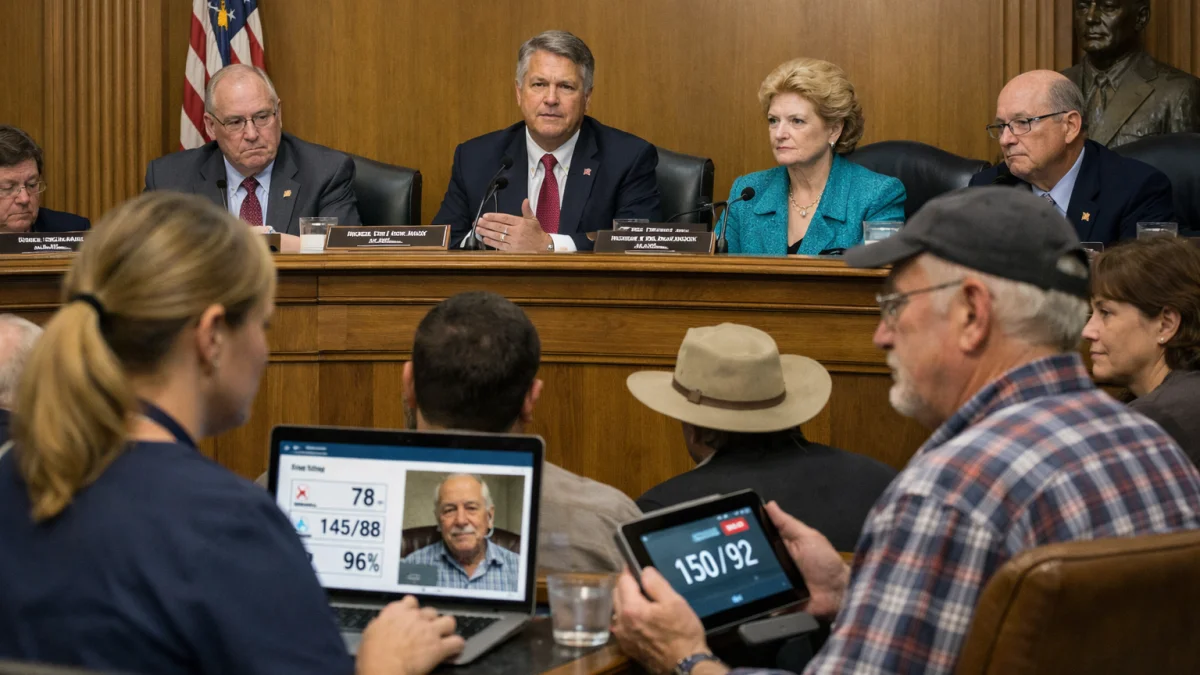


A bipartisan push in the U.S. Congress to expand remote patient monitoring in rural communities while advancing reforms to health insurers' prior authorization requirements reflects a broader effort to address longstanding barriers to healthcare access without relying solely on expanded physical infrastructure. The legislative package under consideration by the House Ways and Means Committee on July 15 brings together proposals that seek to modernize Medicare reimbursement, reduce administrative burdens on clinicians, and improve access for patients in medically underserved areas.
The significance of the package lies in its combination of payment reform and administrative simplification. Remote patient monitoring has become an increasingly important component of chronic disease management following the expansion of telehealth during and after the COVID-19 pandemic. At the same time, prior authorization requirements imposed by insurers have drawn criticism from physicians, hospitals, and patient advocates, who argue that approval delays can postpone treatment and increase administrative costs. Addressing both issues together reflects an emerging consensus that healthcare access depends not only on workforce availability but also on the efficiency of reimbursement and insurance processes.


The proposed Rural Patient Monitoring Access Act would modify Medicare payment rules for remote physiologic monitoring by establishing a payment floor for geographic practice expense adjustments, a change intended to reduce reimbursement disparities affecting rural providers. The legislation would also require providers receiving Medicare payment for remote monitoring to ensure that qualified clinicians are available to respond in real time to abnormal physiological readings, use systems capable of interoperating with electronic health records, and report data that would allow the Centers for Medicare & Medicaid Services (CMS) to evaluate long-term cost savings and program performance. According to the Congressional Research Service summary accompanying the bill, CMS would also be required to study costs and savings associated with remote monitoring over several years.
Supporters argue that these provisions attempt to balance expanded access with safeguards designed to ensure quality of care. Rural communities frequently experience shortages of physicians and specialists, making technologies that allow clinicians to monitor chronic conditions remotely an attractive supplement to traditional care. Congressional findings included in the legislation note that a majority of federally designated health professional shortage areas are located in rural regions, where patients often travel significantly farther to obtain medical services.
Research has generally found that remote monitoring can improve management of chronic illnesses such as hypertension and diabetes when integrated into coordinated care programs. Studies have also highlighted continuing obstacles, including broadband limitations, digital literacy, and infrastructure challenges that disproportionately affect rural populations. Those findings suggest that payment reform alone may not fully address disparities unless accompanied by investments in connectivity, workforce capacity, and technical support.
The legislative package also includes proposals aimed at prior authorization reform, another area that has attracted bipartisan attention. Prior authorization is intended to control healthcare costs by requiring insurers to approve certain treatments before they are delivered. Physicians' organizations, however, have argued for years that the process often delays medically necessary care while increasing paperwork for providers. Congressional consideration of prior authorization reform follows broader administrative efforts to streamline insurance approvals through greater use of electronic systems and standardized processes.
Although lawmakers from both parties generally support reducing unnecessary administrative burdens, debate continues over how reforms should balance faster patient access with insurers' responsibility to manage healthcare spending and prevent inappropriate utilization. Insurers have historically maintained that prior authorization remains an important tool for ensuring evidence-based care and controlling costs, while provider groups have called for greater transparency, standardized timelines, and exemptions for routinely approved services. The current proposals therefore represent an incremental approach rather than a fundamental restructuring of utilization management.
The congressional effort also aligns with broader federal initiatives focused on rural healthcare. The Trump administration has separately launched a multiyear rural health transformation program intended to strengthen access through targeted federal funding for states. While that initiative primarily addresses healthcare infrastructure and delivery systems, the congressional legislation focuses on payment policy and administrative processes, illustrating how lawmakers and federal agencies are pursuing complementary strategies to improve rural care.
The package's bipartisan composition is notable in an otherwise polarized healthcare policy environment. Rather than reopening broader debates over insurance coverage or Medicare expansion, the proposals concentrate on operational improvements that have drawn support from provider organizations, rural health advocates, and many policymakers across party lines. That narrower focus may improve prospects for legislative progress, although committee approval would represent only one stage of the congressional process.
As Congress considers the legislation, several questions remain unresolved, including the budgetary effects of revised Medicare reimbursement, implementation requirements for providers, and the extent to which prior authorization reforms would meaningfully reduce delays without increasing program costs. Federal lawmakers, CMS, healthcare providers, insurers, and patient advocacy organizations are continuing to monitor committee action and subsequent legislative negotiations as Congress evaluates whether these targeted reforms can improve healthcare access and efficiency for rural Medicare beneficiaries while maintaining program oversight and quality standards.