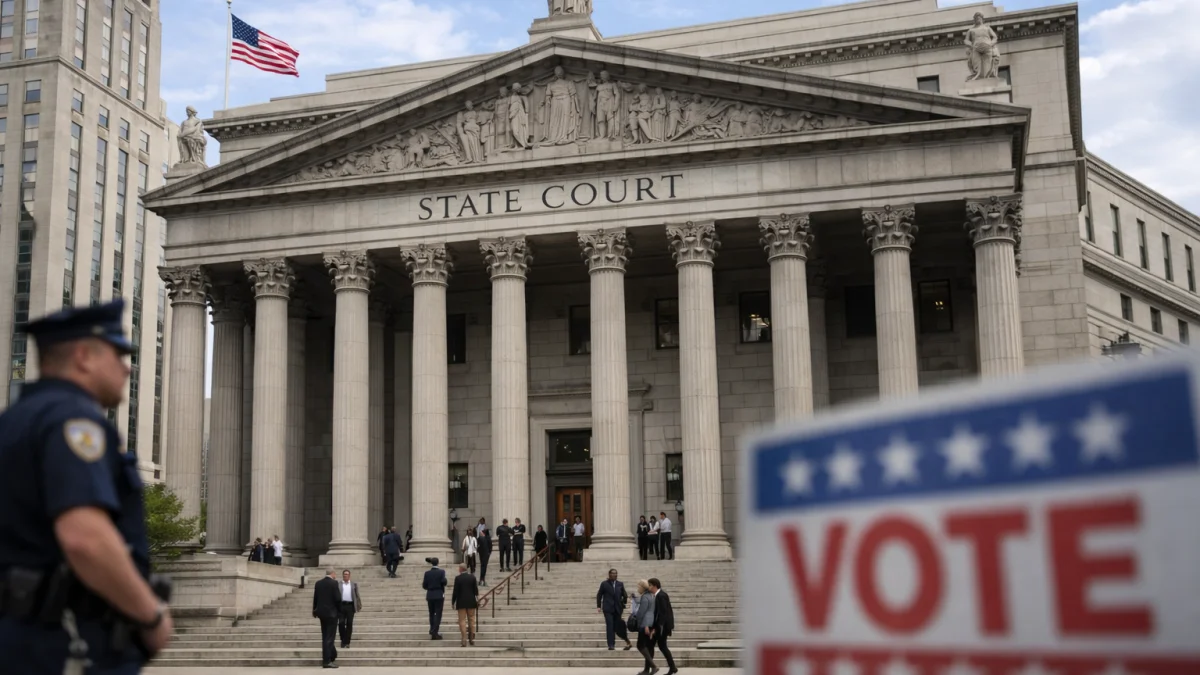


WASHINGTON — Federal and state courts across the United States are hearing multiple challenges to state voting laws and election procedures as states prepare for the 2026 midterm elections, legal groups and court records show.
Cases involve restrictions on mail-in ballots, proof-of-citizenship requirements, voter registration rules and redistricting maps, with plaintiffs arguing that the measures disproportionately affect certain voter groups. Defendants, including state officials, maintain that the laws protect election integrity.


In Arizona, voting rights organizations continue to challenge provisions of 2022 laws requiring proof of citizenship for certain ballots and registration processes. A federal appeals court previously struck down parts of the requirements, and related proceedings remain active.
Pennsylvania courts are examining how the state enforces date requirements on mail ballot envelopes, following a challenge by a voter and organizations. In North Carolina, a lawsuit by Republican groups questions a law extending eligibility for overseas voters.
The litigation comes after the U.S. Supreme Court’s April 2026 ruling in Louisiana v. Callais, a 6-3 decision that struck down a congressional map creating an additional majority-Black district as an unconstitutional racial gerrymander. The ruling has prompted further redistricting disputes and map challenges in several states.
“These cases highlight ongoing debates over balancing access to the ballot with safeguards against fraud,” said a spokesperson for a voting rights organization involved in multiple suits.
State officials in various jurisdictions have defended the measures. In Missouri, the state supreme court earlier blocked certain voter registration restrictions, citing free speech protections. Similar challenges to identification and assistance rules have appeared in other states.
The Supreme Court has also considered cases involving mail ballot deadlines and other procedural issues that could affect how votes are counted. Details on the full scope of pending lower court actions remain subject to ongoing filings.
Voting rights groups have filed suits in states including Florida, Texas and others regarding congressional and legislative maps, claiming violations of state or federal protections. States argue the maps comply with legal standards following the recent Supreme Court guidance.
As of Monday, several cases were in preliminary stages or awaiting hearings, with potential impacts on voter registration deadlines and ballot processing for the November elections. No comprehensive resolution has been reached across the disputes.