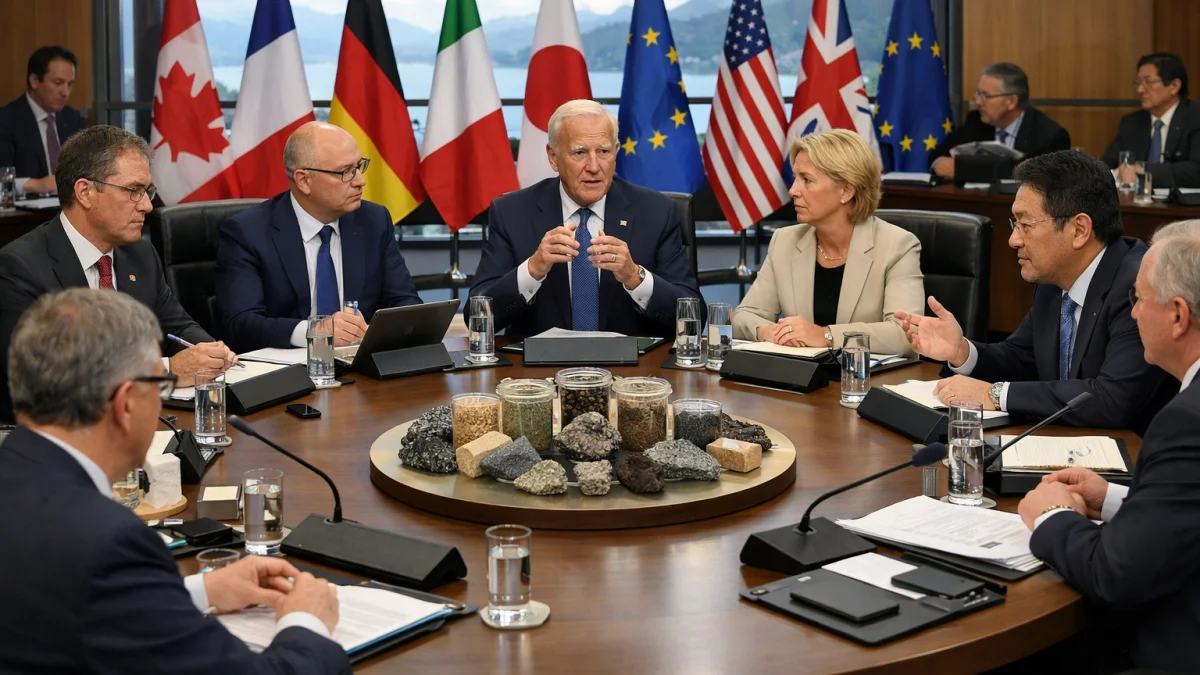


EVIAN-LES-BAINS, France — Critical minerals supply chains emerged as a central focus of discussions at the Group of Seven summit this week, with leaders seeking measures to reduce dependence on dominant suppliers and strengthen access to materials essential for advanced manufacturing, defense systems, renewable energy technologies and digital infrastructure.
Leaders from the United States, Canada, France, Germany, Italy, Japan and the United Kingdom spent part of the final day of the summit on Wednesday discussing coordinated approaches to securing supplies of lithium, nickel, rare earth elements and other strategic minerals, according to diplomats and summit participants. France, which hosted the meeting, pushed for a joint statement aimed at improving supply-chain resilience and addressing market distortions affecting the sector.


The discussions culminated in agreement on a new critical minerals alliance and coordination platform designed to help member countries diversify supply sources, strengthen stockpiles and expand recycling capacity. The initiative will be developed in cooperation with the International Energy Agency, according to a Reuters report on the summit outcome.
“We need resilient and diversified supply chains among trusted partners,” participants in earlier G7 ministerial discussions said in a June 10 statement on accelerating investment in critical minerals projects. The statement described critical minerals as strategically important for economic security and the energy transition.
The issue has risen steadily on the G7 agenda over the past two years. Leaders adopted a Critical Minerals Action Plan during the 2025 summit in Canada, committing member states to promote diversified, secure and transparent supply chains. Subsequent ministerial meetings focused on standards-based markets and investment frameworks intended to support new mining, processing and recycling projects.
Western governments have increasingly expressed concern about concentration in global supply chains. China remains a major processor of rare earths and other minerals used in batteries, semiconductors, electric vehicles and defense equipment. Officials from several G7 countries have argued that excessive reliance on a single supplier could expose industries to supply disruptions and economic pressure.
While G7 members broadly agreed on the need for greater coordination, discussions revealed differing views on specific policy tools. Previous negotiations included debate over stockpiling arrangements, pricing mechanisms and investment incentives, according to diplomats and officials familiar with the talks.
Under the new framework announced this week, member countries plan to begin with pilot efforts focused on lithium and nickel before expanding cooperation to additional minerals. The alliance will also monitor markets, coordinate responses to potential disruptions and encourage investment in supply-chain projects across G7 countries and like-minded partners.
As the summit concluded on Wednesday, officials said technical work on implementation would continue through ministerial and industry-level meetings in the coming months. Details regarding financing, governance and participation by non-G7 countries remain under discussion.