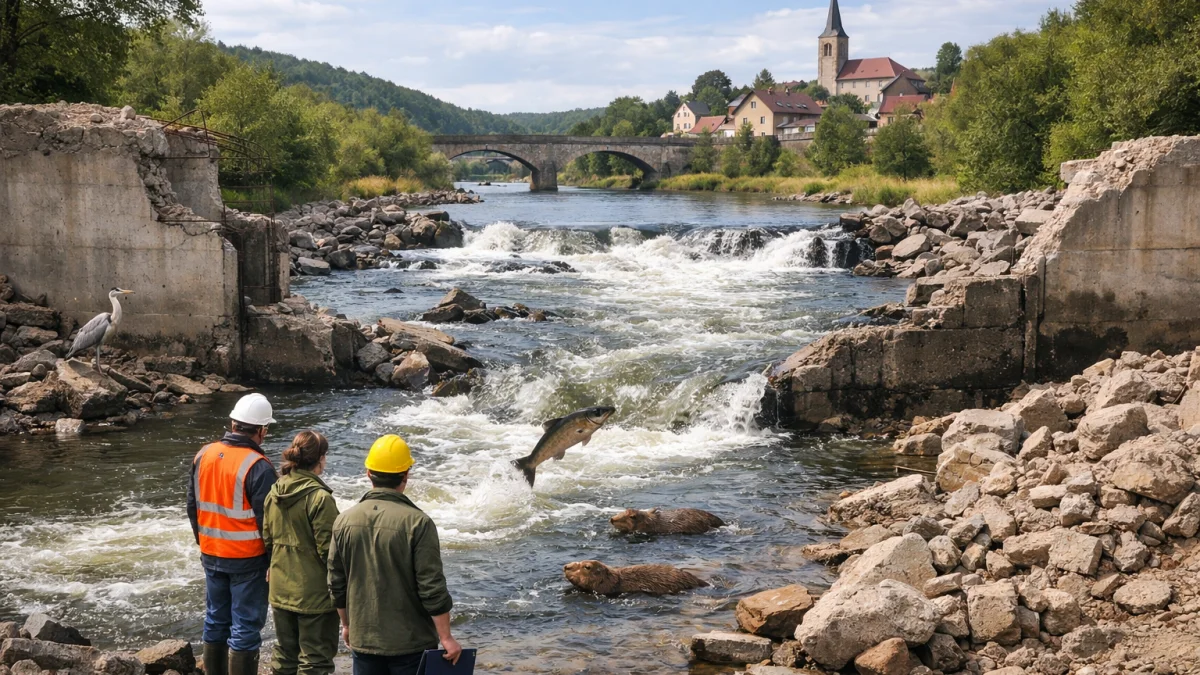


BRUSSELS — Efforts to remove obsolete dams and other river barriers across Europe are helping restore wildlife movement and reconnect freshwater habitats, environmental organizations said on Monday, citing record levels of barrier removals in recent years.
According to the Dam Removal Europe coalition, more than 600 river barriers, including dams, weirs, culverts and sluices, were removed across the continent in 2025, reconnecting about 3,740 kilometers (2,324 miles) of rivers. The coalition said the removals were intended to restore natural river flows and improve migration routes for fish and other aquatic species.


The removals took place in multiple countries, including Sweden, Finland, Spain, Norway, Iceland and North Macedonia, according to the coalition and partner organizations. Environmental groups said many of the structures had become obsolete and no longer served their original purposes.
“The success of the dam removal movement is based on a growing recognition that healthy rivers are critical natural infrastructure,” Dam Removal Europe said in a statement accompanying its annual report. The coalition added that restoring river connectivity can support biodiversity, water security and climate resilience.
Conservation groups and scientists have long argued that dams and other barriers fragment river ecosystems, block fish migration and disrupt the transport of sediment and nutrients. Freshwater migratory fish populations in Europe have declined sharply over recent decades, according to environmental organizations cited in recent reports.
Examples of ecological recovery have emerged in several river systems. In Finland, salmon have returned to stretches of the Hiitolanjoki River after barriers were removed, while projects in southeastern Europe have focused on reopening migration routes for native fish species.
The European Union has set a goal of restoring about 25,000 kilometers of rivers to a free-flowing state by 2030 under broader nature restoration efforts. Environmental groups said recent removals represent progress toward that objective, although many rivers remain fragmented by existing infrastructure. Estimates cited by conservation organizations suggest Europe still has roughly 1.2 million river barriers, with a significant share considered obsolete.
Some researchers and stakeholders have urged caution, noting that barrier removals can create challenges, including the potential spread of invasive species and concerns about local water management. Scientists have said such risks require monitoring and site-specific assessments before projects proceed.
As of June 2026, environmental organizations reported that dam removal activity continued to expand across Europe, with additional restoration projects under development. Details on future removals vary by country and remain subject to regulatory review and local approval processes.