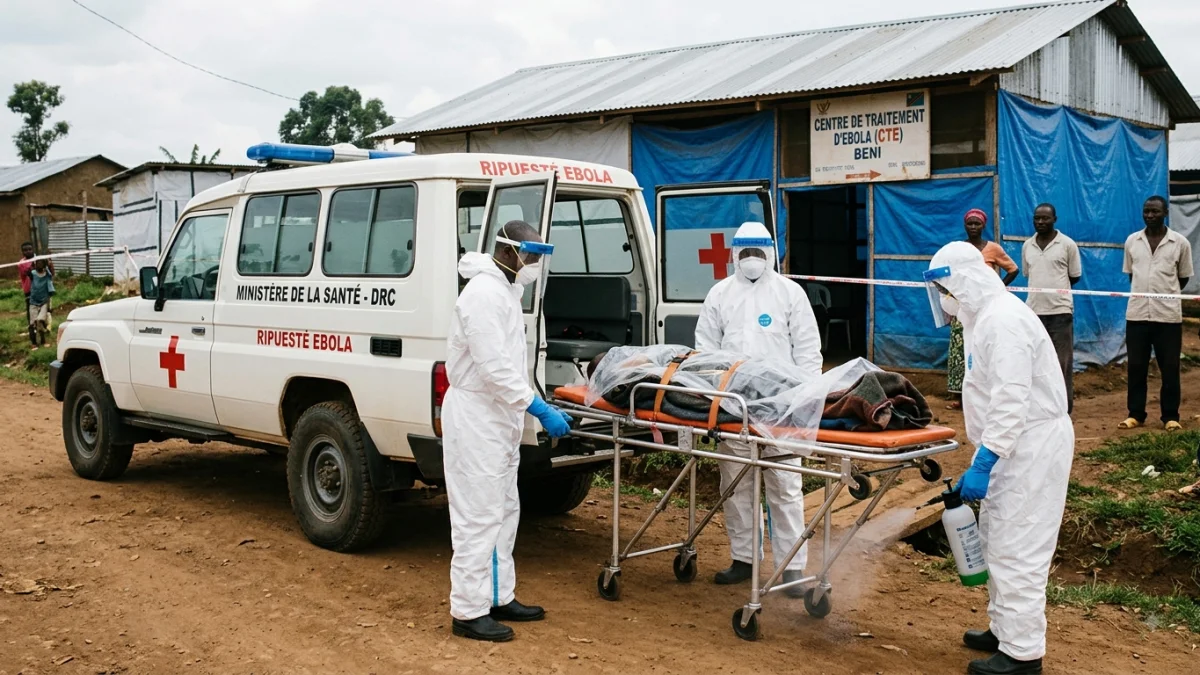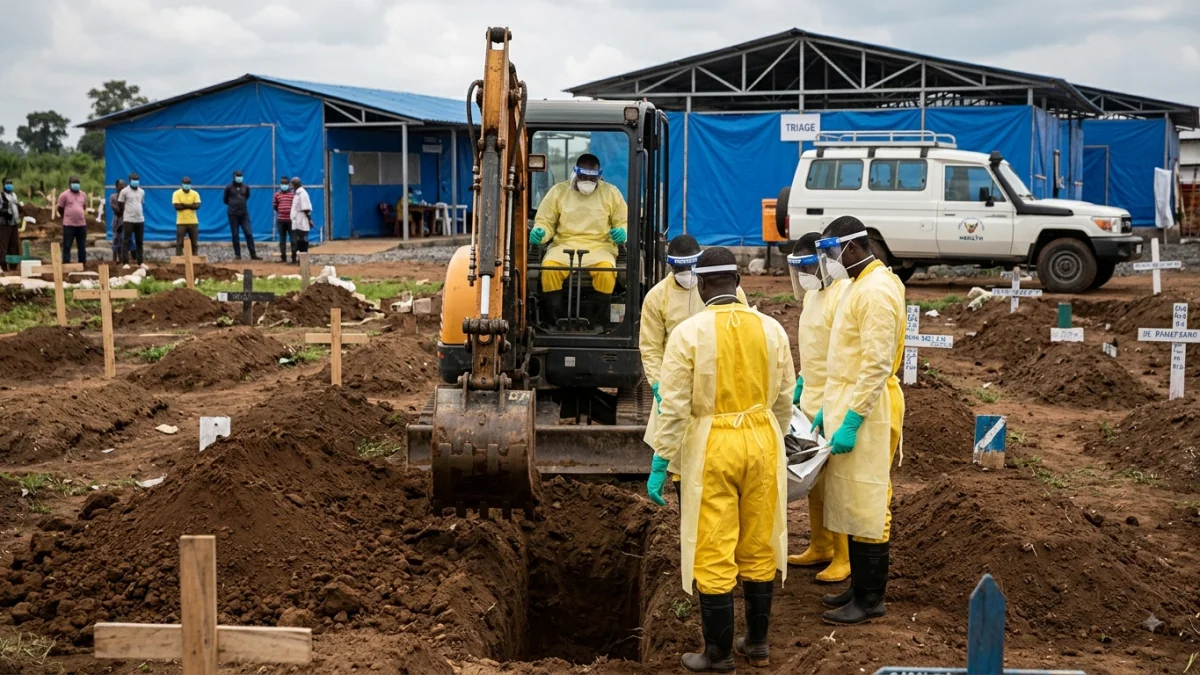


Kinshasa — The death toll from an Ebola outbreak in the Democratic Republic of Congo has surpassed 2,000, with more than 4,400 confirmed cases recorded as the virus spreads rapidly through the country's east, government data showed.
As of Tuesday, Aug. 11, Congo had recorded 4,449 confirmed cases and 2,061 deaths from the outbreak, according to figures cited by the government.


The outbreak, caused by the Bundibugyo species of Ebola virus, was officially declared on May 15 after cases were detected in eastern Congo and Uganda. Genetic sequencing has indicated that transmission in Congo began months earlier, in February, according to health authorities.
World Health Organization Director-General Tedros Adhanom Ghebreyesus said on Wednesday that the outbreak was progressing at a pace that could make it the deadliest Ebola outbreak on record. He said the current trajectory was on course to surpass the West African outbreak of 2014-2016, which killed more than 11,000 people.
The WHO has described the current outbreak as the fastest-growing Ebola outbreak yet. The virus has spread across multiple health zones in eastern Congo, where insecurity, difficult terrain, limited health infrastructure and population movement are complicating efforts to detect infections and trace contacts.
The Bundibugyo virus presents an additional challenge because there is no approved vaccine or specific treatment for the strain, according to the WHO. Researchers and health authorities are testing vaccine candidates and other potential interventions as part of the response.
WHO officials have warned that many infections are being detected outside health facilities, making it harder to interrupt transmission. The agency and Congo's health authorities are expanding surveillance, testing, contact tracing, infection prevention measures and clinical care while working with international partners.
The WHO declared the outbreak a public health emergency of international concern in May, citing sustained transmission and the risk of further regional spread. Its most recent published assessment available before the latest figures rated the risk in Congo as very high, while assessing the global risk as low.
Health authorities continue to monitor new cases and deaths as response teams work to expand access to treatment and strengthen containment measures in affected communities.