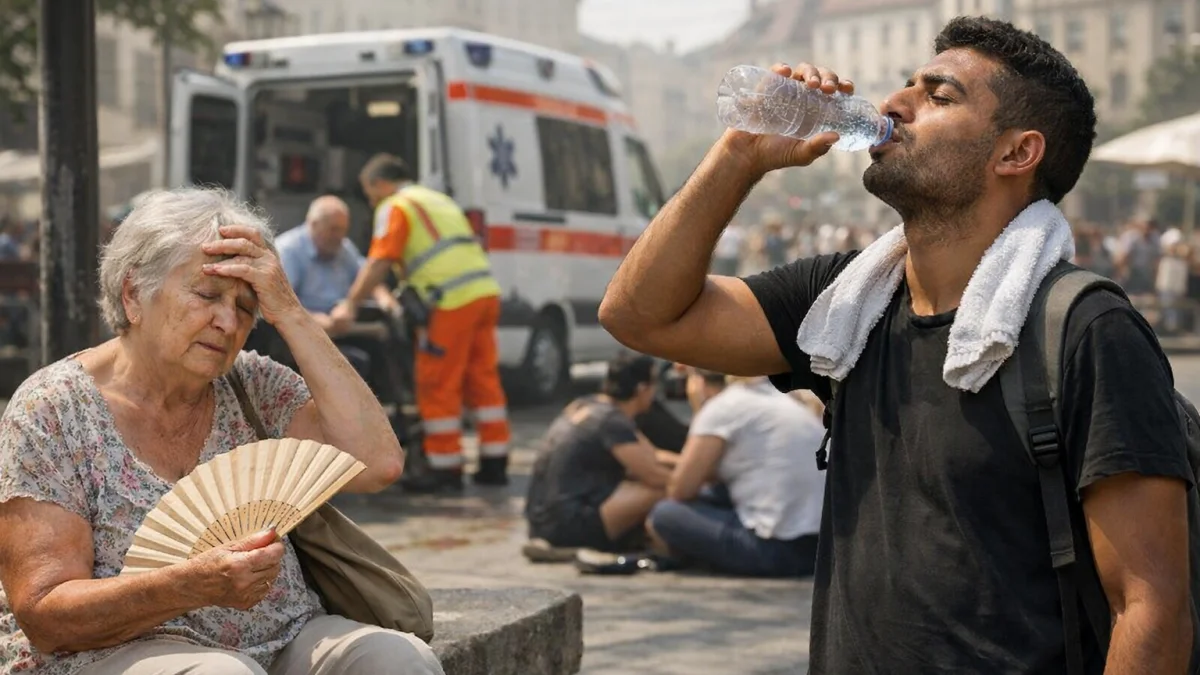
PARIS — Elderly residents and migrant communities across several European cities faced mounting health pressures on Saturday as an intense late-June heatwave pushed temperatures above 40°C in parts of western and central Europe, straining urban services and prompting expanded public health alerts, according to national meteorological agencies and health authorities.
The heatwave has led to widespread warnings across France, Italy, Spain and neighboring countries, with officials urging residents to limit outdoor activity and check on vulnerable individuals. National weather services, including Météo-France, have issued multi-day heat alerts as high temperatures persisted across large parts of the region, while hospitals in several areas reported increased admissions linked to heat-related illness, according to health authorities cited by European media and official briefings.
The World Meteorological Organization has said Europe is warming at more than twice the global average, increasing the likelihood of prolonged and more frequent heat extremes. The World Health Organization has warned that older adults, people with chronic illness, migrants in overcrowded housing, and those without access to cooling systems face elevated risk during extreme heat events.
In France, authorities placed large portions of the country under high-level heat alerts earlier this week, with Météo-France warning of sustained high temperatures and limited overnight cooling. The national rail operator SNCF reported service disruptions due to heat-related stress on infrastructure, while several municipalities activated cooling centers and adjusted public schedules, according to official updates.
In Italy, health authorities maintained red heat alerts in multiple cities including Rome and Milan, with emergency services instructed to prioritize heat-related calls, according to the Italian Ministry of Health. Spain’s national weather agency AEMET also issued warnings across several regions as temperatures approached or exceeded seasonal highs, according to official bulletins cited by European broadcasters and agencies.
Local authorities in multiple cities have expanded outreach measures targeting elderly residents living alone, including telephone check-ins and welfare visits during peak afternoon hours. Migrant support organizations in southern and western Europe reported increased demand for assistance, particularly in densely populated urban districts where housing conditions limit ventilation and cooling, according to humanitarian groups cited in national press briefings.
A spokesperson for the World Health Organization’s European regional office said earlier this week that heat-health action plans remain uneven across the continent. “We continue to see gaps in preparedness that put vulnerable populations at risk during extreme heat events,” the spokesperson said, according to a WHO briefing.
As of Saturday, meteorological agencies said the heatwave was expected to persist through the weekend in parts of southern and eastern Europe, with some regions likely to remain under heat warnings into the following week. Authorities said updated public health assessments would be released once temperature peaks subside, with no consolidated Europe-wide casualty figures yet available.