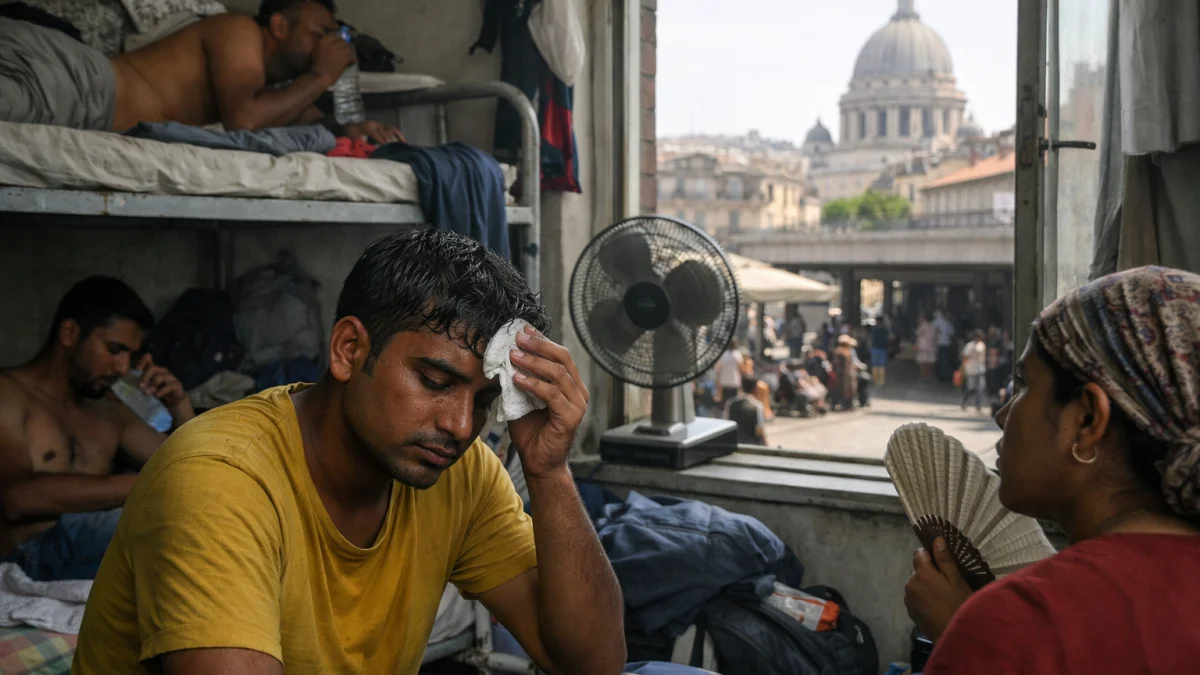
PARIS — Under the elevated tracks of the Stalingrad metro line in northeastern Paris, hundreds of migrants rest on makeshift mattresses or inside tents as temperatures climb. On June 24, 2026, with the city sweltering in record June heat, the air inside the tents can exceed 45 degrees Celsius (113 Fahrenheit), according to aid groups, while the ground burns underfoot.
One man, speaking to reporters near the camp, described the conditions simply: “It’s very hot. It’s 40 degrees. It’s very difficult to live in the tent. I can’t live a life here.”
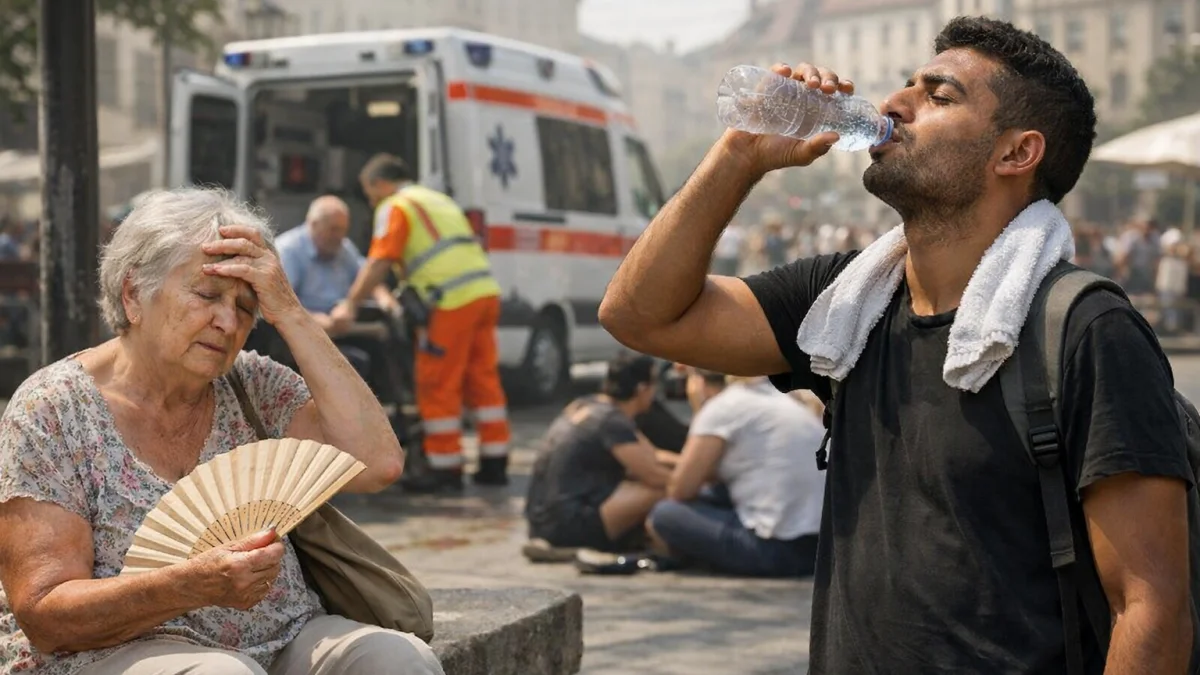
Europe is gripped by its most severe heatwave on record for June, with temperatures shattering previous highs across multiple capitals. Paris hit a June record of 40.9 C. Provisional records fell in Germany (41.5 C), the Czech Republic, Denmark, and elsewhere. Scientists with World Weather Attribution determined the event would have been “virtually impossible” without human-caused climate change.
For urban migrants — many living in precarious housing, tents, or overcrowded apartments without air conditioning — the heat poses acute risks. Across the continent, only about 20 percent of buildings have air conditioning, leaving low-income and transient populations especially exposed.
In the Paris camp housing roughly 800 to 1,000 people, access to water is limited; the nearest point is at least a 10-minute walk. Aid workers from Doctors of the World and other groups have reported cases of dehydration, heat exhaustion, and fainting. Some migrants have entered the Seine River to cool off, despite the dangers and limited swimming ability among many.
“It’s even hotter than last year,” one displaced person told InfoMigrants near Stalingrad. “But we’re used to the heat; we have the same kind in Sudan. The worst part is the night—we can’t sleep.”
Similar vulnerabilities exist in other capitals. In Berlin, where adaptation measures lag behind cities like Paris that strengthened responses after the deadly 2003 heatwave, migrant communities in dense, older housing stock face compounded risks from urban heat islands. Studies of urban migrant neighborhoods in Vienna and elsewhere highlight how poverty, precarious housing, limited healthcare access, and language barriers amplify heat-related health threats.
Broader European data underscores the pattern. Non-EU citizens face elevated poverty and social exclusion rates — over 45 percent in some assessments — correlating with residence in hotter, less green urban districts. Health authorities note that migrants, along with the elderly and homeless, are among those most at risk during heatwaves.
This June’s heatwave highlights longstanding gaps. Research on heat vulnerability consistently identifies migrants, particularly those undocumented or recently arrived, as facing higher risks due to housing precarity, limited social networks, and barriers to information or services.
Cities have opened cooling centers and emergency shelters in places like Rome, Milan, and Paris. Public fountains and shaded areas see heavy use. French emergency doctors reported sharp increases in heat-related calls, with one Paris physician noting 55 excess deaths in emergency services over 24 hours in one stretch — far above the normal three or four.
Authorities in several countries have issued warnings and extended support for vulnerable groups, including outreach to transient populations. Yet aid organizations stress the need for longer-term solutions beyond emergency water points and temporary shelters.
As night falls in the Stalingrad camp, many remain outside their tents seeking any breeze under the metro overpass. The heat persists, a tangible reminder of how climate-driven extremes intersect with urban inequality. In European capitals where summers are growing hotter, the experiences of these migrants illustrate a widening challenge for cities unaccustomed to providing reliable cooling for all residents.