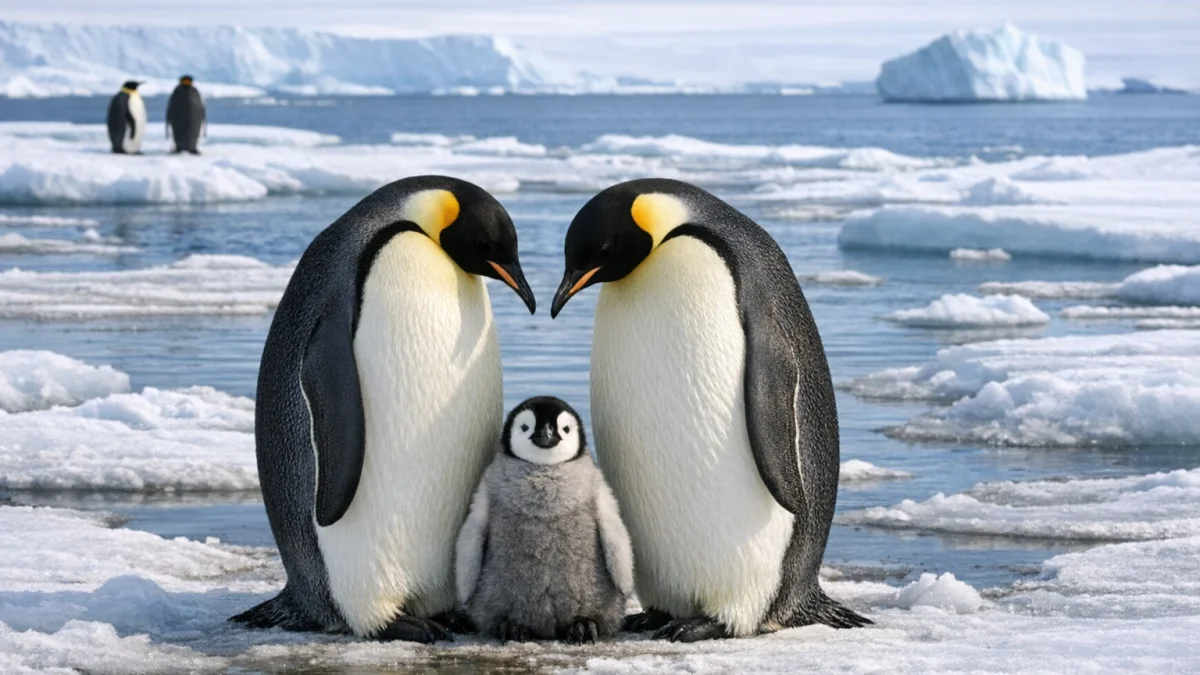


GENEVA — The International Union for Conservation of Nature on Thursday declared the emperor penguin an endangered species, citing the impacts of climate change on Antarctic sea ice essential to the birds' survival.
The IUCN uplisted the emperor penguin from near threatened to endangered on its Red List of Threatened Species. The assessment projects that the population will halve by the 2080s due to declining sea ice, which emperor penguins rely on for breeding and raising chicks.


Emperor penguins, the world's largest penguin species, breed on stable sea ice attached to the Antarctic continent during the Southern Hemisphere winter. Warming temperatures have led to more frequent early breakup of sea ice, resulting in chick losses in some colonies. The species has moved from near threatened based on new modeling of future sea ice loss under current climate trends, the IUCN said.
“We have concluded that human-induced climate change represents the most serious threat to emperor penguins,” said Philip Trathan, a member of the IUCN Penguin Specialist Group, in a statement accompanying the update.
The announcement also included the uplisting of the Antarctic fur seal to endangered, driven by reduced food availability linked to environmental changes. The southern elephant seal was listed as at risk due to disease, though details on that assessment remained limited.
The emperor penguin update reflects projections rather than observed widespread population collapse to date. Some colonies have experienced declines, including the complete loss of one colony off the Antarctic Peninsula in recent years, according to earlier scientific reports. Overall population trends continue to be monitored, with exact current numbers subject to ongoing surveys.
Climate change has caused significant reductions in Antarctic sea ice extent in recent years, affecting multiple ice-dependent species. The IUCN Red List assessment incorporates expert modeling of future habitat loss.
Conservation groups have long highlighted the vulnerability of emperor penguins. The species is not currently subject to major direct human threats such as hunting or fishing bycatch in its remote habitat, but indirect effects from global emissions dominate the risk profile.
As of Thursday, the IUCN had not released full details on the quantitative population projections beyond the halving estimate by the 2080s. Monitoring of emperor penguin colonies continues through satellite imagery and field expeditions by organizations including the British Antarctic Survey.
The Red List update serves as a global reference for conservation priorities. No immediate policy changes were announced by governments in response to the listing on Thursday.