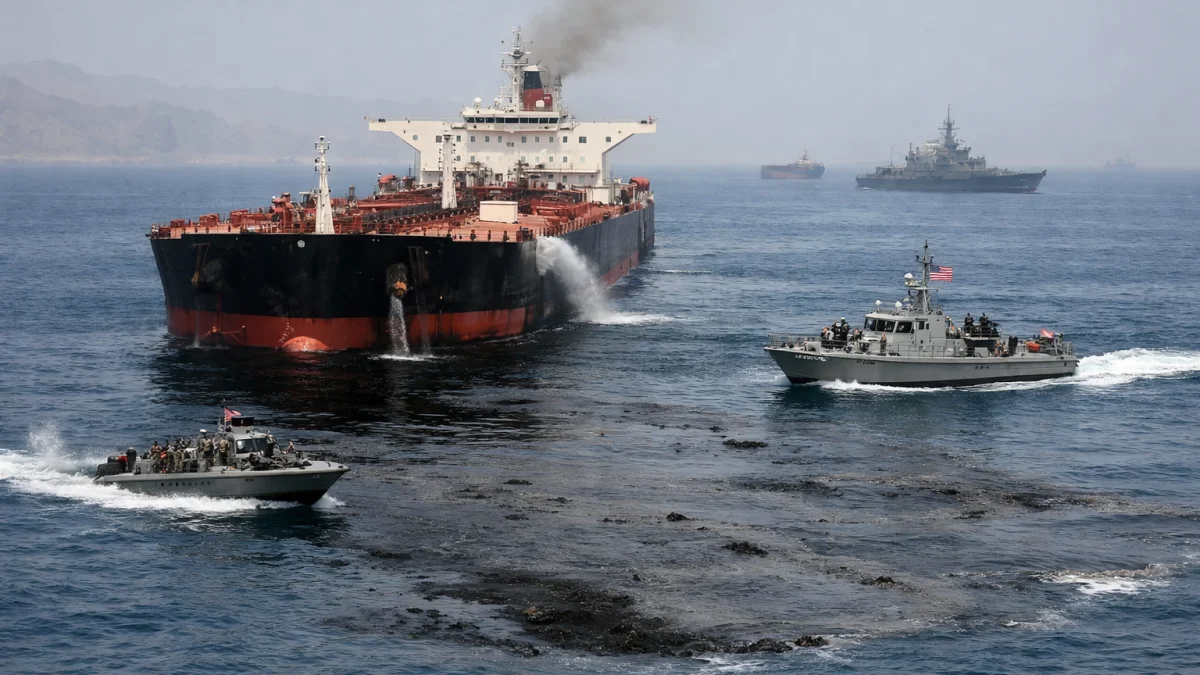


Escalating tensions in and around the Strait of Hormuz are expanding beyond a geopolitical and energy security challenge into a growing environmental risk, as renewed attacks on commercial shipping increase the likelihood of a major marine oil spill in one of the world's most strategically important waterways. The latest escalation, marked by attacks on oil tankers, reduced commercial traffic and renewed military operations involving the United States and Iran, has heightened concerns among maritime authorities, energy markets and environmental experts.
The significance extends beyond the immediate disruption to global oil supplies. The Strait of Hormuz carries roughly one-fifth of internationally traded crude oil and substantial volumes of liquefied natural gas under normal conditions. A serious spill resulting from missile strikes, drone attacks or vessel collisions would threaten sensitive marine ecosystems while compounding economic losses already associated with disrupted shipping. Environmental risks are increasingly becoming part of the broader assessment of the crisis rather than a secondary consequence.


Recent incidents have reinforced those concerns. Maritime security agencies have reported multiple attacks on commercial vessels transiting the strait and nearby Gulf of Oman. Shipping data indicate tanker movements have fallen to their lowest levels in weeks as operators reassess security conditions. Industry analysts also report that more vessels are disabling their Automatic Identification System (AIS) transponders to reduce exposure, making traffic monitoring more difficult and increasing navigational risks in one of the world's busiest shipping corridors.
The International Maritime Organization (IMO) has responded by emphasizing the safety of seafarers and warning of mounting operational risks. Earlier in the crisis, the agency temporarily paused elements of its evacuation planning following attacks on vessels in the region while continuing to coordinate with member states and industry representatives. IMO officials have also highlighted rising insurance costs, operational uncertainty and the need to protect commercial crews operating in increasingly hazardous waters.
From an environmental perspective, the concentration of large crude carriers transiting a relatively narrow waterway magnifies the consequences of any successful attack. Even limited structural damage can release significant quantities of oil into the marine environment. The Persian Gulf's warm, shallow waters recover slowly from major contamination events, while coastal habitats including coral communities, mangroves and fisheries remain vulnerable to prolonged pollution. Cleanup operations would also become substantially more difficult if military activity restricted access to affected areas.
Historical experience illustrates the scale of potential consequences. The Gulf has experienced major oil pollution during previous regional conflicts, most notably during the 1991 Gulf War, when deliberate and accidental releases created one of the largest oil spills in history. Although the current situation differs operationally and politically, environmental specialists frequently cite those events as evidence that armed conflict involving energy infrastructure and tanker traffic can produce ecological damage lasting years beyond the cessation of hostilities.
The latest escalation also demonstrates how security risks and environmental risks increasingly reinforce one another. Commercial operators facing missile threats or drone attacks may alter shipping routes, reduce transit speeds or navigate under degraded situational awareness. These defensive measures can lower exposure to hostile action but may increase collision risks, particularly when vessels operate without publicly transmitting location data. Maritime analysts have noted a growing number of "dark" voyages through Hormuz, reflecting the difficult balance between operational security and navigational safety.
Energy markets have responded rapidly. Oil prices rose sharply following renewed attacks and concerns that disruptions could become more prolonged. While much market attention has focused on supply availability and inflationary pressures, environmental incidents could introduce an additional layer of disruption. A major spill could temporarily close sections of shipping lanes, complicate salvage operations and require extensive containment efforts, prolonging delays even if military tensions eased.
Governments and industry have sought to reduce vulnerability by diversifying export routes through pipelines and alternative ports outside the Strait of Hormuz. However, analysts note that such infrastructure cannot immediately replace the waterway's full capacity, meaning the strait remains indispensable for global energy trade despite ongoing efforts to improve resilience.
Official responses continue to emphasize maritime security alongside diplomatic efforts to prevent further escalation. Governments involved in the crisis have issued competing statements regarding responsibility for attacks and the status of shipping through the strait, while international organizations continue monitoring vessel safety and commercial navigation. Independent verification remains challenging in several reported incidents, underscoring the importance of relying on corroborated reporting and official maritime advisories.
The current confirmed picture is one of increasing operational danger for commercial shipping, elevated volatility in global energy markets and a growing risk that military activity could trigger an environmentally significant oil spill. Authorities, maritime organizations and shipping companies are closely monitoring vessel movements, security conditions, insurance developments and any further attacks that could affect both navigational safety and the ecological health of the Gulf region.