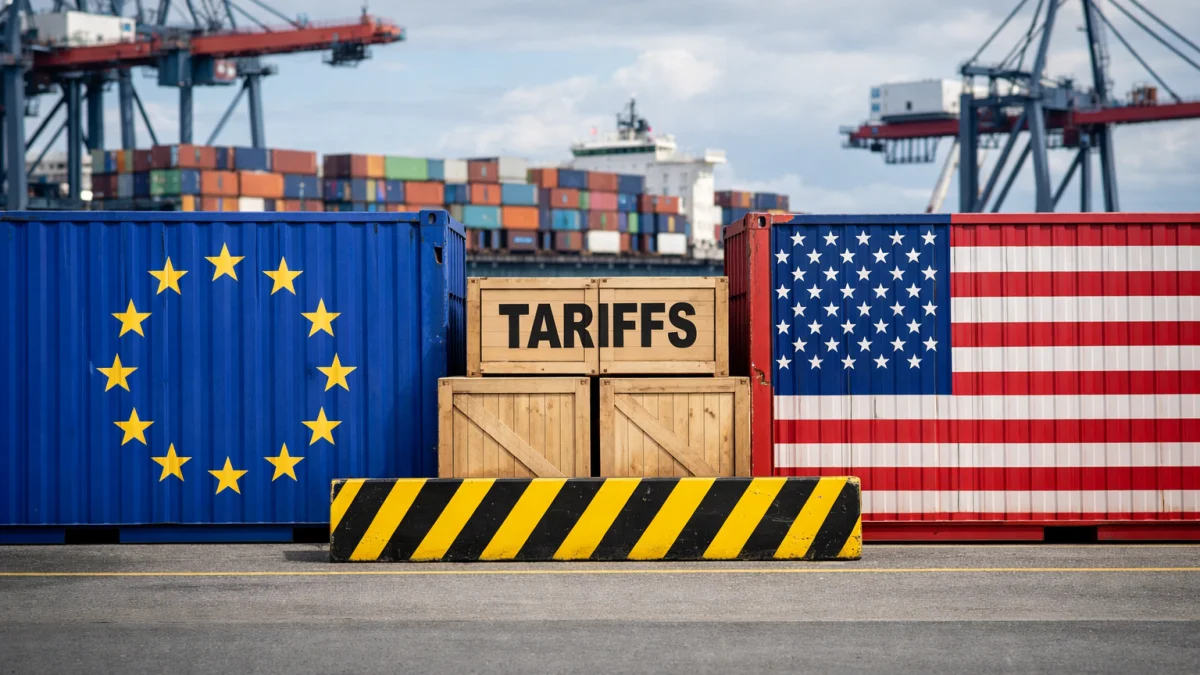


BRUSSELS — European Union tariffs and trade measures affecting U.S. goods continue to generate friction in trans-Atlantic relations, even after last year’s framework agreement aimed at stabilizing bilateral trade, officials and industry groups said.
The European Parliament on Tuesday approved legislation to eliminate EU duties on a wide range of U.S. industrial goods, fulfilling key commitments under the July 2025 U.S.-EU framework agreement. The vote advances the EU’s side of the deal, which caps most U.S. tariffs on EU exports at 15 percent while seeking greater market access for American products in Europe.


Under the agreement, known as the Turnberry framework, the EU committed to removing tariffs on U.S. industrial exports and providing preferential access for certain agricultural and seafood products. In exchange, the United States agreed to apply a 15 percent ceiling on most EU goods, with higher rates remaining in place for steel, aluminum and copper.
Implementation has faced delays. The European Parliament had previously suspended consideration of the measures amid broader tensions, including U.S. tariff policy shifts following a February Supreme Court ruling that limited certain presidential tariff authorities. EU officials have pressed for predictability and adherence to the agreed ceiling.
Sector-specific issues persist. Tariffs on steel, aluminum and related products remain elevated on both sides, and concerns linger over non-tariff barriers, digital regulations and agricultural market access. U.S. officials have at times criticized the pace of EU implementation, while European counterparts have expressed reservations about recent U.S. tariff adjustments.
“The European Parliament’s approval ... is important for German auto makers seeking clarity but trade barriers remain too high,” a German industry representative said, highlighting ongoing concerns in key export sectors.
The framework deal followed months of tensions after the U.S. imposed broad reciprocal tariffs in 2025, prompting the EU to prepare retaliatory measures on billions of dollars worth of American goods. Those countermeasures were paused during negotiations.
Bilateral trade exceeds $1.5 trillion annually, making the relationship one of the world’s largest. The EU has maintained that the agreement provides stability, while noting that full ratification and implementation are still required in some areas. Details on timelines for complete rollout of the tariff reductions remain subject to further EU legislative steps.
As of mid-June 2026, both sides continue discussions on unresolved issues, including supply chain cooperation and specific product exemptions. No new major retaliatory tariffs have been imposed recently, but officials on both sides acknowledge that differences over trade policy continue to test trans-Atlantic ties.