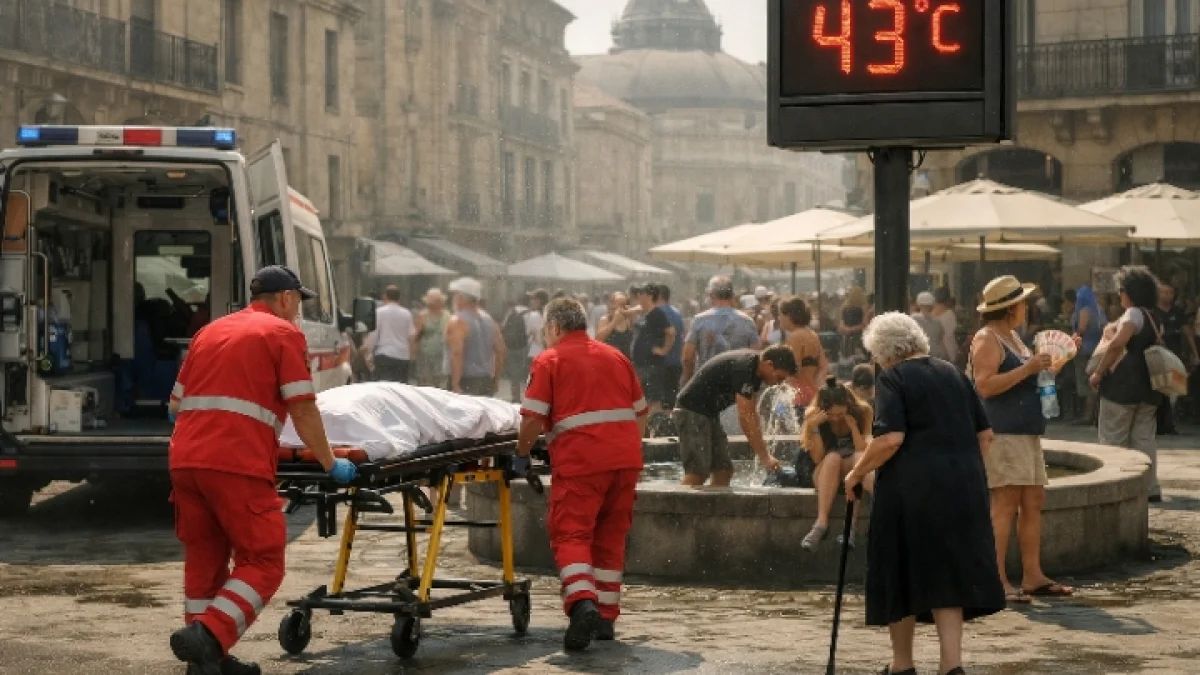


Europe's early-summer heat wave has been linked to more than 10,000 excess deaths across the continent, according to preliminary mortality data and national health authorities, making it one of the clearest indications yet that extreme heat is becoming a major public health challenge rather than solely a meteorological event. While assessments remain preliminary and some countries are still compiling mortality records, officials and researchers say the scale of excess deaths during late June reflects the combination of record-breaking temperatures, an aging population and increasing exposure to climate-driven heat extremes.
The significance extends beyond the immediate death toll. Public health agencies increasingly assess heat through excess mortality—the number of deaths above historical expectations—because many fatalities are not recorded as directly caused by heat. Extreme temperatures often worsen cardiovascular, respiratory and kidney diseases or contribute to dehydration and heat stress, particularly among older adults and people with chronic illnesses. As a result, the full impact of a heat wave frequently becomes apparent only after mortality data are analyzed over subsequent weeks.


Preliminary data indicate that the overwhelming majority of excess deaths occurred among people aged 65 and older. Several countries reported sharp increases in mortality during the final week of June, with France, Germany, Britain, Belgium, Spain and the Netherlands among those recording significant increases above seasonal norms. Although national methodologies differ and some figures remain subject to revision, public health experts say the broad consistency across multiple surveillance systems strengthens confidence that the mortality surge was primarily associated with extreme heat.
The episode also reinforces scientific assessments that Europe has become particularly vulnerable to rising temperatures. According to the World Health Organization and the European climate community, Europe is warming roughly twice as fast as the global average. Higher baseline temperatures increase both the likelihood and intensity of heat waves, while urban development, limited nighttime cooling and aging infrastructure amplify health risks during prolonged hot periods.
Researchers emphasize that climate change does not create every heat wave but substantially alters their frequency and severity. Attribution studies conducted after recent European heat events have consistently concluded that human-induced warming has made such extremes significantly more likely. In England and Wales, researchers from Imperial College London, the Met Office and the London School of Hygiene & Tropical Medicine estimated that more than 2,700 excess deaths occurred during the May and June heat waves, with roughly 42% attributed to the additional warming caused by climate change.
The latest mortality estimates also highlight persistent adaptation challenges despite years of planning. Following the devastating 2003 European heat wave, governments expanded heat warning systems, emergency communication, public cooling advice and surveillance programmes. Those measures have improved preparedness in many countries, yet health officials say the increasing frequency of extreme heat is testing systems originally designed for less frequent events. Hospitals, ambulance services and elderly care facilities have all reported heightened pressure during successive heat episodes this year.
Another important finding is that vulnerability extends beyond traditionally identified high-risk groups. While older adults remain disproportionately affected, officials note that outdoor workers, people living in poorly insulated housing, individuals with pre-existing health conditions and residents of densely built urban areas also face elevated risks. Public health specialists increasingly view housing quality, access to cooling, workplace protections and urban planning as central components of climate resilience rather than separate policy issues.
The economic implications are also becoming more apparent. Extreme heat has disrupted transport networks, reduced labour productivity, strained electricity systems through increased cooling demand and heightened wildfire risk across several parts of Europe. Such impacts illustrate that heat waves affect multiple sectors simultaneously, increasing pressure on governments to integrate climate adaptation into infrastructure, health care and emergency planning rather than treating heat as an isolated seasonal hazard.
Experts caution, however, that excess mortality estimates should be interpreted carefully. They measure deaths above expected seasonal levels rather than laboratory-confirmed heat fatalities, and reporting methods vary among countries. Final mortality totals often change as death registrations are completed and statistical analyses are refined. Nevertheless, epidemiologists regard excess mortality as one of the most reliable indicators of the overall health burden associated with extreme weather because it captures both direct and indirect effects.
Current evidence indicates that the 2026 European heat wave has become one of the deadliest recent heat events on the continent outside the most severe historical episodes. Health authorities, meteorological agencies and international organizations continue to update mortality assessments, evaluate the effectiveness of heat-response measures and monitor further periods of extreme temperatures during the remainder of the summer. While the final death toll has yet to be confirmed, officials agree that the latest findings underscore the growing interaction between climate change, demographic vulnerability and public health across Europe.