

WASHINGTON — Federal Reserve Chair Kevin Warsh has signaled a new approach to U.S. monetary policy decisions, emphasizing reduced reliance on forward guidance and placing greater weight on incoming economic data, according to remarks following the central bank's June policy meeting and subsequent public statements.
The Federal Reserve left its benchmark interest rate unchanged at its June 16-17 meeting, while updated economic projections indicated that more policymakers now expect the possibility of higher borrowing costs later this year as inflation remains above the central bank's 2% target, the Fed said.


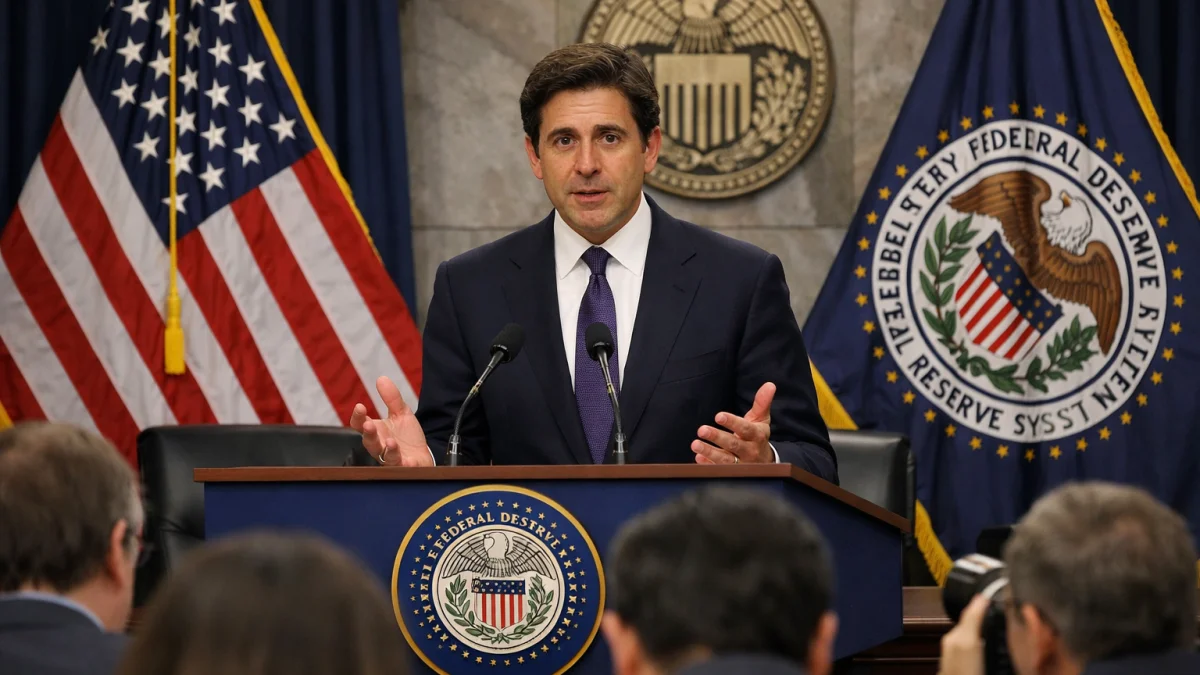
Speaking after the meeting, Warsh said the Federal Open Market Committee had shortened its policy statement and removed language providing forward guidance about future policy moves.
"You might have already noticed something. A difference in today's policy statement. It's a bit shorter, a bit simpler, and it dispenses with some older language," Warsh said. "Absent also is so-called forward guidance, which we agreed was not well suited to the current policy conjuncture."
Warsh also said he had chosen not to submit his own interest-rate projections in the committee's Summary of Economic Projections, while encouraging other policymakers to continue providing theirs under the existing process. He said the decision reflected his long-held views about the current structure of the projections.
The changes mark a shift in how the central bank communicates its policy outlook, with officials indicating that future decisions will depend more directly on economic conditions rather than advance signaling. The June meeting retained the Fed's focus on restoring price stability as inflation remained above target, while policymakers acknowledged continued uncertainty surrounding the economic outlook.
Economists and market participants have closely examined the revised communication strategy. A Reuters poll published on Friday found that most economists expect the Federal Reserve to keep interest rates unchanged for the remainder of 2026 despite elevated inflation, although a growing number of policymakers now anticipate at least one rate increase before year-end.
Analysts have also noted that the reduced use of forward guidance could make future policy decisions less predictable for financial markets, while supporters of the approach say it gives policymakers greater flexibility to respond to evolving economic data.
As of Saturday, the Federal Reserve had not announced additional changes to its monetary policy framework beyond those outlined during Warsh's first meeting as chair. Officials are expected to provide further updates at upcoming policy meetings and public appearances.