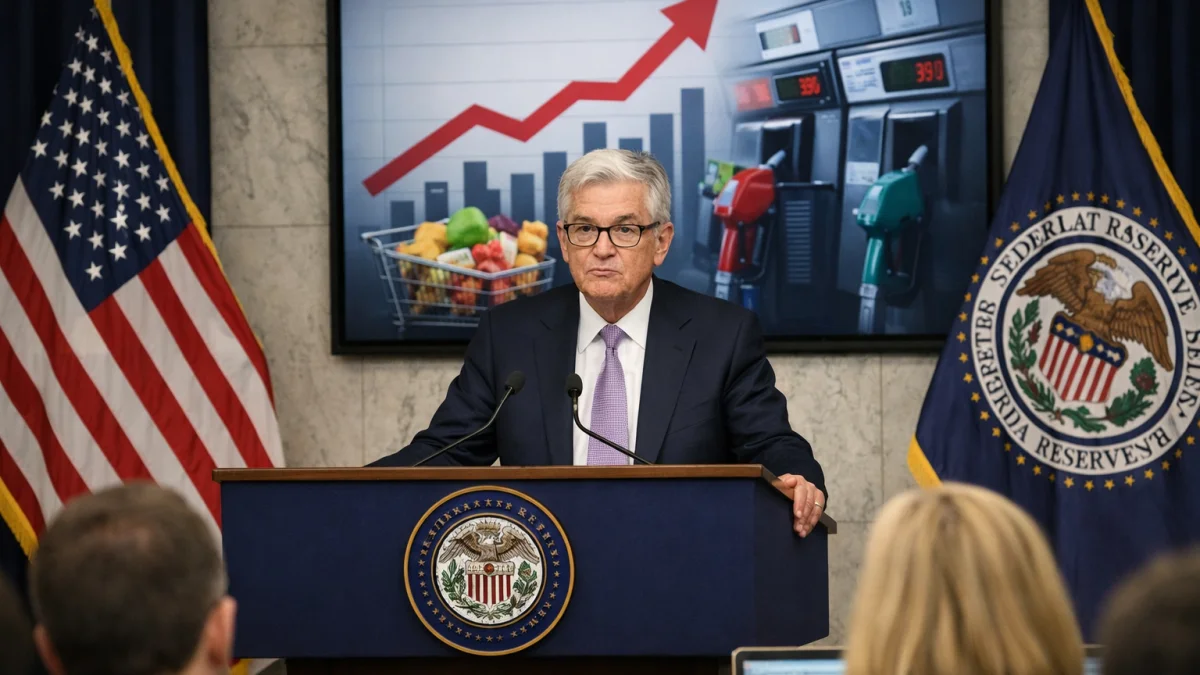


WASHINGTON — Latest U.S. inflation data showing acceleration in consumer and producer prices has further diminished expectations for Federal Reserve interest rate cuts this year, economists and market participants said.
The Consumer Price Index rose 4.2 percent in the 12 months through May, up from 3.8 percent in April, the Bureau of Labor Statistics reported on June 10. Core CPI, excluding food and energy, increased 2.9 percent over the year. Producer prices advanced 6.5 percent in the 12 months through May, the largest gain since late 2022, according to data released June 11.


The figures come amid elevated energy costs linked to the conflict in the Middle East. Nearly 70 percent of economists in a Reuters poll conducted June 4-9 forecast that the Fed would hold its key rate steady in the 3.50 percent-3.75 percent range for the remainder of 2026.
Fed officials have indicated that progress toward the central bank's 2 percent inflation target has been slower than anticipated. In minutes from its April meeting released in May, participants noted that inflation remained elevated, partly due to energy price increases and other factors.
"While tariff effects should begin to fade soon, the combined impact of these three forces is likely to remain roughly steady this year, keeping year-over-year core PCE inflation at 3%+ throughout 2026," Goldman Sachs chief U.S. economist David Mericle said in a recent analysis.
The data has led major financial institutions to push back expectations for rate reductions. Goldman Sachs now anticipates the first cuts in June and December 2027. Market-implied probabilities for any easing in 2026 have fallen sharply.
The Federal Reserve held its benchmark rate unchanged following its March meeting and has maintained that stance. Officials have weighed risks from persistent price pressures against a stabilizing labor market. The Fed's preferred inflation gauge, the personal consumption expenditures price index, stood at 3.8 percent in April.
Critics and some analysts have pointed to supply shocks from geopolitical tensions as a primary driver of the recent uptick, while others note stickiness in services prices. The central bank continues to monitor incoming data closely ahead of its June 16-17 policy meeting.
As of June 13, 2026, economists widely expect the Fed to keep rates on hold in the near term. Details on any potential shifts in the central bank's economic projections remain unclear until the upcoming meeting concludes.