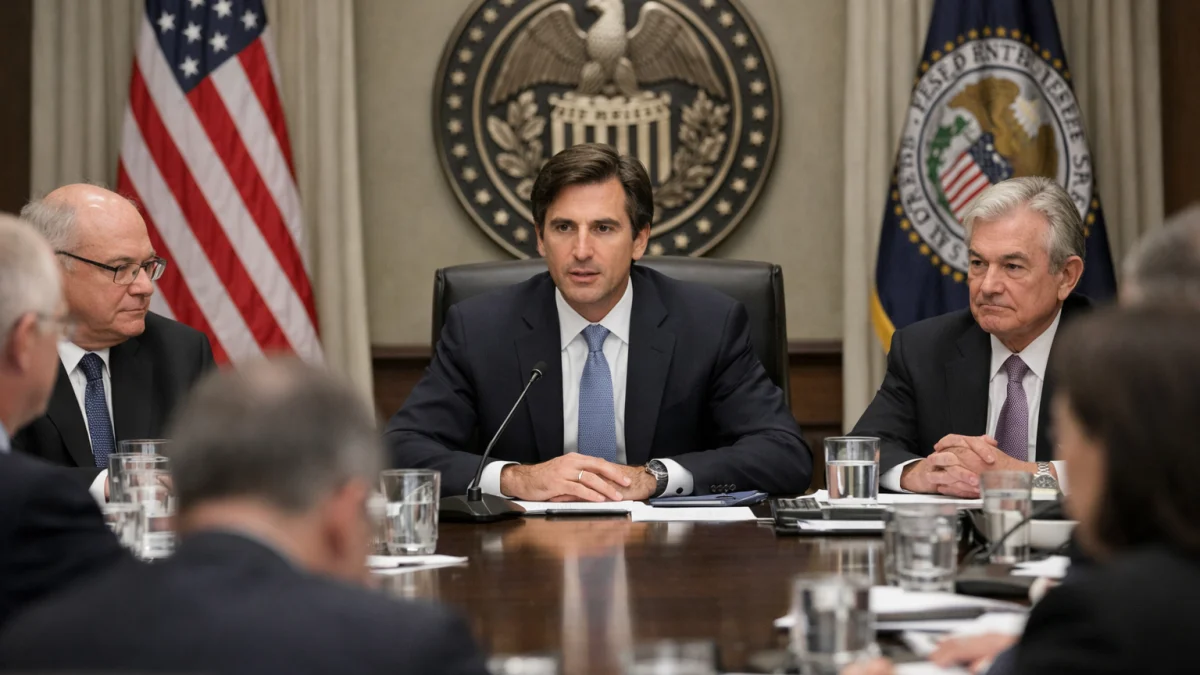


WASHINGTON — The Federal Reserve held interest rates steady on Wednesday in the first meeting chaired by new Chairman Kevin Warsh.
The central bank’s Federal Open Market Committee voted unanimously to maintain the target range for the federal funds rate at 3.5 percent to 3.75 percent, officials said.


The decision comes as the Fed navigates persistent inflation pressures amid a solid labor market and other economic indicators. Warsh, who took office in May after being nominated by President Donald Trump, presided over the two-day meeting.
"This marks an important step as we continue to monitor economic developments closely," Warsh said in prepared remarks following the announcement, according to reports from the meeting.
The Fed has kept rates unchanged throughout 2026, with the last adjustment occurring in December 2025. Economists had widely expected no change at this meeting.
Officials also updated their economic projections and pared language from the policy statement that had suggested a bias toward future rate cuts, according to statements released after the meeting. Details on the full Summary of Economic Projections remained under review.
Warsh, a former Fed governor, assumed the chairmanship after Jerome Powell. His first meeting as chair drew attention to potential shifts in communication style and policy approach.
The U.S. economy has shown resilience with strong job gains, though inflation remains above the Fed’s 2 percent target, influenced by factors including energy prices. No immediate rate hike was signaled for the near term.
Markets reacted with modest movements following the announcement, with some analysts noting the removal of easing bias as a cautious signal.
The next FOMC meeting is scheduled for later in the summer. Officials said they would continue to assess incoming data on inflation, employment and growth before considering any adjustments.
Warsh is expected to hold a press conference to discuss the decision and answer questions from reporters. Further details on his longer-term outlook for monetary policy were not immediately available.