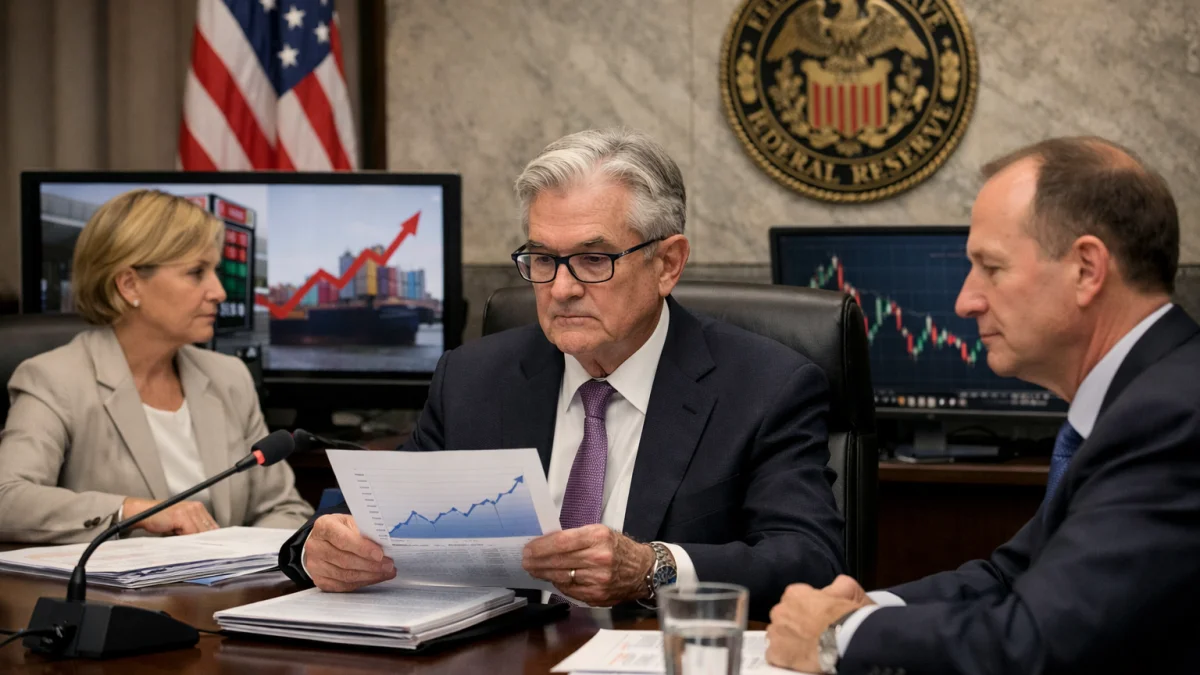


WASHINGTON — Federal Reserve officials are closely monitoring inflation pressures stemming from recent surges in global energy prices linked to Middle East tensions, as the central bank prepares for its policy meeting this week, according to statements and minutes from recent gatherings.
Inflation has moved higher in recent months, with headline measures rising due in part to energy costs, while core inflation remains elevated above the Fed’s 2 percent longer-run target, Federal Open Market Committee participants noted in April meeting minutes released in May. The committee maintained the target range for the federal funds rate at 3.5 percent to 3.75 percent at that time.


Recent data showed year-over-year headline inflation around 4 percent in some measures, driven largely by energy price increases, with forecasters adjusting projections upward for 2026, the Philadelphia Fed’s Survey of Professional Forecasters indicated in May. Nowcasts from the Cleveland Fed for June pointed to continued pressures.
Officials have highlighted risks from global developments, including energy market disruptions. A majority of participants at the April meeting observed that inflation remained above target and could take longer to return to 2 percent than previously anticipated, the minutes showed.
“Inflation is elevated, in part reflecting the recent increase in global energy prices,” the FOMC stated in its April policy announcement.
The monitoring comes as the Fed, now under Chair Kevin Warsh, assesses the combined effects of energy shocks, prior tariff impacts on goods prices, and a stabilizing labor market. Short-term inflation expectations among households have also risen modestly in recent surveys conducted by the New York Fed.
Background factors include supply disruptions in energy markets tied to regional conflicts, which have pushed up costs for consumers and businesses. Core inflation, excluding volatile food and energy components, has shown persistence in services and goods sectors influenced by earlier policy measures.
Industry and economic analysts have pointed to both transitory and more persistent elements in current price trends. Banks and businesses have reported mixed signals, with some sectors experiencing cost pass-through while others see moderating pressures.
The Fed’s upcoming two-day meeting starting Tuesday is expected to provide further clarity on its assessment. Markets widely anticipate no immediate change in rates, with focus on updated projections and any signals regarding future policy adjustments.
As of Monday, Fed officials continued to emphasize data-dependent decision-making, weighing risks to both employment and price stability. Comprehensive June inflation readings and other economic indicators will inform ongoing deliberations, with full details on the extent of recent events’ impacts still being evaluated.