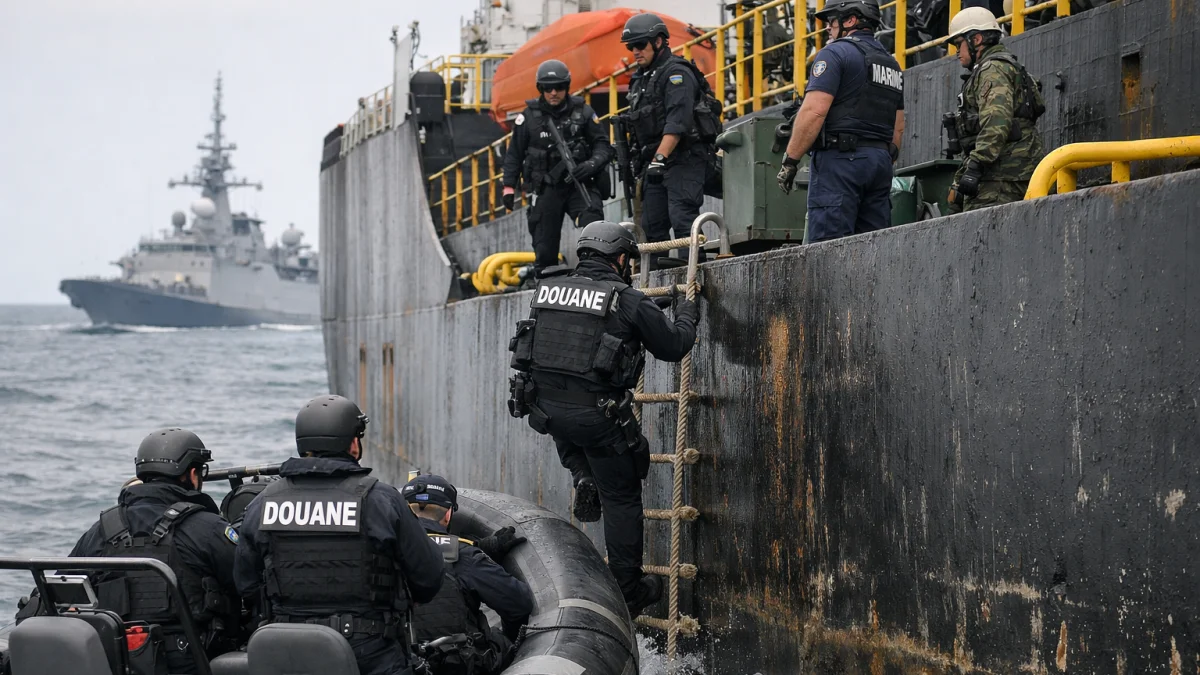


France’s intensified campaign against vessels suspected of belonging to Russia’s “shadow fleet” is testing how far Western sanctions enforcement can extend beyond financial restrictions and into direct control of maritime trade. The latest operation, in which French forces intercepted the tanker Deliver near Sicily, marked another escalation in Europe’s effort to disrupt ships accused of transporting Russian oil through opaque ownership structures, questionable registrations, and other methods designed to bypass restrictions.
The significance of the seizures lies in the shift from tracking and sanctioning vessels to physically stopping them. Since sanctions on Russian energy exports were introduced after Moscow’s full-scale invasion of Ukraine in 2022, governments have relied primarily on financial measures, including price caps, asset restrictions, and bans on maritime services. The growth of the shadow fleet has challenged that approach by creating a parallel shipping network that allows sanctioned or restricted oil flows to continue through alternative flags, unclear ownership chains, and non-Western commercial networks.


French authorities have increasingly used maritime enforcement powers when they believe vessels violate sanctions rules or maritime regulations. The Deliver interception followed earlier French actions involving ships such as the Grinch and Tagor, where authorities cited concerns including invalid or disputed flags and suspected links to sanctioned oil transport. In the Tagor case, French officials said the vessel had departed from Russia and was operating under a false Cameroonian flag, while the ship’s detention involved questions over nationality and compliance with maritime law.
The legal foundation for such operations remains a central issue. International maritime law generally gives vessels protection from interference when they are properly registered and operating under a recognized flag. However, ships that are effectively stateless or using invalid registrations can face inspection and enforcement actions under maritime rules. Western governments argue that shadow fleet operators exploit gaps in the international system by changing flags, using complex corporate structures, and relying on limited transparency in ownership and insurance arrangements.
The environmental dimension has also become a growing concern. Many shadow fleet vessels are older tankers with unclear maintenance histories, limited insurance coverage, and uncertain regulatory oversight. European officials have linked the issue not only to sanctions enforcement but also to maritime safety and the potential risk of accidents involving aging ships carrying large quantities of crude oil. French President Emmanuel Macron has argued that vessels bypassing sanctions and maritime rules also create broader security and environmental concerns.
However, the impact of individual seizures remains debated. Supporters of tougher enforcement argue that detentions raise costs for operators, create uncertainty for companies involved in sanctions evasion, and demonstrate that restrictions are being actively enforced. France’s previous cases have resulted in penalties, investigations, and temporary immobilization of vessels, including the release of the Grinch after its owner paid a multi-million-euro fine.
Critics and some analysts point to the limits of the strategy. The shadow fleet is not a single organized entity but a dispersed network involving shipping companies, intermediaries, insurers, registries, and buyers in countries that do not participate in Western sanctions. As a result, removing individual vessels may impose costs without eliminating the wider system. The European Union has responded by expanding sanctions lists targeting hundreds of vessels linked to Russia’s shadow fleet, but enforcement remains dependent on legal authority, international cooperation, and access to maritime jurisdictions.
The diplomatic consequences are also increasing. Moscow has rejected Western maritime actions, with Russian officials describing some interceptions as unlawful. Russia has continued to export oil through alternative routes and markets, particularly in Asia, while European governments argue that stronger enforcement is necessary to prevent sanctions from being undermined.
France’s recent operations therefore represent both a practical enforcement effort and a test of the broader sanctions system. The confirmed situation is that European countries are moving toward more direct maritime interventions against suspected shadow fleet vessels, while legal disputes, international maritime rules, and the adaptability of global oil shipping networks continue to shape the outcome. Authorities are monitoring further vessel movements, court proceedings, and coordination among European partners to determine whether seizures become a sustained enforcement tool or remain limited interventions against a much larger sanctions-evasion network.