

WASHINGTON — Global economic growth projections remain broadly stable despite continuing geopolitical tensions, the International Monetary Fund said this week, while warning that risks tied to energy markets, inflation and trade disruptions remain elevated.
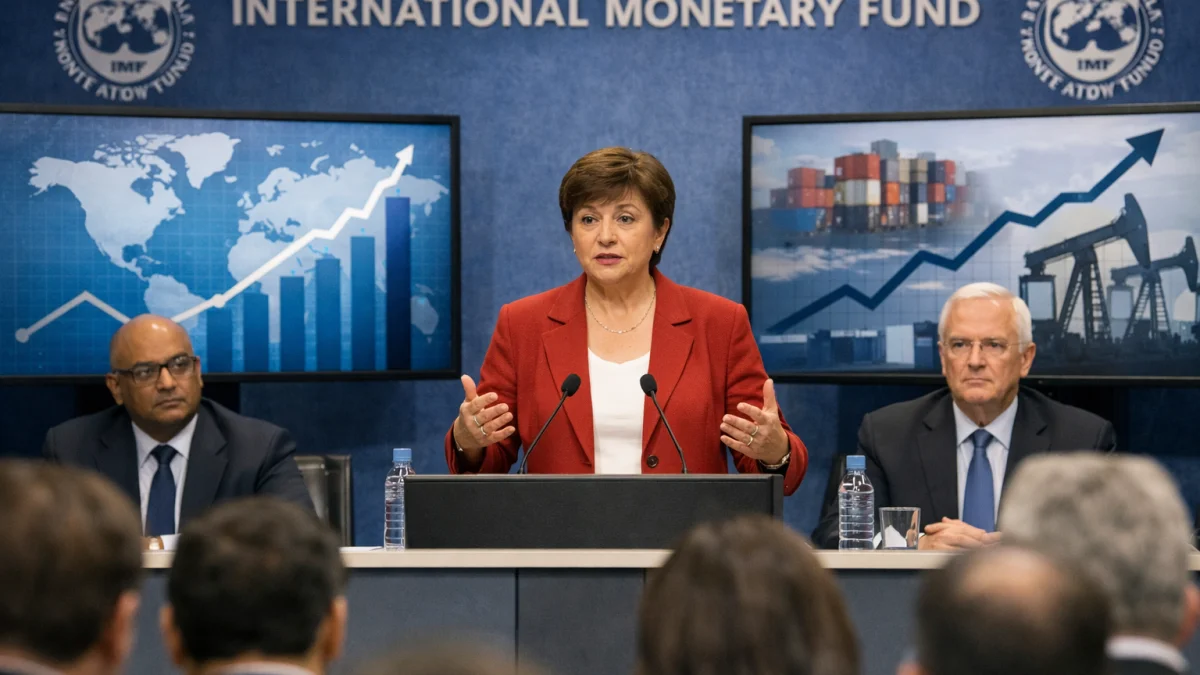
IMF Managing Director Kristalina Georgieva said on Monday that the global economy was not showing signs of a broad slowdown despite recent conflicts and market volatility. Speaking ahead of meetings involving leaders of major economies, Georgieva said a recently announced U.S.-Iran agreement had reduced some immediate concerns over global energy supplies, although uncertainty remained.


“There is no global slowdown in sight yet, but risks are high,” Georgieva said, according to Reuters. She noted that the outlook continues to depend on developments in energy markets and the broader geopolitical environment.
The IMF's most recent baseline forecast projects global growth of about 3.1% in 2026 and 3.2% in 2027, assuming geopolitical disruptions remain limited in duration and scope. The projections were outlined in the Fund’s April World Economic Outlook, which assessed the impact of conflict-related disruptions on inflation, trade and financial conditions.
According to the IMF, the global economy has demonstrated resilience despite higher trade barriers, elevated uncertainty and rising energy costs. The organization said inflation is expected to increase modestly in 2026 before resuming a downward path the following year. However, the Fund cautioned that downside risks continue to outweigh positive factors.
The assessment comes as policymakers monitor the economic effects of geopolitical tensions across several regions. Rising commodity prices and supply-chain concerns have prompted governments and central banks to review growth and inflation expectations. Earlier this month, the World Bank lowered its own global growth forecast, citing the potential impact of energy-market disruptions and financial-market volatility linked to international conflicts.
IMF officials said the effects of geopolitical tensions vary significantly by region. Commodity-importing economies remain vulnerable to higher energy and food costs, while some larger economies have continued to benefit from technology investment and relatively strong domestic demand.
The Fund has also highlighted the importance of policy coordination, fiscal sustainability and efforts to preserve financial stability. In its latest outlook, the IMF said deeper geopolitical fragmentation, prolonged conflict or renewed trade tensions could weaken growth prospects and increase market volatility.
As of mid-June, the IMF had not announced a revision to its baseline global growth forecast. Officials said they continue to monitor developments in energy markets, inflation trends and geopolitical conditions ahead of future economic updates.