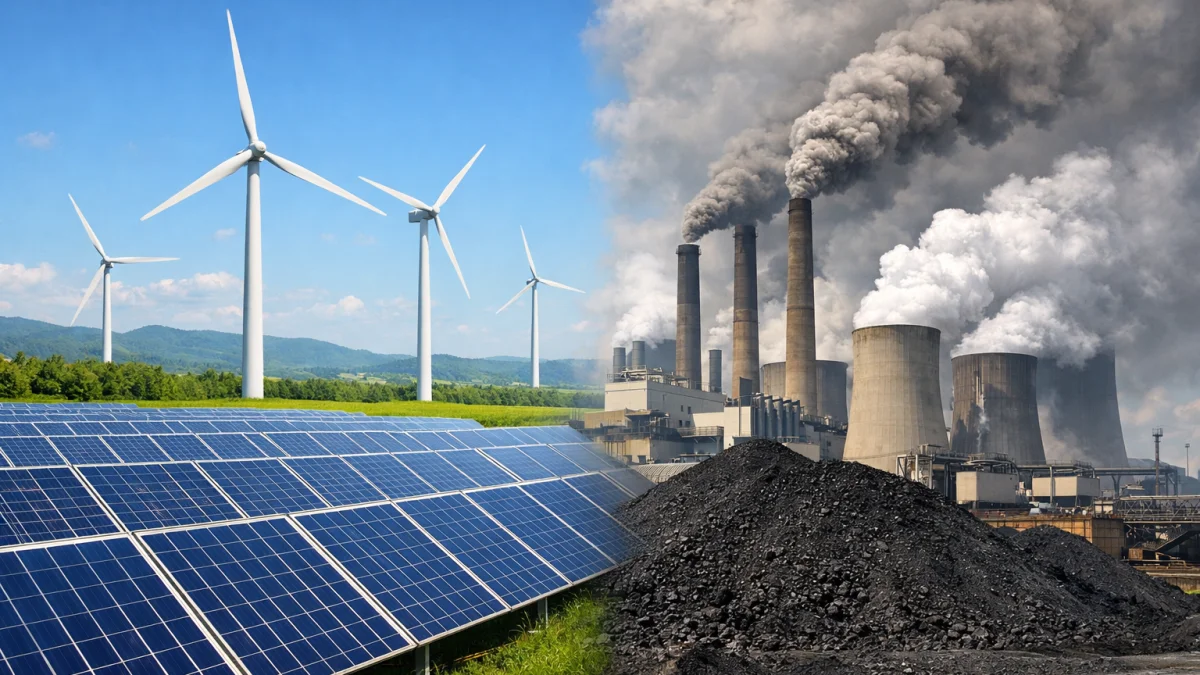


LONDON — Renewables overtook coal as the largest source of global electricity generation in 2025 for the first time in the modern era, according to new data from the energy think tank Ember.
The milestone, detailed in Ember’s Global Electricity Review 2026 released this week, showed renewables accounting for 33.8% of worldwide electricity output, or about 10,730 terawatt-hours, compared with coal’s 33.0%, or 10,476 TWh.


Solar and wind power drove the shift, with continued rapid growth pushing renewables above one-third of the global mix for the first time. Coal generation declined by 63 TWh, or 0.6%, marking the first annual fall since the Covid-19 disruptions in 2020.
“Renewables overtook coal power in 2025,” the report stated, describing the development as a historic milestone in the global power system.
The change occurred amid rising global electricity demand, which renewables helped meet while contributing to a slight overall reduction in fossil fuel generation. Solar alone met a substantial share of new demand growth.
The overtake follows years of strong expansion in renewable capacity, particularly in major markets including China, Europe and the United States. Earlier mid-year data from Ember had already indicated the crossover was underway in the first half of 2025.
Coal remains the single largest individual source of electricity in several regions, notably parts of Asia, where it continues to play a significant role in power supply. Industry representatives have previously noted that reliable baseload power and economic considerations influence energy choices in developing economies.
The International Energy Agency has projected that renewables will further solidify their position as the leading source in coming years, with solar expected to continue rapid growth.
Ember’s analysis, which draws on data from dozens of countries, covers full-year 2025 results. Global electricity demand growth was largely met by low-carbon sources, according to the report.
The findings come as governments and companies pursue climate targets and energy security goals. Details on the exact pace of future shifts will depend on ongoing capacity additions, policy decisions and economic factors. Officials and analysts continue to monitor developments in major economies.