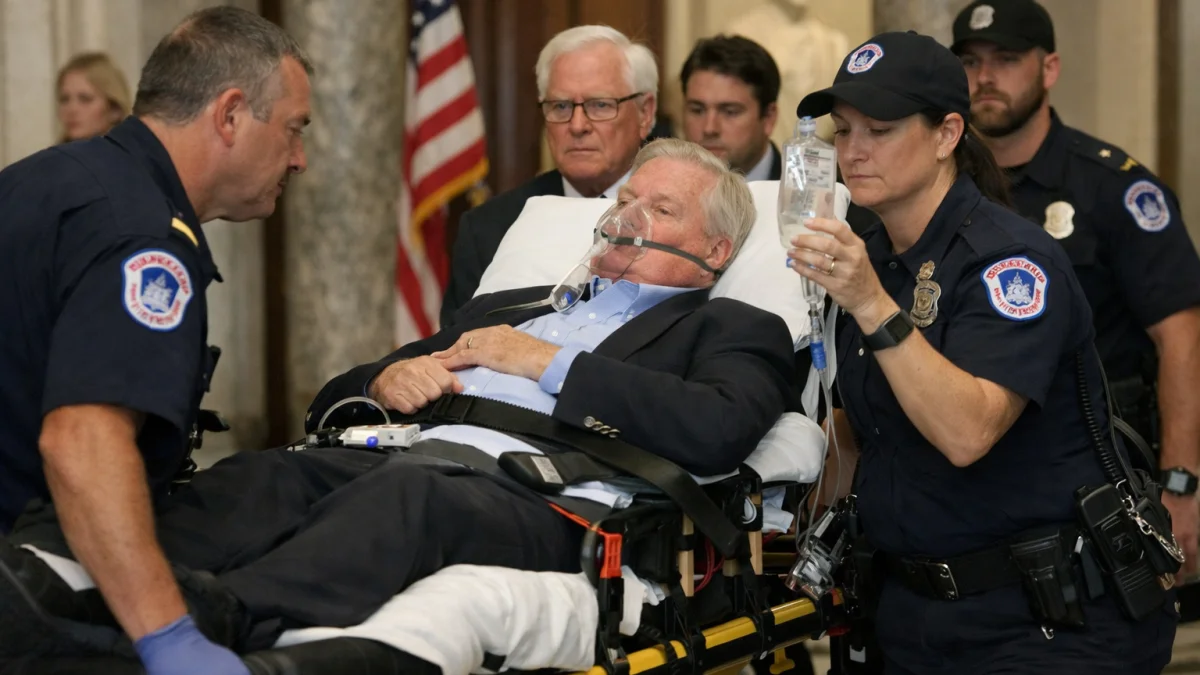


The sudden death of U.S. Senator Lindsey Graham following what his office described as a "brief and sudden illness" has renewed attention to how the U.S. Senate manages the health of its members, highlighting longstanding questions about transparency, institutional continuity and the operational risks posed by an aging legislature. Graham, 71, died on July 11, only days after remaining publicly active and traveling overseas, with his office providing no immediate details on the cause of death beyond requesting privacy for his family.
The significance of the development extends beyond the loss of a senior Republican lawmaker. It underscores the limited formal mechanisms governing public disclosure of lawmakers' health, an issue that has periodically resurfaced whenever members of Congress experience serious illness, extended absences or sudden incapacity. Unlike the executive branch, where presidential succession and medical reporting have established constitutional and political expectations, Congress relies largely on individual members and their offices to determine what health information is disclosed publicly.


Graham's death came after decades in public office and while he remained an influential voice on national security and foreign policy. He had recently returned from Ukraine and continued participating in public activities before his death, making the announcement particularly unexpected. Officials have not released additional medical information, and no federal requirement compels senators to disclose diagnoses or underlying health conditions.
The episode also draws attention to the demographic profile of the Senate. Many of its most senior members are in their seventies or eighties, reflecting both electoral success and the chamber's institutional preference for seniority. Advanced age does not itself indicate diminished capacity, and many lawmakers continue to perform demanding legislative duties effectively. Nevertheless, medical experts have long noted that the likelihood of acute cardiovascular events and other serious illnesses increases with age, making succession planning and institutional resilience increasingly relevant.
Health-related disruptions have repeatedly affected congressional operations in recent years. Extended medical absences have delayed committee work, judicial confirmations and closely contested floor votes. In a narrowly divided Senate, the temporary or permanent loss of even one member can influence legislative scheduling, committee leadership and partisan balance until replacement procedures are completed.
Unlike vacancies in the House of Representatives, which require special elections, Senate vacancies are governed primarily by the Seventeenth Amendment and state law. In South Carolina, the governor is expected to appoint an interim senator until a special election is held according to state procedures. While those mechanisms provide continuity of representation, they do not address broader questions about how Congress should prepare for unexpected medical emergencies involving sitting members.
Medical privacy remains central to the debate. Members of Congress enjoy the same legal protections over personal health information as other Americans. Advocates of limited disclosure argue that elected officials should retain control over sensitive medical details unless a condition demonstrably impairs their constitutional responsibilities. Others contend that voters have a legitimate interest in understanding whether serious illnesses could affect a senator's ability to serve, particularly when members occupy influential committee positions or leadership roles.
The discussion has intensified periodically following illnesses involving lawmakers from both major parties. Those episodes have prompted bipartisan calls from some governance experts for clearer voluntary disclosure standards rather than mandatory publication of detailed medical records. Proposals have included independent physician assessments, standardized health updates after prolonged absences and clearer procedures for communicating temporary incapacity to congressional leadership.
Constitutional scholars generally note that Congress intentionally provides broad autonomy to its members. The Constitution establishes qualifications for office and permits each chamber to judge the qualifications of its own members, but it contains no comprehensive framework governing temporary medical incapacity comparable to presidential succession under the Twenty-Fifth Amendment. As a result, practical responses often depend on political judgment rather than predetermined institutional rules.
Graham's death also illustrates the operational challenges created when senior policymakers remain deeply engaged in domestic and international affairs until shortly before unexpected medical events. Modern senators routinely maintain demanding travel schedules, participate in classified briefings, oversee committee responsibilities and campaign simultaneously, placing substantial physical demands on officeholders regardless of age.
Public health specialists caution against drawing conclusions about any individual's medical condition without official confirmation. While emergency dispatch recordings cited by several media organizations indicate first responders were called to Graham's Washington residence, officials have not publicly identified a definitive cause of death, and investigations into sudden deaths routinely avoid premature conclusions pending medical examination.
For now, the confirmed facts remain limited. Graham's office has stated only that the senator died after a brief and sudden illness, while his family has requested privacy. State officials are expected to begin the statutory process for filling the Senate vacancy, and congressional leaders have issued tributes recognizing his decades of public service. Whether the episode prompts renewed bipartisan discussion over congressional health disclosure practices and institutional continuity will depend on subsequent legislative action and any additional official information released about the circumstances surrounding his death.