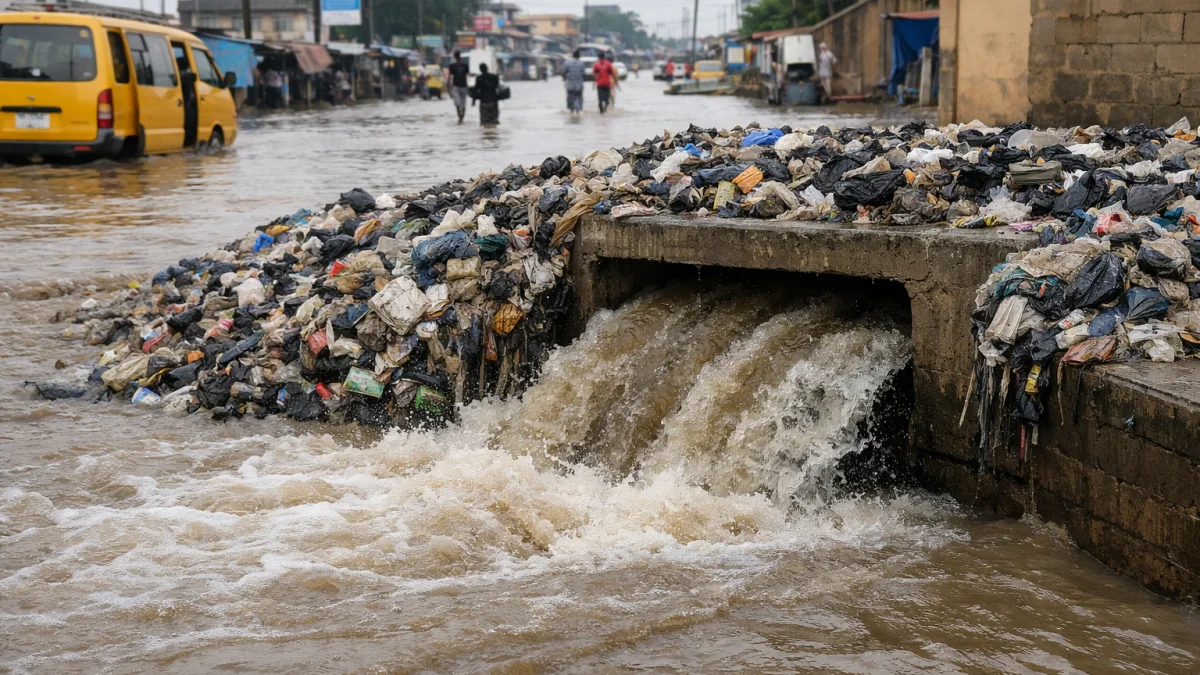


ACCRA, Ghana — Heavy flooding struck multiple areas of Ghana’s capital Accra over the weekend as torrential rains overwhelmed drainage systems clogged by accumulated trash and waste, disrupting daily life and submerging roads and low-lying neighborhoods.
The downpours, which began intensifying around June 4, 2026, affected districts including Kaneshie, Circle, Odawna and other parts of the city, according to local authorities and media reports. Residents reported submerged streets, stranded vehicles and inundated homes and businesses as floodwaters rose rapidly.


Officials from the National Disaster Management Organisation (NADMO) and the Accra Metropolitan Assembly attributed much of the severity to garbage blocking gutters and culverts, preventing water from flowing freely. Greater Accra Regional NADMO Director Dennis Nartey Ajannor noted that indiscriminate dumping of refuse into drains exacerbates the problem during heavy rains.
“Many residents continue to dump rubbish into drains, which blocks water channels and leads to overflowing whenever it rains,” Ajannor said in comments reported by local media.
The flooding comes more than a decade after the deadly June 3, 2015 disaster in Accra, which killed over 150 people and highlighted similar issues of poor drainage, waste management and unplanned development. Despite repeated calls for improvement, choked drains remain a recurring challenge, officials and residents said.
Accra Mayor Michael Kpakpo Allotey recently announced incentives for residents to report individuals dumping waste into drains, offering rewards to encourage better compliance. City authorities have undertaken desilting efforts, but critics say enforcement and infrastructure upgrades lag behind the capital’s rapid urbanization.
Flooding in Accra is driven by a combination of factors, including outdated drainage systems, encroachment on waterways and increased rainfall intensity linked to broader environmental patterns. Waste management remains a key bottleneck, with plastic and other debris frequently cited as major obstructions.
No widespread fatalities were immediately reported from the latest floods, though some areas saw property damage and temporary displacement. Emergency services responded to affected communities, with assessments ongoing as of Monday.
As cleanup and recovery efforts continued, city officials urged residents to avoid dumping waste in drains and to heed weather warnings. Long-term solutions discussed in recent years include improved waste collection, better urban planning and major drainage infrastructure projects, though details on immediate new commitments remained limited.
The latest flooding underscores persistent vulnerabilities in Ghana’s largest city during the rainy season.