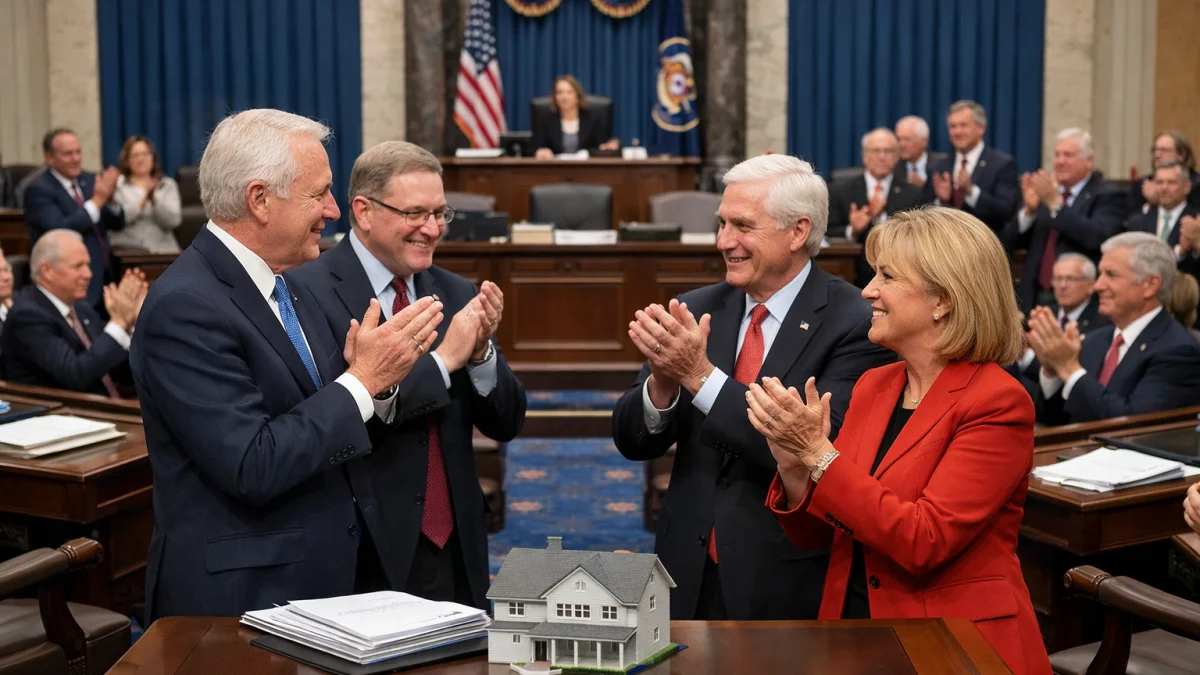


WASHINGTON — The U.S. Senate has approved a sweeping housing affordability package with strong bipartisan support, advancing legislation that lawmakers say is intended to increase housing supply, reduce regulatory barriers, and expand access to affordable homes amid persistent concerns over housing costs nationwide.
The measure, known as the 21st Century ROAD to Housing Act, passed the Senate on Monday by an 85-5 vote after months of negotiations between Republican and Democratic lawmakers. The bill was one of the broadest bipartisan housing initiatives considered by Congress in recent years and was designed to address shortages in housing supply that many policymakers have linked to rising home prices and rents.


Senate Banking Committee Chairman Tim Scott, a Republican, and committee ranking member Elizabeth Warren, a Democrat, led negotiations on the legislation. According to lawmakers, the bill combines dozens of proposals aimed at encouraging residential construction, modernizing federal housing programs, expanding financing options, and reducing administrative obstacles that can delay development.
“The measure was the result of years of work to lower costs, expand housing supply, cut red tape, protect taxpayers, and help more Americans achieve the dream of homeownership,” Scott said following the Senate vote.
Among the most closely watched provisions is a restriction on large institutional investors purchasing additional single-family homes once they exceed a specified ownership threshold. The final version reflected compromises reached during negotiations and omitted some stricter provisions that had appeared in earlier drafts.
Supporters from both parties said the legislation seeks to address affordability concerns that have become a major issue for homebuyers and renters. Warren described the measure as part of a broader effort to confront housing shortages affecting communities across the country. Housing organizations representing landlords, developers, lenders, and tenant advocates also expressed support for portions of the package, according to congressional statements and industry groups.
Some lawmakers and policy groups, however, questioned whether the legislation would be sufficient to lower housing costs in the near term. Critics argued that high mortgage rates, local zoning restrictions, and broader market conditions remain significant challenges that are not fully addressed by the bill.
The legislation subsequently cleared the House of Representatives by a wide bipartisan margin and was sent to President Donald Trump for consideration. House leaders said the bill would help increase the availability of affordable housing and reduce barriers to new construction.
As of June 24, 2026, the measure was awaiting presidential action. Congressional leaders from both parties described the legislation as a significant bipartisan effort to address housing affordability, though implementation would depend on federal agencies and local governments if it becomes law.