

US-Iran tensions in and around the Strait of Hormuz are again drawing attention to the vulnerability of global oil supply routes, as heightened security risks in the waterway underscore how quickly geopolitical friction can translate into energy market uncertainty. Recent statements from maritime authorities and energy agencies indicate that while crude flows through the strait have not been fully halted, shipping conditions remain sensitive to security alerts, insurance reassessments, and intermittent operational disruptions.
The Strait of Hormuz, which connects the Persian Gulf to the Arabian Sea, is one of the world’s most critical energy chokepoints. According to long-standing assessments by the U.S. Energy Information Administration (EIA), roughly one-fifth of global petroleum liquids consumption transits the waterway in normal conditions, making it a focal point for global supply security. Even temporary interruptions or perceived risks to transit have historically been sufficient to trigger price volatility in international crude benchmarks due to the concentration of supply flows.


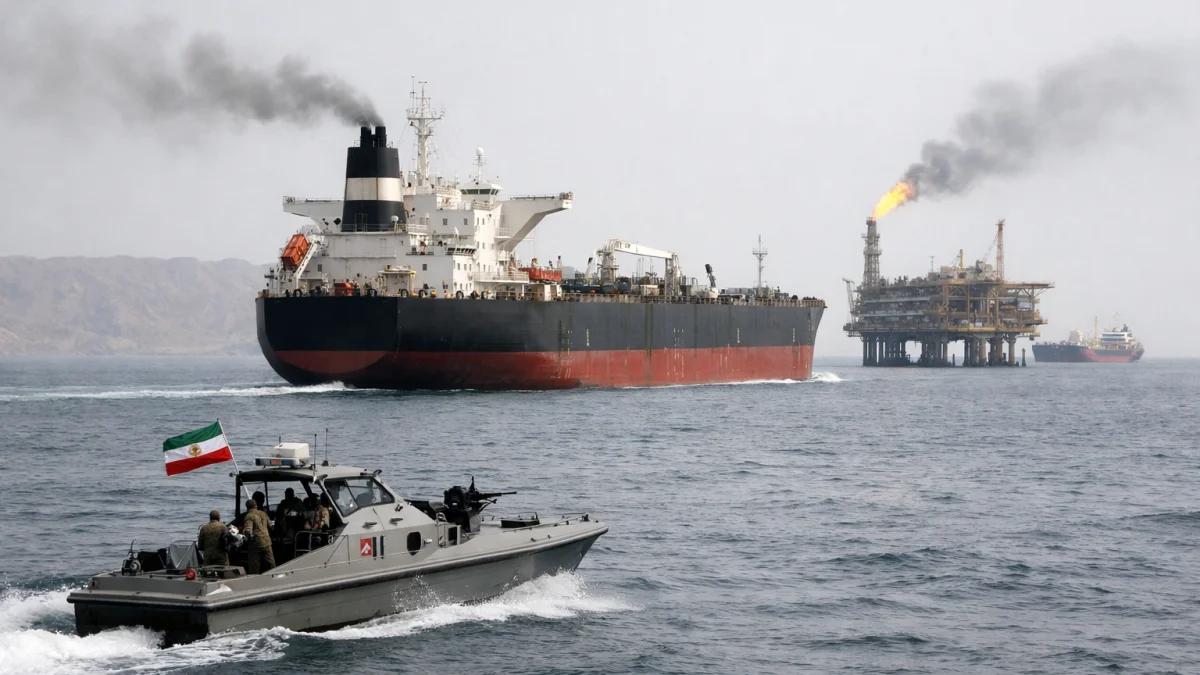
The current phase of heightened US-Iran tension has placed renewed pressure on this system. Government officials and maritime monitoring bodies have reported increased security measures in the region, alongside periodic warnings issued to commercial shipping operators regarding navigation risks in and near the strait. While there has been no confirmed full closure of the passage, shipping firms have at times adjusted routing, timing, or insurance coverage in response to risk assessments from private maritime security advisories and state-level alerts.
The significance of these developments lies less in sustained physical disruption and more in the fragility of logistics under threat conditions. The global oil market relies on just-in-time maritime flows, with limited redundancy for certain grades of crude tied to Gulf producers. Even when alternative supply exists, replacing disrupted shipments requires time, additional transport costs, and refinery adjustments, particularly for buyers in Asia who are heavily dependent on Middle Eastern crude streams.
Energy analysts at institutions such as the International Energy Agency (IEA) have long noted that spare production capacity in major producing regions can act as a buffer against supply shocks. However, they also emphasize that spare capacity does not eliminate short-term price sensitivity when chokepoints are affected. This distinction has been reflected in recent trading behavior, where crude futures have shown heightened intraday volatility in response to geopolitical headlines, according to market data compiled by major exchanges.
Insurance and shipping markets provide another lens into the stress on supply resilience. Marine insurers typically adjust war-risk premiums when geopolitical tensions escalate in high-risk corridors. Industry participants have reported that such premiums can rise rapidly during periods of uncertainty in the Gulf region, increasing the cost of transporting crude even when physical flows remain uninterrupted. This effect can ripple through global fuel pricing without any actual reduction in production volumes.
The Strait of Hormuz has experienced comparable periods of tension in previous decades, including during the 1980s “Tanker War” phase of the Iran-Iraq conflict and more recent incidents involving tanker seizures and drone or missile threats in the broader Gulf region. In those episodes, the market impact was driven less by sustained supply loss and more by elevated risk perception, which altered shipping behavior and pricing structures. The current environment reflects a similar mechanism, although the broader global oil market today is more diversified than in earlier decades due to the expansion of U.S. shale production and increased non-OPEC supply.
At the same time, structural vulnerabilities remain. A substantial portion of Gulf exports is directed toward Asia, where refinery configurations are often optimized for specific crude grades from the Middle East. This limits short-term substitution flexibility, even when global headline supply appears sufficient. As a result, regional disruptions can produce disproportionate price effects in certain markets, particularly for sour crude benchmarks.
Diplomatic and security responses have focused on preventing escalation that could threaten maritime transit. U.S. naval forces in the region have historically played a role in escorting or monitoring commercial shipping during periods of elevated tension, while regional states have issued parallel statements emphasizing the importance of maintaining freedom of navigation under international maritime law. Iran, for its part, has periodically signaled its strategic leverage over the strait, reflecting its geographic position along the narrow waterway.
Legal frameworks governing the Strait of Hormuz remain anchored in customary international law and provisions of the United Nations Convention on the Law of the Sea (UNCLOS), which generally support transit passage rights through international straits. However, the practical enforcement of these norms depends on de facto security conditions and the willingness of state actors to avoid interference with commercial shipping.
Market participants are now balancing two parallel assessments: the physical continuity of oil flows and the geopolitical risk premium embedded in pricing. Even in the absence of major supply interruptions, the persistence of elevated risk perception can sustain volatility in futures markets and increase hedging costs for producers, traders, and refiners.
What remains confirmed at this stage is that oil continues to move through the Strait of Hormuz, albeit under heightened security awareness and periodic operational adjustments by shipping operators. What remains uncertain, according to official statements and industry assessments, is the duration of elevated tensions and whether diplomatic or security mechanisms will fully reduce risk perceptions in the near term. Analysts continue to monitor shipping data, insurance pricing, and official communications for signs of stabilization or further escalation, but no definitive long-term resolution has yet been established.