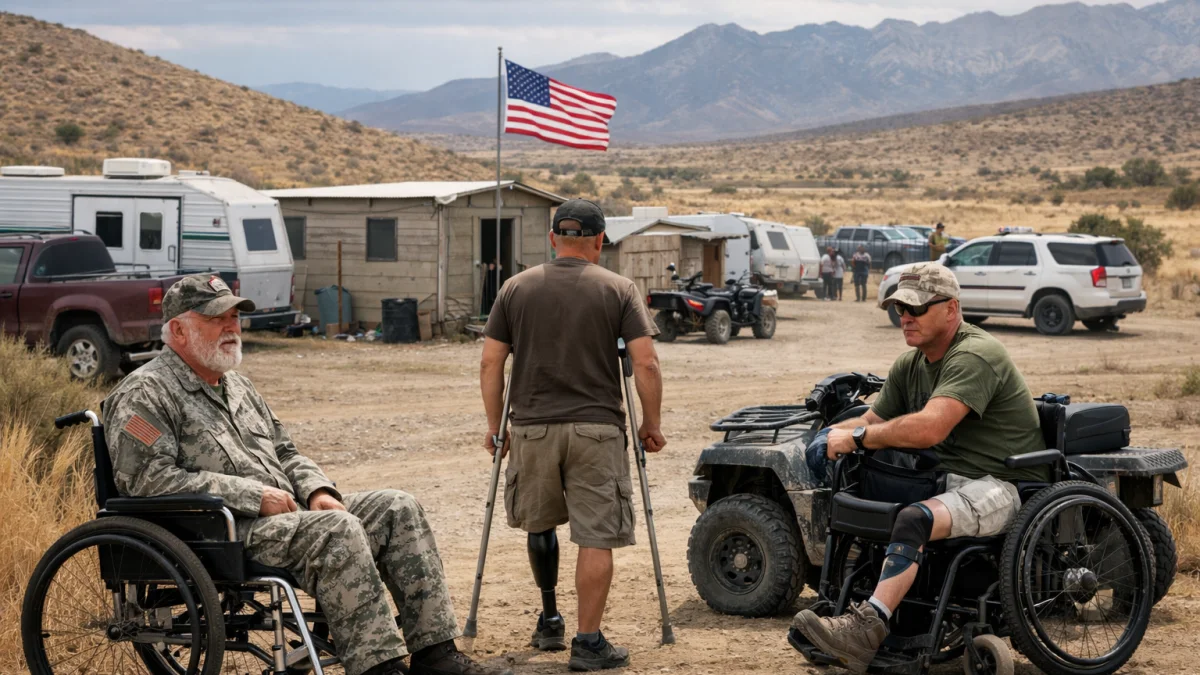


REMOTE COMMUNITY — Hundreds of disabled military veterans have relocated to a remote community with limited law enforcement presence, according to local officials and veterans' advocates, in a move that has drawn attention to access to public services and emergency response in the area.
The relocations, which have taken place over recent months, involve veterans seeking lower housing costs, quieter surroundings and closer community ties, advocacy groups said. Officials said the area's sparse population and limited law enforcement resources have raised concerns about emergency response times and access to healthcare, although details about the number of recent arrivals remain unclear.


Local authorities said they have been coordinating with community organizations and veterans' service providers to monitor public safety needs. Officials said no widespread public safety incidents directly linked to the relocations have been reported.
"Our priority is making sure residents receive the services they need while maintaining public safety," a local official said, adding that agencies were working with state and federal partners where appropriate. Details of those coordination efforts were not immediately released.
Veterans' organizations said many former service members, particularly those living with service-connected disabilities, continue to face challenges finding affordable housing and long-term care, especially in rural areas where medical facilities and transportation options can be limited. Several advocacy groups have previously urged policymakers to expand community-based services and improve access to long-term support for disabled veterans.
The U.S. Department of Veterans Affairs has said it is working to improve care for vulnerable veterans through a range of initiatives, including expanded legal and healthcare support for individuals unable to make medical decisions independently. The department has said those efforts are intended to help veterans transition to appropriate care settings while preserving access to needed services.
Some veterans' advocates have cautioned that rural communities often lack sufficient healthcare infrastructure, emergency services and social support networks to meet growing demand. They have called for additional investment in community-based care and stronger coordination among local, state and federal agencies.
As of Saturday, officials had not announced additional public safety measures related to the relocations. Authorities said they would continue monitoring service needs while veterans' organizations remained engaged with residents and government agencies. Details on future assistance programs or law enforcement staffing changes remain unclear.