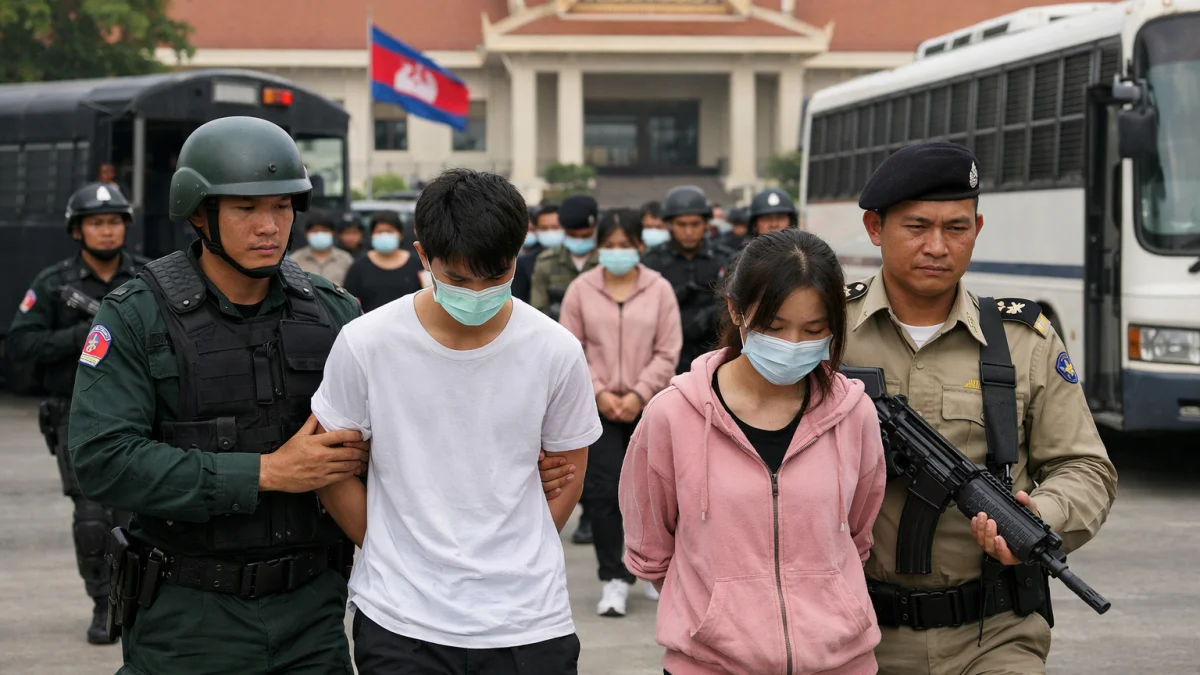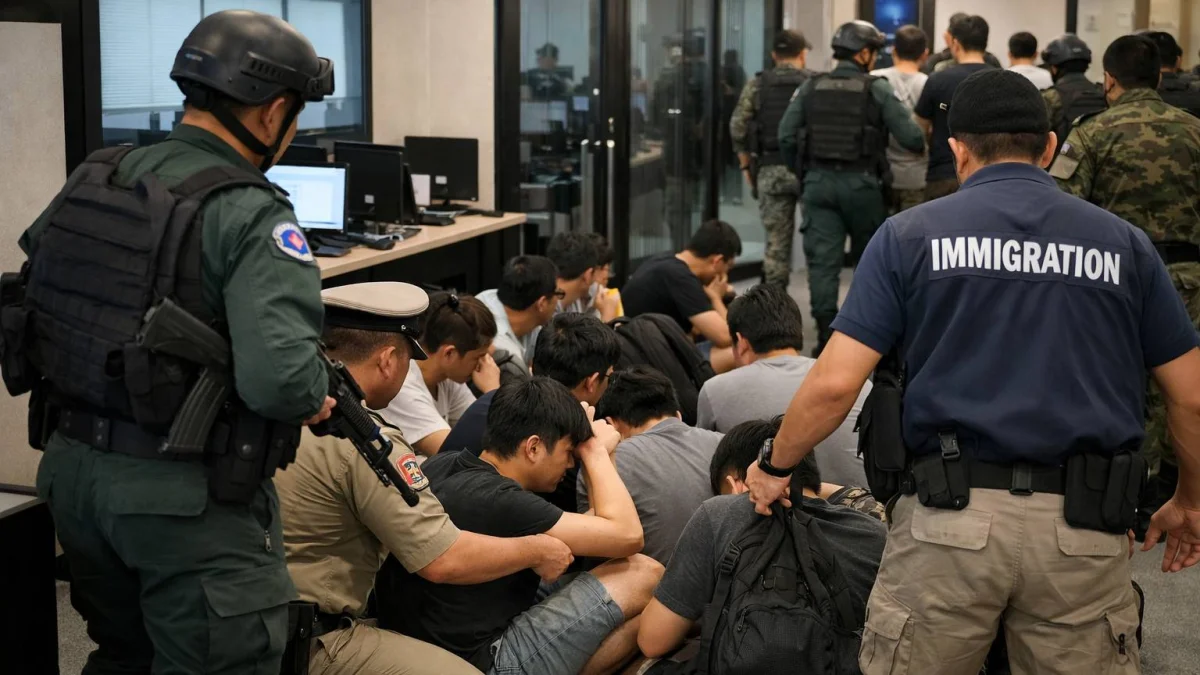
PHNOM PENH — Cambodia’s campaign against online scam operations has left thousands of foreign workers stranded after raids and closures disrupted a sprawling cyberfraud industry, according to aid groups, rights organizations and media reports published this month.
The crackdown, launched by Cambodian authorities in 2025 and continuing into 2026, targeted scam compounds linked to transnational criminal networks accused of online fraud, human trafficking and forced labor. Cambodian officials have said they have shut down hundreds of scam operations, made arrests and deported foreign nationals as part of the effort. However, rights groups say many workers freed from the compounds have been left without adequate support or a clear path home.
The most visible consequence has been the emergence of large numbers of foreign workers seeking assistance in Phnom Penh and other locations after being released or escaping from scam centers. Many had been recruited with promises of legitimate employment before being forced to participate in online fraud schemes, according to Amnesty International and other organizations.
“Thousands of stranded foreign workers” have been left in Cambodia following the closures, NPR reported on June 21, citing aid workers and local observers. The report said many of those individuals had been transported to Cambodia by scam operators and were unable to immediately return to their home countries after the compounds were shut down.
Amnesty International said in a report released on June 8 that Cambodian authorities had often treated people released from scam compounds as irregular migrants rather than potential trafficking victims. The organization said survivors reported being held in immigration detention facilities, charged visa overstay fees and left without sufficient access to legal assistance or embassy support.
The Cambodian government has rejected Amnesty’s findings and defended its enforcement campaign. Government officials said authorities had targeted more than 250 scam operations nationwide and disputed allegations that the crackdown had been ineffective. Officials also rejected suggestions that law enforcement had failed to address the problem.
Amnesty and other researchers contend that many scam compounds remain active despite the campaign. The rights group said it found evidence of intervention at only a portion of the sites it documented and alleged that some operators relocated or avoided enforcement actions. Cambodian authorities have not publicly accepted those conclusions.
As of Sunday, aid organizations and foreign embassies continued efforts to assist stranded workers, while Cambodian authorities maintained that their crackdown on cyberfraud networks remained ongoing. Details on the total number of affected workers remained unclear.