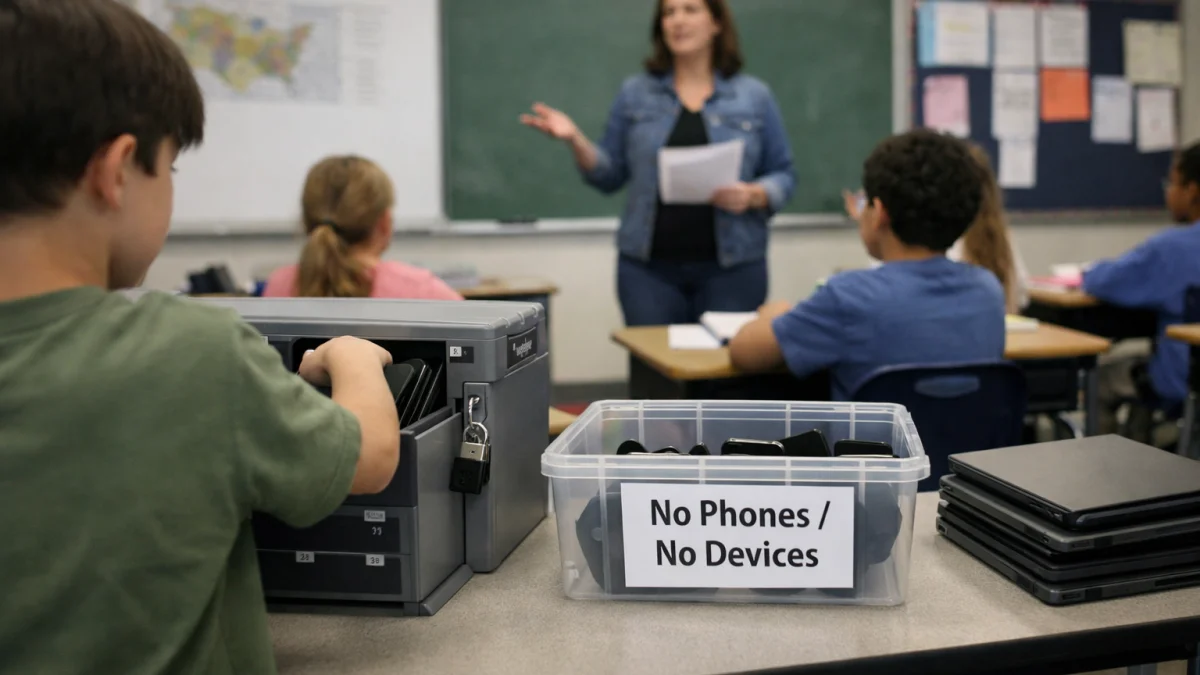
LOS ANGELES — School districts across the United States are adopting stricter limits on student screen time in classrooms, with several large education systems approving new policies in recent months that reduce reliance on laptops and tablets following years of expanded digital learning after the COVID-19 pandemic. The measures, approved or scheduled to take effect during the 2026-27 school year, range from limits on daily classroom device use to complete bans on screens for the youngest students, according to school districts and state officials.
The policy changes reflect a broader reassessment by education leaders of how technology should be used in schools after districts invested heavily in one-to-one devices during the pandemic. Supporters of the new restrictions say they are intended to balance the instructional benefits of technology with concerns about student attention, social development and excessive screen exposure. School systems have generally said digital tools will continue to be used where educationally necessary, while paper-based instruction and teacher-led activities will receive greater emphasis.
The nation's second-largest school district, the Los Angeles Unified School District, approved one of the country's most comprehensive classroom screen-time policies this month. Under the plan, students in early education through first grade will not use screens during instruction, while older students will face grade-specific limits that include time spent on homework. The policy is scheduled to begin rolling out in August.
"We know that tech is not going away and can be a powerful tool in the classroom," Los Angeles school board member Nick Melvoin, who sponsored the earlier resolution directing staff to develop the policy, said during the April board meeting. "This is not about going backwards. This is about rethinking screen time in schools to ensure we are doing what actually helps students learn best," according to Education Week.
Other districts and states have also moved to curb classroom device use. According to education reports, Iowa has approved elementary school screen-time limits beginning with the 2027-28 school year, while the San Diego Unified School District has adopted restrictions that include limits on student access to YouTube during instruction. California's statewide Phone-Free School Act is also scheduled to take effect on July 1, requiring schools to adopt policies restricting student smartphone use during the school day, with specified exceptions.
Federal officials have also entered the debate. The U.S. Office of the Surgeon General earlier this year recommended that schools reduce classroom screen exposure, encourage greater use of printed instructional materials and expand paper-and-pencil assignments, while recognizing exceptions for students whose individualized education plans require digital tools. Separately, the Federal Communications Commission has opened proceedings examining children's screen use and technology supported through federal school connectivity programs.
The latest confirmed changes include Los Angeles Unified's phased implementation beginning in August and California's statewide smartphone restrictions taking effect on July 1, while additional district policies approved this year are scheduled to be introduced according to their respective implementation timelines.