BUNIA—Volunteers working in Ebola response operations across affected areas of the Democratic Republic of the Congo and Uganda are facing threats, logistical constraints and violence as they support containment efforts in remote and conflict-affected regions, according to the World Health Organization (WHO) and humanitarian partners.
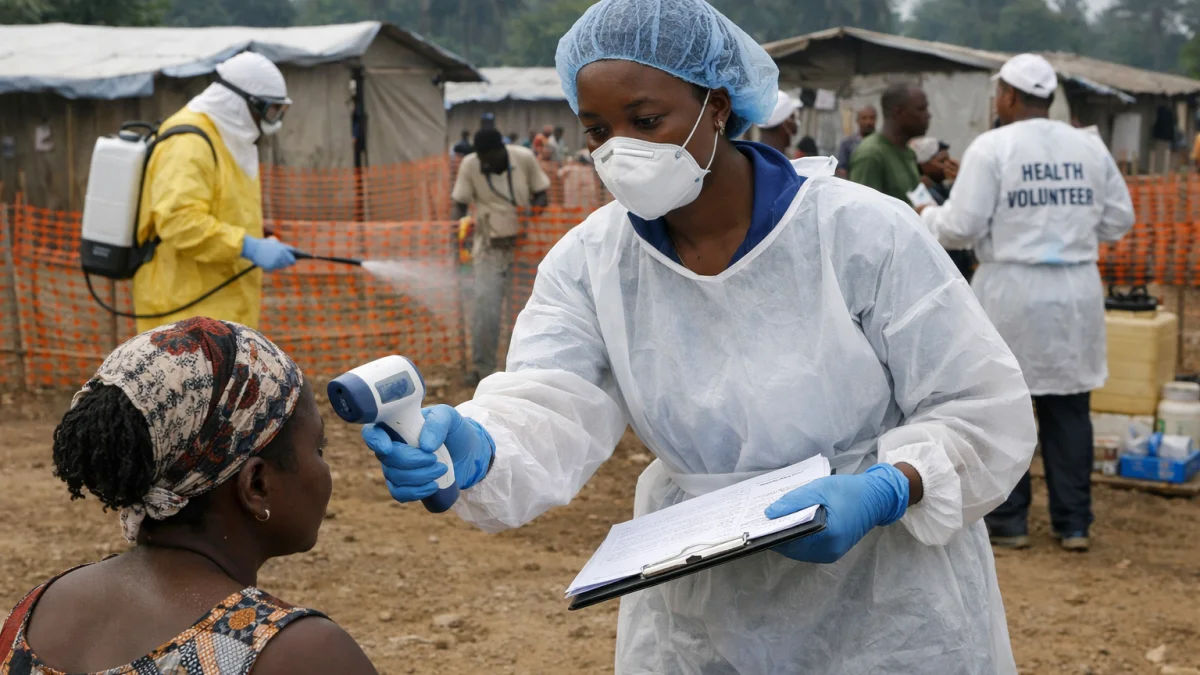
Health authorities and aid organizations have deployed local and international volunteers to assist with contact tracing, surveillance, patient care, and safe burial practices in outbreak zones in eastern Congo, where insecurity and displacement have complicated access to communities, WHO said in recent briefings on the outbreak response. The virus strain involved is the Bundibugyo species of Ebola, for which no licensed vaccine or specific antiviral treatment is currently available, according to WHO technical guidance.
The Ebola outbreak, first confirmed in mid-May 2026 after laboratory testing in the Democratic Republic of the Congo, has since spread across multiple health zones and into neighboring Uganda through cross-border transmission linked to population movement, WHO said. The response has relied heavily on community-based volunteers due to shortages of trained health workers and limited access to remote or insecure areas.
WHO Director-General Tedros Adhanom Ghebreyesus has previously warned that response operations are being hampered by insecurity and mistrust in some communities. “Ebola moves fast. Africa must move faster,” Africa Centres for Disease Control and Prevention Director-General Jean Kaseya said in a joint response plan announcement earlier in June, emphasizing the need for coordinated action across borders and communities.
According to WHO situation updates published in June, treatment centers in parts of eastern Congo have operated near capacity as case numbers increased, while health workers have faced interruptions due to insecurity, including reported incidents of intimidation and attacks on health infrastructure in some affected zones. WHO has also noted that misinformation and displacement have complicated contact tracing efforts, with hundreds of patients reported unaccounted for in some areas.
Aid agencies have stressed that volunteers often serve as the primary link between treatment centers and communities in hard-to-reach locations, conducting door-to-door outreach and assisting with early case identification. However, WHO has reported that some workers have encountered hostility or suspicion from residents, driven in part by long-standing conflict dynamics and fears surrounding isolation measures.
The outbreak response is being coordinated under a joint Africa CDC and WHO plan launched in June 2026, which aims to strengthen surveillance, expand laboratory capacity, and increase community engagement across affected countries, according to the agencies.
As of the latest WHO updates in June, response operations continue across affected regions with ongoing recruitment of additional community health workers and expansion of cross-border monitoring systems, while authorities have not announced a timeline for full containment of the outbreak.