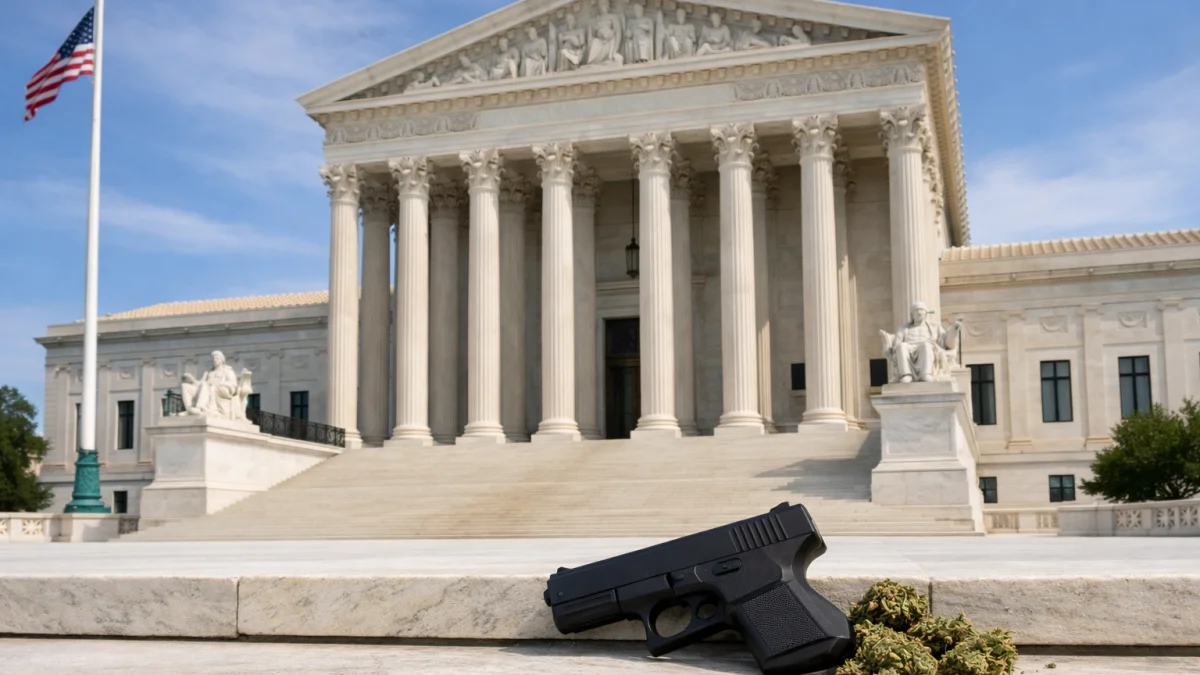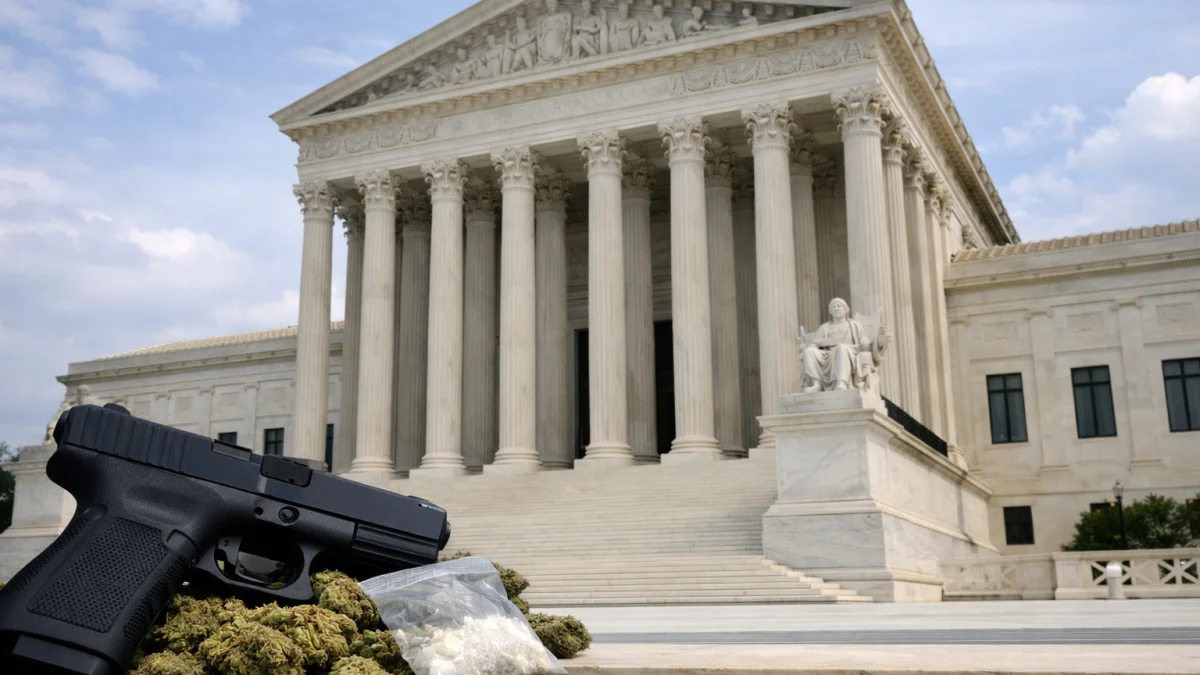
WASHINGTON — The U.S. Supreme Court on Thursday narrowed the application of a federal law that bars illegal drug users from possessing firearms, ruling in favor of a Texas man whose prosecution under the statute violated his Second Amendment rights, according to the court’s decision.
The unanimous ruling centered on Ali Danial Hemani, who challenged a provision of the 1968 Gun Control Act that prohibits firearm possession by anyone deemed an “unlawful user” of a controlled substance. The case tested whether the federal government could broadly apply the law to people who use marijuana but are not shown to pose a danger to themselves or others.
Writing for the court, Justice Neil Gorsuch said the government had failed to demonstrate that Hemani’s marijuana use justified disarming him under the Constitution’s protection of the right to keep and bear arms. “In many respects, this case is a narrow one,” Gorsuch wrote, emphasizing that the ruling did not address bans involving addicts, intoxicated individuals or other circumstances involving demonstrated dangerousness.
Federal agents discovered a handgun and marijuana during a search of Hemani’s home, leading to charges under the federal statute. Lower courts had previously ruled in his favor, finding that the government’s application of the law did not align with the Supreme Court’s recent Second Amendment precedents.
The decision does not invalidate the federal statute entirely. Instead, the court limited its reach by holding that the government cannot automatically apply the prohibition to all drug users without sufficient evidence that a particular individual presents a danger comparable to groups historically restricted from possessing firearms.
The case drew attention because it involved a federal law that has also been cited in other high-profile prosecutions, including the 2024 gun conviction of Hunter Biden, who was later pardoned by former President Joe Biden. The court did not address Biden’s case directly, and legal experts said the ruling’s practical impact on past convictions remains unclear.
Civil liberties organizations, gun-rights advocates and cannabis-reform groups supported Hemani’s challenge, arguing that the law was overly broad, particularly as marijuana use has become legal under state law in much of the country. Gun-safety organizations and some public-health advocates argued that Congress has authority to restrict firearm access for people using controlled substances.
The ruling is the latest in a series of Supreme Court decisions expanding Second Amendment protections while requiring the government to justify firearm regulations through historical analogies. Federal officials have not announced whether they will seek legislative changes in response to the decision. As of Thursday, the statute remained in effect, though with limits on how it may be enforced in cases similar to Hemani’s.