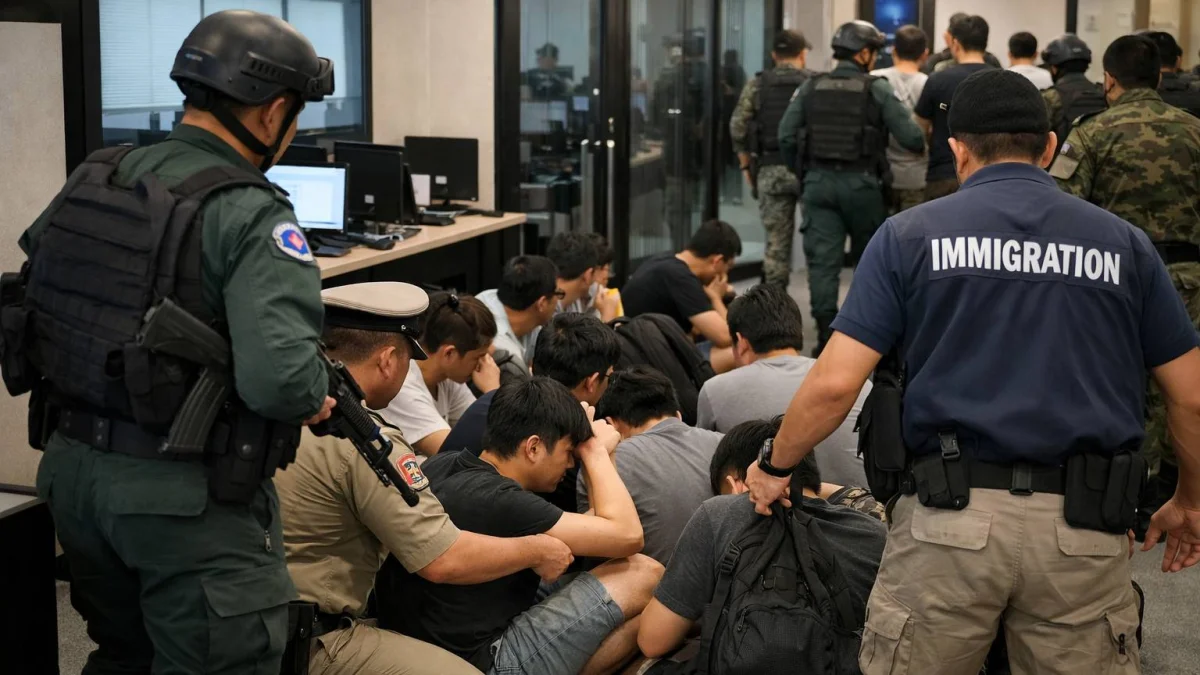
PHNOM PENH — Tens of thousands of people have been affected by Cambodia’s ongoing crackdown on online scam operations, with authorities reporting large-scale deportations and repatriations while rights groups say many trafficking victims remain without adequate protection, according to government officials and humanitarian organizations.
The crackdown, intensified in recent months under the government of Prime Minister Hun Manet, has targeted scam compounds that authorities say were involved in online fraud schemes affecting victims around the world. Cambodian officials have described the campaign as one of the country’s largest efforts against transnational cybercrime.
Government spokesman Touch Sokhak said authorities had “rescued” tens of thousands of workers from scam operations and worked with foreign governments to facilitate their return home. He said the process was being conducted “with the utmost care in accordance with the law and has good cooperation with their own countries.”
Senior officials have also said thousands of suspects have been investigated or charged and that many foreign nationals have either been deported or left the country voluntarily as enforcement actions expanded. Cambodian authorities say the campaign has disrupted numerous scam centers and led to arrests of organizers and facilitators.
However, Amnesty International said in a report released this month that many scam compounds remain operational despite the crackdown. The rights group said evidence suggested authorities had intervened at only a portion of the sites it identified and alleged that some trafficking victims were being treated as immigration offenders rather than victims of crime.
“More than 70 per cent of the compounds identified by Amnesty appear to have been bypassed by the crackdown,” the organization said in its report, while also raising concerns about detention conditions and access to legal assistance for foreign nationals removed from scam centers.
The Cambodian government rejected those findings. Chhay Sinarith, the senior minister overseeing anti-scam operations, said the report did not accurately reflect enforcement efforts and highlighted what authorities described as extensive nationwide action against cybercrime networks.
Online scam compounds have expanded across parts of Southeast Asia in recent years, often operating from fortified complexes and employing foreign workers. International organizations and law enforcement agencies have reported that some workers were recruited through deceptive job offers and later subjected to coercion or trafficking.
As of Monday, Cambodian authorities said anti-scam operations were continuing. Human rights groups and aid organizations said many former workers remained in need of assistance, while officials pledged to maintain pressure on criminal networks operating in the country.