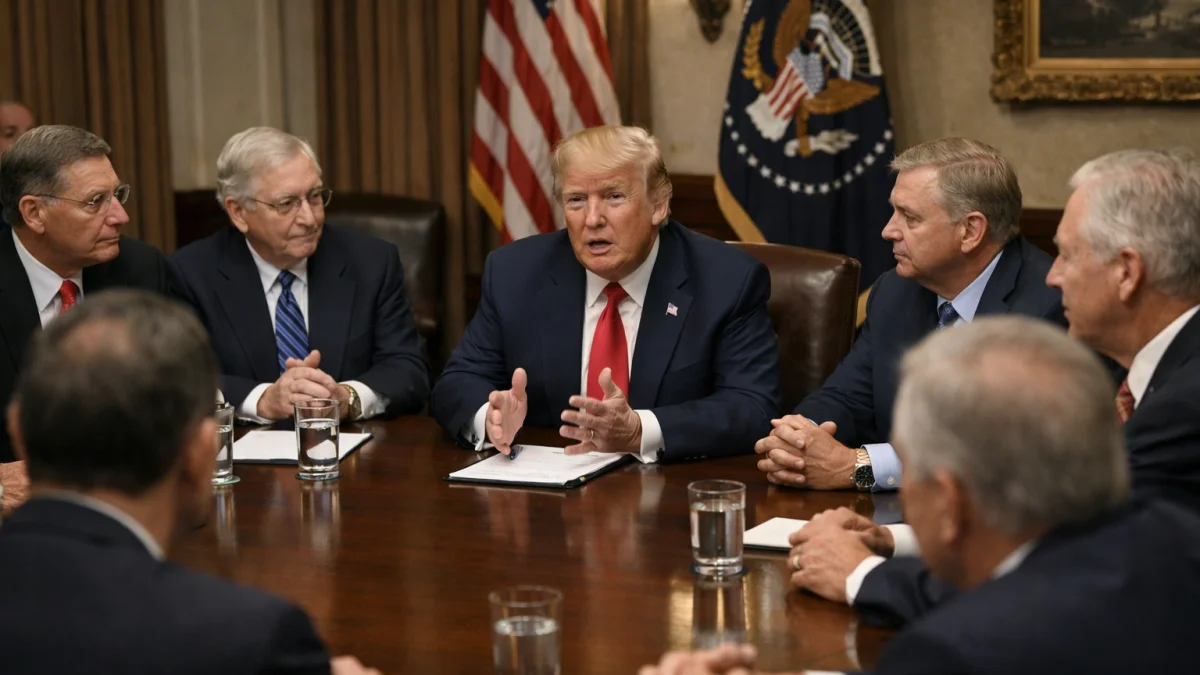
WASHINGTON — President Donald Trump met Republican senators at the Capitol on Wednesday amid growing tensions within his party over the administration’s policy toward Iran, as lawmakers questioned the scope of U.S. military involvement and debated Congress’s role in authorizing continued operations.
The closed-door meeting came one day after the Senate approved a war powers resolution intended to limit the president’s authority to continue military action against Iran without congressional approval. Several Republican senators joined Democrats in supporting the measure, highlighting divisions within the party over the conflict and the administration’s strategy.
According to lawmakers and media reports, Trump used the meeting to criticize Republican senators who had supported efforts to restrict his war powers. The discussion became heated at times, particularly during an exchange with Senator Bill Cassidy of Louisiana, who has publicly raised concerns about the administration’s handling of the conflict.
Cassidy told reporters after the meeting that he had pressed the president for additional information regarding U.S. objectives in Iran. According to CBS News, Cassidy said he told Trump that “our original objectives have not been achieved, and I want to know what’s going on.”
The meeting occurred as Republican lawmakers faced competing pressures from the White House and constituents concerned about the conflict. Some senators have argued that Congress should play a larger role in decisions involving military action, while administration officials have maintained that flexibility is necessary as diplomatic efforts continue.
Trump also met with senators while pressing Congress to advance other legislative priorities, including election-related measures that have encountered resistance in the Senate. Republican lawmakers have expressed frustration in recent weeks over disagreements involving both domestic policy and foreign affairs.
Later on Wednesday, Senate Republicans voted on a separate procedural measure related to congressional war powers and Iran. The effort to advance the resolution failed after several Republicans changed their positions following discussions with administration officials, according to lawmakers and media reports.
Vice President JD Vance and special envoy Steve Witkoff subsequently briefed several senators on the administration’s diplomatic efforts involving Iran, according to people familiar with the discussions. Some lawmakers said afterward that they were willing to give negotiators additional time.
As of Thursday, divisions within the Republican conference over Iran policy remained evident, although Senate Republicans had rejected the latest war powers effort. Additional debate over military policy and related funding requests is expected when Congress resumes legislative business after its scheduled recess.