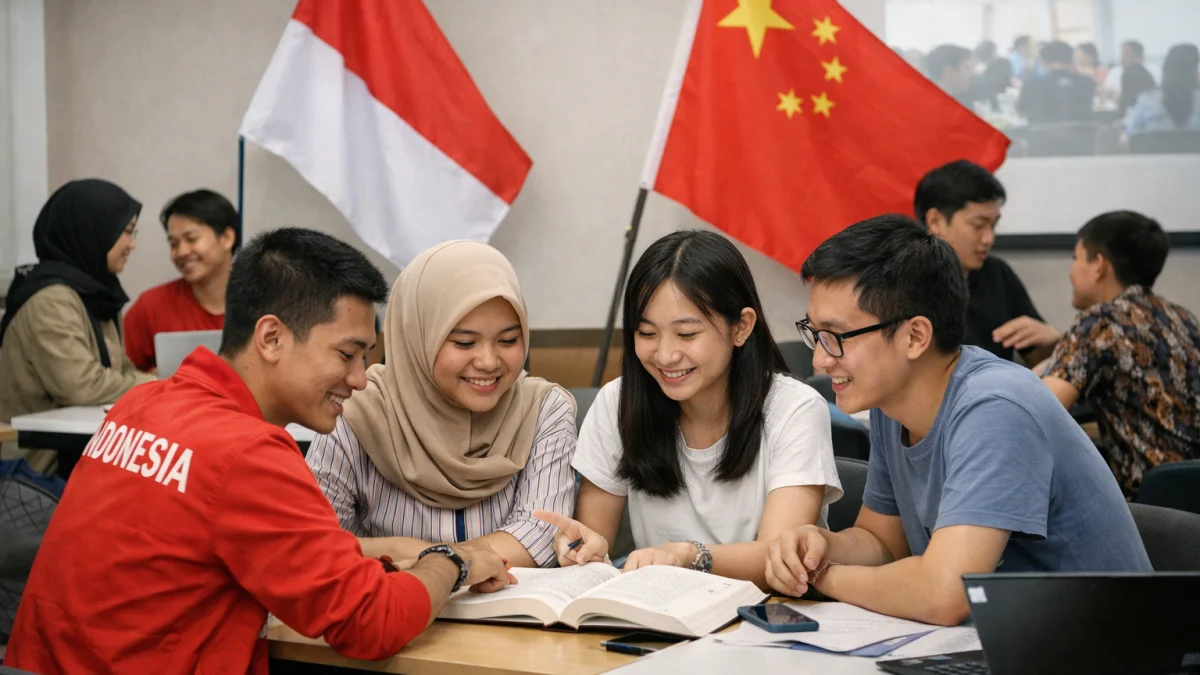
Students from universities in Indonesia and China gathered online in late June to discuss scholarships, exchange opportunities and joint academic programs, reflecting a growing effort by higher education institutions in both countries to expand cross-border learning as bilateral ties deepen.
The virtual seminar on the internationalization of higher education brought together representatives from 10 universities in Indonesia and China, along with diplomats and education officials, who outlined new opportunities for students to study abroad, participate in joint research and pursue academic exchanges. Organizers said the event was designed not only to promote campuses but also to strengthen long-term educational cooperation between the two countries.
For students considering overseas study, such initiatives represent more than another institutional agreement. They offer access to different classrooms, languages, research networks and professional experiences at a time when universities across Asia are placing greater emphasis on international mobility.
Education and Culture Attaché at the Indonesian Embassy in Beijing Lestari Puspitaningsih said expanding academic cooperation supports broader bilateral relations through education, research and the mobility of students and lecturers. According to the embassy, participating universities presented scholarship programs and flagship courses intended to attract more international students from both countries.
The seminar forms part of a wider pattern that has become increasingly visible across Indonesian higher education.
In May, the Faculty of Administrative Sciences at Universitas Indonesia signed an implementation agreement on student mobility with Zhejiang University's School of Public Affairs. The partnership includes student exchanges while building on existing cooperation in joint research, publications and academic networking. University officials described the agreement as part of a broader strategy to internationalize higher education and expand opportunities for students to gain international experience.
Other universities have pursued similar paths.
Diponegoro University's Vocational School entered a partnership with Guangdong Open University and industry partners to develop short-term vocational training, teaching factories, student and lecturer exchanges, and industry-based learning centers linking academic education with workforce development.
At the University of Indonesia's Depok campus, administrators also recently hosted delegates from China's Jinan University to explore dual-degree models and future academic collaboration involving several faculties. University officials said discussions focused on expanding global learning opportunities through structured institutional partnerships.
Borobudur University likewise signed cooperation agreements with Chinese vocational institutions aimed at combining academic study with practical skills and strengthening graduates' international competitiveness through broader educational collaboration.
For many students, such agreements can influence educational choices in tangible ways.
Exchange programs typically allow participants to spend a semester or more abroad while earning academic credit at their home institution. Joint research projects expose students to laboratories, fieldwork and supervisors in another country. Scholarship programs can reduce financial barriers that have traditionally limited overseas study, while dual-degree arrangements enable graduates to earn qualifications recognized by institutions in both countries.
University leaders also argue that mobility extends beyond academic credentials. Living and studying in another country requires students to adapt to different teaching methods, languages and cultural environments while building international professional networks that may shape future careers.
The expansion of Indonesia-China academic partnerships comes as economic links between the two countries continue to grow. China remains Indonesia's largest trading partner, and educational cooperation increasingly mirrors broader engagement in sectors including manufacturing, technology and infrastructure. Some education officials say closer university ties can help prepare graduates with the international skills needed in industries operating across national borders.
At the same time, universities have emphasized that academic collaboration extends beyond economics. Agreements announced this year frequently include provisions for faculty exchanges, collaborative publications, scientific conferences and shared research addressing public policy, health, engineering and governance.
Such cooperation also reflects a broader trend in Asian higher education, where universities are seeking more international partnerships to strengthen research capacity, improve global visibility and provide students with wider educational opportunities without requiring them to study exclusively in Europe or North America.
The institutions involved acknowledge that international programs still require careful implementation. Student mobility depends on visa procedures, language preparation, credit recognition and sustained institutional support to ensure exchanges produce meaningful academic outcomes rather than symbolic agreements.
Even so, education officials participating in the June seminar expressed optimism that expanding partnerships would continue to increase opportunities for students and lecturers from both countries.
As universities introduced scholarships, exchange pathways and collaborative research initiatives during the online event, the focus remained on the people those agreements are intended to serve: students seeking broader educational experiences and the chance to learn across borders in classrooms increasingly connected by shared academic ambitions.