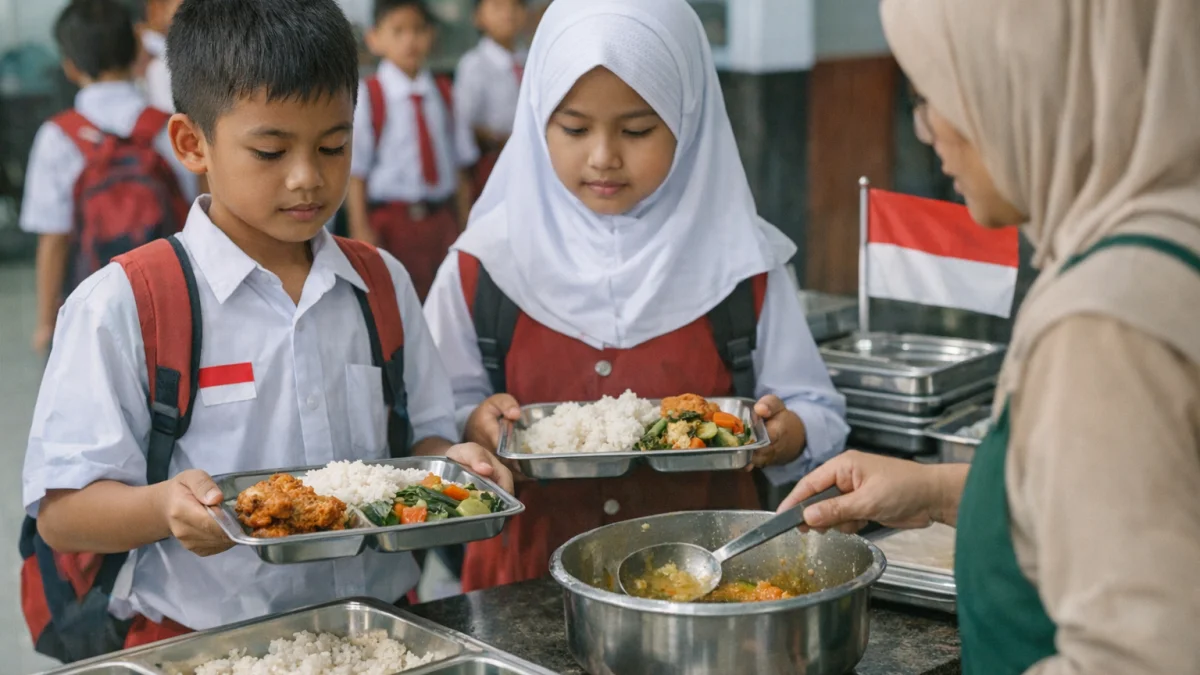


JAKARTA — Indonesia will reduce distribution of its flagship free nutritious meal programme from six days a week to five days a week starting Tuesday, in a move expected to generate budget savings amid fiscal pressures.
National Nutrition Agency deputy head Nanik Sudaryati Deyang said on Sunday that the adjustment will apply to the programme, which primarily serves schoolchildren, and is projected to save around 40 trillion rupiah (about $2.3 billion). The change takes effect on March 31, 2026.


The programme, a signature initiative of President Prabowo Subianto, was originally budgeted at 335 trillion rupiah for 2026. Officials have described the reduction as a measure for fiscal efficiency.
Finance Minister Purbaya Yudhi Sadewa earlier indicated that the proposal originated from the National Nutrition Agency and would require presidential approval. The government has linked broader budget considerations to economic impacts from the ongoing conflict in the Middle East, including rising fuel prices.
According to the National Nutrition Agency, distribution will continue on a six-day schedule in underdeveloped regions with high stunting rates. Details on the exact scope of exceptions and implementation remain under discussion.
The programme aims to improve child nutrition and has been rolled out nationwide following pilot projects. It forms a significant portion of state spending this year.
Nanik Sudaryati Deyang told AFP: “This adjustment aligns the meal distribution with the standard five-day school week while maintaining the programme’s core objectives.”
President Prabowo had previously stated that the free meal programme would remain untouched, with other areas targeted for cost savings. The decision marks the first major austerity step in response to current fiscal challenges.
No immediate comments were available from the president’s office on Tuesday regarding the implementation.
The government has not disclosed the total number of beneficiaries affected by the change or precise daily meal volumes impacted. Officials have said the savings estimate is based on internal calculations.
The programme continues to operate, with the adjustment focused on distribution frequency rather than elimination of the initiative. Further details on monitoring and potential adjustments are expected in coming weeks.