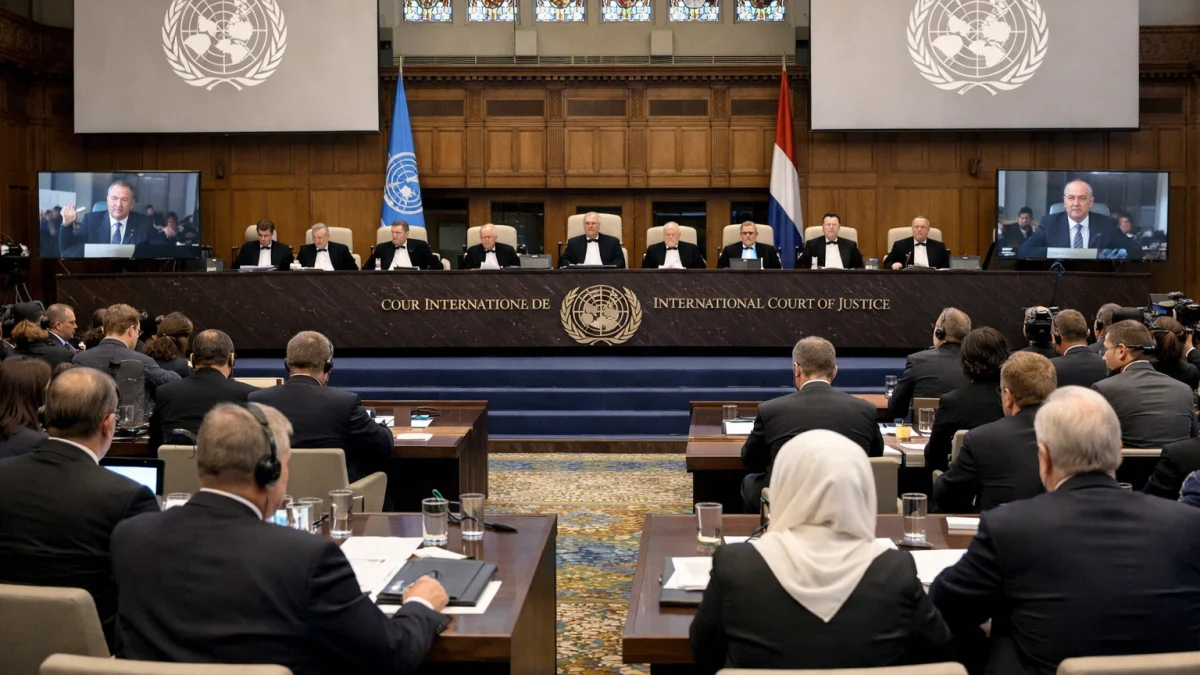


THE HAGUE — Proceedings at international courts advanced in several high-profile cases this month, with judges, prosecutors and oversight bodies taking procedural steps in matters involving alleged crimes against humanity, disciplinary proceedings and legacy war-crimes investigations.
At the International Criminal Court (ICC), member states were preparing for further proceedings concerning Chief Prosecutor Karim Khan after the court's oversight body voted to suspend him and refer disciplinary measures to the Assembly of States Parties. The decision followed an investigation into allegations of sexual misconduct. Khan has denied wrongdoing and described the findings against him as unsupported by the evidence. According to the ICC's governing body, the suspension will remain in place pending consideration by member states. Reuters and other media reported the decision on June 8.


“The suspension is not an indication of the final outcome,” the Bureau of the Assembly of States Parties said in a statement announcing the measure.
The case has drawn attention from governments, legal observers and civil society organizations because it concerns the leadership of the court responsible for prosecuting genocide, crimes against humanity and war crimes. Khan has maintained that the disciplinary action is procedurally flawed and has challenged the findings.
Separately, proceedings continued in the ICC case involving former Philippine President Rodrigo Duterte. Court documents released in recent weeks showed judges addressing procedural matters, including detention conditions and preparations for future hearings. The court also confirmed earlier actions connected to related investigations involving former officials linked to the anti-drug campaign carried out during Duterte's presidency.
In Switzerland, a long-running case involving Rifaat al-Assad formally concluded after the Swiss Federal Criminal Court ordered proceedings closed following his death, according to legal advocacy group TRIAL International. The case had concerned allegations linked to events in the Syrian city of Hama in 1982. Plaintiffs and advocacy organizations said the closure ended more than a decade of investigative work, although they noted that no final trial judgment would be issued.
Meanwhile, the United Nations Security Council was scheduled to review the work of the International Residual Mechanism for Criminal Tribunals, the body that continues responsibilities inherited from tribunals for Rwanda and the former Yugoslavia. UN officials said briefings and institutional reviews were expected during June.
As of Monday, proceedings in several international legal forums remained active. Courts and oversight bodies said additional hearings, reviews and procedural decisions were expected in the coming weeks, while details of some pending matters remained unclear.