

Israel’s expression of serious security concerns over a proposed Hamas disarmament agreement underscores the central obstacle that has repeatedly hindered efforts to translate ceasefire negotiations into a durable post-war settlement in Gaza: whether armed groups can be verifiably disarmed before Israel relinquishes military control of territory captured during the conflict. The latest dispute highlights that broad political agreement on ending hostilities remains insufficient without consensus on sequencing, verification and enforcement.
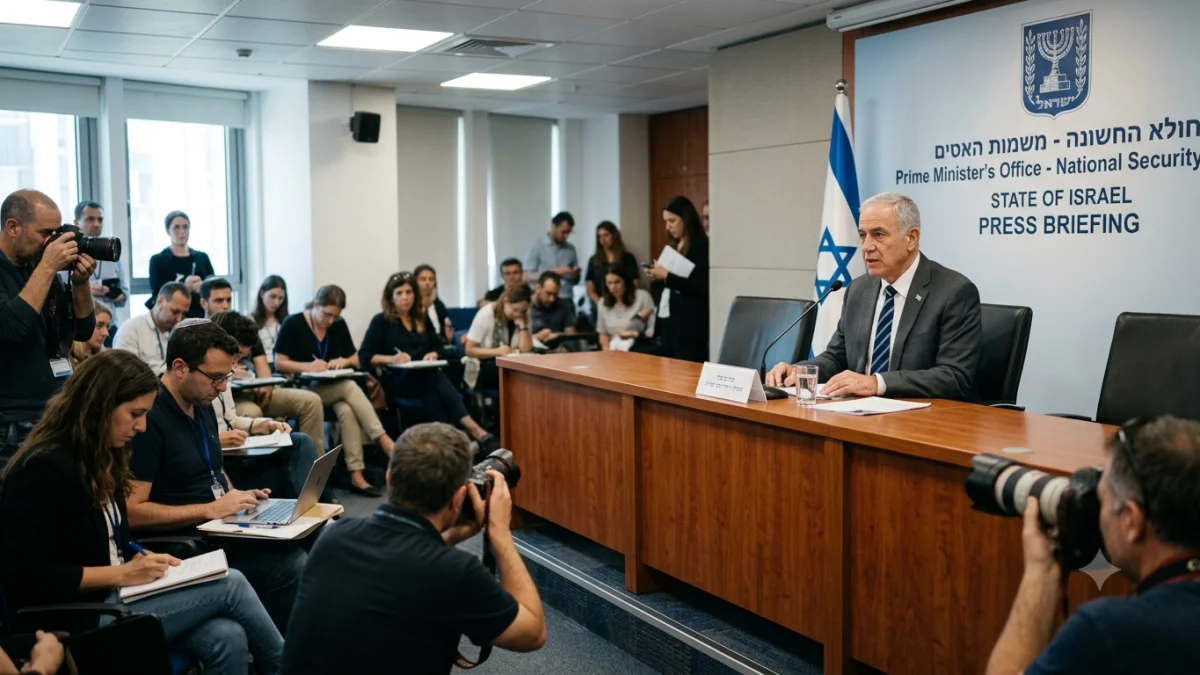
The immediate significance of the latest development lies in the gap between public announcements that progress has been made and the positions maintained by the parties directly responsible for implementing any agreement. While Hamas has indicated willingness to accept a U.S.-brokered framework involving disarmament, Israeli officials argue that the proposed arrangements leave unresolved questions about how weapons would be surrendered, verified and permanently removed from Gaza. According to Israeli officials, intelligence assessments continue to indicate that Hamas seeks to preserve or rebuild military capabilities, reinforcing longstanding Israeli concerns that incomplete implementation could allow the group to reconstitute its forces.


At the center of the disagreement is the sequencing of obligations. The reported framework links Hamas' phased disarmament with an Israeli military withdrawal, the deployment of an international stabilization force and the establishment of a technocratic Palestinian administration to govern Gaza. Israeli officials, however, have maintained that withdrawal should occur only after complete and verifiable disarmament, while Hamas has argued that Israeli commitments must proceed simultaneously or beforehand. Those competing interpretations have emerged repeatedly during negotiations over Gaza's future and remain a principal source of diplomatic friction.
Verification mechanisms have become equally contentious. Reports indicate that Israel has objected to proposed monitoring arrangements involving certain regional mediators and instead seeks stronger international guarantees that weapons would be destroyed rather than merely stored. Such concerns reflect broader debates over whether any external monitoring mechanism would possess sufficient authority and operational capacity to prevent renewed militarization. Experience from previous ceasefire agreements has demonstrated that monitoring provisions often become as politically sensitive as the underlying security commitments themselves.
The legal and governance dimensions are also significant. The proposed framework reportedly envisions replacing Hamas' governing role with a technocratic Palestinian administration supported by international actors. That transition would require not only security guarantees but also agreement over civil administration, policing, humanitarian access and reconstruction. International policymakers have generally viewed these elements as interconnected, arguing that governance reform and reconstruction cannot be sustained without credible security arrangements, while security arrangements themselves require functioning civilian institutions.
Israeli security assessments remain shaped by the October 2023 Hamas attack and the subsequent conflict, which fundamentally altered Israeli strategic doctrine regarding Gaza. Since then, Israeli leaders across much of the political spectrum have consistently argued that preventing Hamas from rebuilding military capacity constitutes a core national security objective. That position has influenced Israel's negotiating stance throughout successive ceasefire discussions, including current deliberations over disarmament and withdrawal.
Analysts have similarly identified enforceable demilitarization as one of the principal determinants of whether any political settlement could endure. Research published by the Institute for National Security Studies argues that reconstruction efforts risk failing if armed groups retain the ability to rebuild military infrastructure, while other analysts have cautioned that insisting upon complete disarmament before broader political implementation could itself delay stabilization indefinitely. Those differing assessments illustrate the policy trade-offs confronting negotiators rather than a consensus over the optimal approach.
The dispute also carries implications for regional diplomacy. The proposed framework reportedly depends on international participation in security oversight, reconstruction financing and civilian administration. Any erosion of confidence between the principal negotiating parties could complicate efforts by mediators to assemble the multinational political and financial commitments necessary for implementation. At the same time, continued Israeli military operations and humanitarian challenges in Gaza increase pressure on mediators seeking progress toward a sustainable ceasefire.
Domestic political considerations further complicate decision-making. Israeli leaders must balance security assessments with coalition politics and public expectations following nearly three years of conflict, while Hamas faces internal pressures regarding the future of its armed wing and political role. Those domestic constraints help explain why negotiators have continued to disagree over implementation details even where broader principles appear to have gained tentative acceptance.
For now, the confirmed position remains that negotiations continue but no comprehensive implementation agreement has been finalized. Israeli officials maintain that significant security concerns regarding verification and sequencing remain unresolved, while Hamas has indicated conditional acceptance of a broader framework subject to reciprocal implementation. International mediators continue to monitor discussions over disarmament, military withdrawal, governance arrangements and oversight mechanisms, all of which remain essential to determining whether the proposed agreement can move from principle to execution.