

TOKYO — Scientists have identified a previously unrecognized seismic phenomenon linked to Japan’s devastating 2011 Tohoku earthquake that caused the entire Japanese archipelago to shift several millimeters eastward minutes after the main quake, according to a study published this month in the journal Science.
Researchers from the University of Chicago and collaborating institutions reported that seismic waves generated by the magnitude 9.0 earthquake traveled deep into the Earth, reflected from near the boundary of the planet’s core, and returned to the surface, triggering additional movement along tectonic plate boundaries beneath Japan. The study’s findings were published in June and were based on a reanalysis of data collected during the March 2011 disaster.


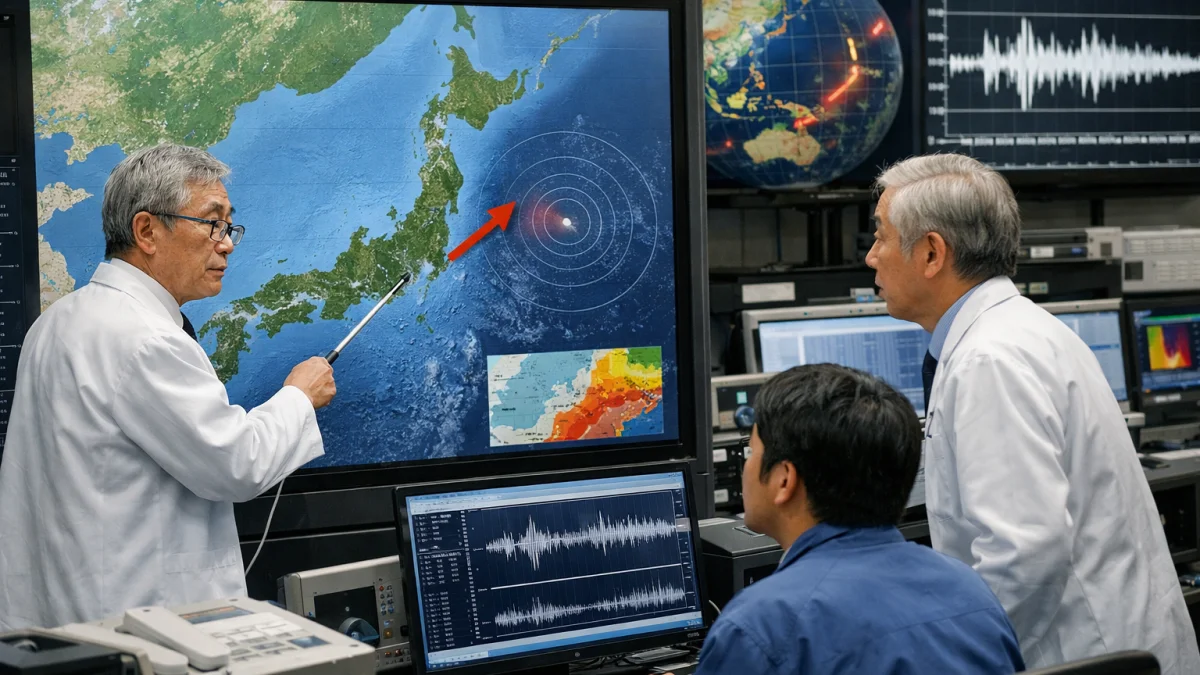
According to the researchers, the returning seismic wave, known as an ScS wave, reached the surface about 13 minutes after the initial earthquake and coincided with a synchronized eastward displacement of up to about six millimeters across much of Japan. The movement was detected through Japan’s extensive network of Global Navigation Satellite System monitoring stations.
“We were quite puzzled because usually these offset signals are seen when there’s an earthquake, but there was no known earthquake corresponding to this timing,” lead researcher Sunyoung Park of the University of Chicago said in comments reported following publication of the study.
The Tohoku earthquake and resulting tsunami in 2011 caused widespread destruction in northeastern Japan and triggered the Fukushima nuclear disaster. Scientists have long studied the event because it is among the most extensively recorded earthquakes in history. The newly identified displacement was not associated with a separate earthquake but rather with seismic energy from the original event interacting with deep Earth structures, researchers said.
The study found that the reflected waves reactivated tectonic boundaries involving several plates around Japan, producing a broad zone of ground movement extending across much of the country. Researchers said the affected area was significantly larger than the rupture zone associated with the original earthquake.
Scientists involved in the research said the findings could improve understanding of how large earthquakes influence ground motion after the strongest shaking has ended. They described the phenomenon as a previously unrecognized source of seismic hazard, though they did not report any new threat to the public stemming from the discovery.
The study has prompted additional discussion within the geophysical research community regarding how reflected seismic waves may affect fault systems following major earthquakes. Researchers said further work will be needed to determine whether similar effects have occurred in other large seismic events around the world.
As of Wednesday, Japanese authorities had not announced any policy changes related to the findings, which concern a historical earthquake event rather than a newly occurring seismic incident.