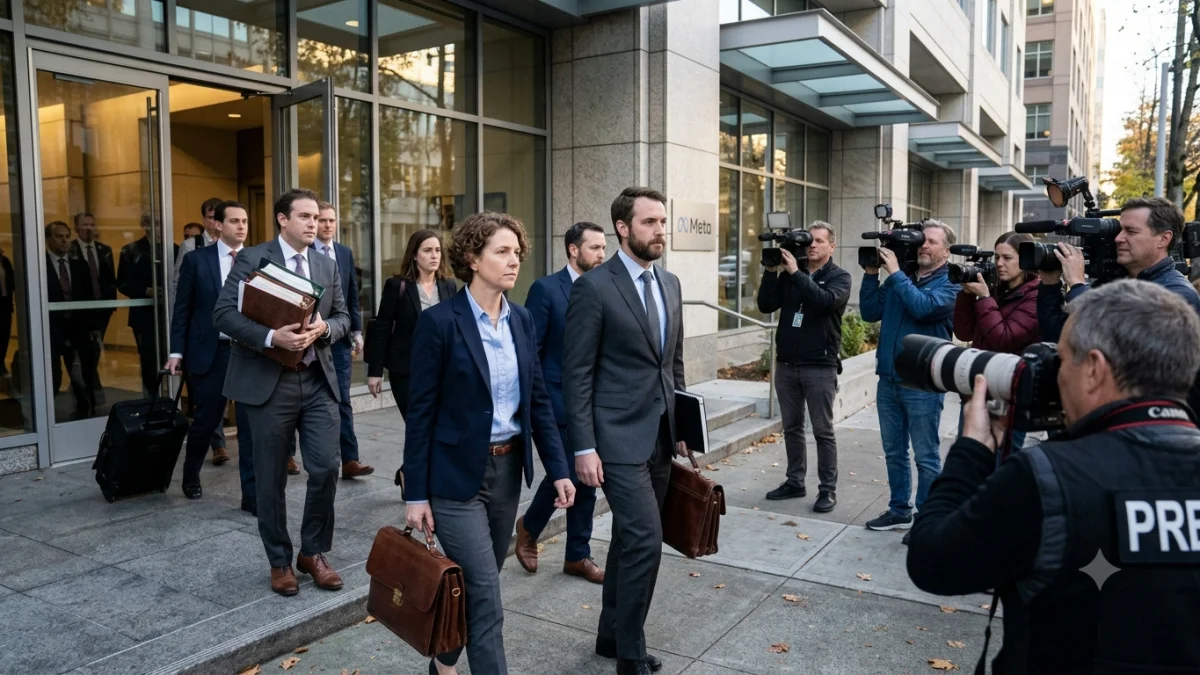


Meta has been ordered to pay an additional $567 million in a landmark New Mexico child safety lawsuit, increasing the company's total liability in the case to $942 million and significantly raising the legal and regulatory stakes for social media platforms over the protection of minors. The latest ruling goes beyond financial penalties by requiring operational changes to Facebook and Instagram, underscoring a broader judicial willingness to impose structural remedies rather than relying solely on fines.
The decision is significant because it represents one of the most extensive state-level judicial actions against a major technology company over alleged harm to children. While previous litigation against social media companies has often focused on damages or settlements, the New Mexico court coupled monetary penalties with mandated changes aimed at reducing future risks. Those measures include stronger age-verification efforts, additional safeguards for young users, enhanced educational notices, restrictions designed to limit harmful interactions involving minors, and regular compliance reporting to the court and the state.


The latest order follows a jury verdict issued in March 2026, when Meta was found liable under New Mexico's consumer protection laws and ordered to pay $375 million in civil penalties. Jurors concluded that the company had knowingly harmed children's mental health and failed to adequately address child sexual exploitation risks on its platforms. The second phase of the litigation focused on remedies, resulting in the additional $567 million award and broader court-ordered reforms.
Judge Bryan Biedscheid concluded that Meta's platforms constituted a public nuisance under state law, drawing an analogy between digital harms and environmental pollution that requires remediation. The ruling directs approximately $420 million toward treatment services for affected children and young people, with the remaining funds designated for prevention initiatives, public education, screening programs and related efforts over several years. The court also ordered Meta to strengthen protections against child sexual exploitation and reduce opportunities for harmful interactions involving minors.
The case reflects a broader shift in legal strategies used by state governments to address concerns surrounding social media. Rather than relying exclusively on federal legislation, attorneys general have increasingly pursued consumer protection, public nuisance and unfair business practice claims under state law. Those approaches seek to establish that platform design decisions—including recommendation systems, engagement features and safety controls—can create legally actionable risks when companies allegedly fail to mitigate foreseeable harm.
The New Mexico litigation also arrives amid growing scientific and policy debate over the relationship between adolescent mental health and social media use. Public health authorities, pediatric organizations and researchers have increasingly called for stronger protections for minors, although experts continue to debate the precise magnitude and causation of specific mental health effects. Courts have therefore focused not only on broader mental health concerns but also on documented evidence relating to child sexual exploitation, online solicitation and the effectiveness of platform safety measures.
Meta has consistently rejected allegations that it intentionally endangered children. Following both the March verdict and the latest ruling, the company said it disagrees with the court's conclusions and intends to appeal. Meta has argued that it has invested heavily in child safety tools, parental supervision features, artificial intelligence systems for detecting harmful content and other safeguards, while maintaining that identifying every harmful actor or piece of content remains an industry-wide challenge.
The implications extend well beyond New Mexico. Meta is already confronting numerous lawsuits from states, school districts and private plaintiffs concerning the effects of social media on young users. Separately, the company faces multistate litigation in California in which several state attorneys general allege that Facebook and Instagram were deliberately designed to encourage excessive use among adolescents while misleading the public about associated risks. Meta has disputed those allegations.
Legal observers view the New Mexico ruling as potentially influential because it demonstrates that courts may be prepared to order both substantial financial remedies and operational reforms. If upheld on appeal, the judgment could provide a model for other jurisdictions seeking to address child safety concerns through state consumer protection laws rather than waiting for comprehensive federal regulation. At the same time, appellate review will likely examine important legal questions concerning the scope of state authority, the application of public nuisance doctrine to digital platforms and the limits of judicial oversight of technology companies' product design.
The case also highlights an evolving regulatory environment in which governments increasingly expect online platforms to demonstrate proactive risk management for younger users. Age assurance technologies, algorithmic transparency, default privacy protections and mechanisms to reduce harmful recommendations have become central issues in policy discussions across multiple jurisdictions, reflecting broader international efforts to strengthen online child safety.
For now, the confirmed outcome is that Meta has been ordered to pay a total of $942 million in the New Mexico case and implement a series of court-directed safety measures while pursuing an appeal. The company's appellate challenge, the implementation of the mandated reforms and the progress of related lawsuits elsewhere in the United States remain the principal developments being monitored.