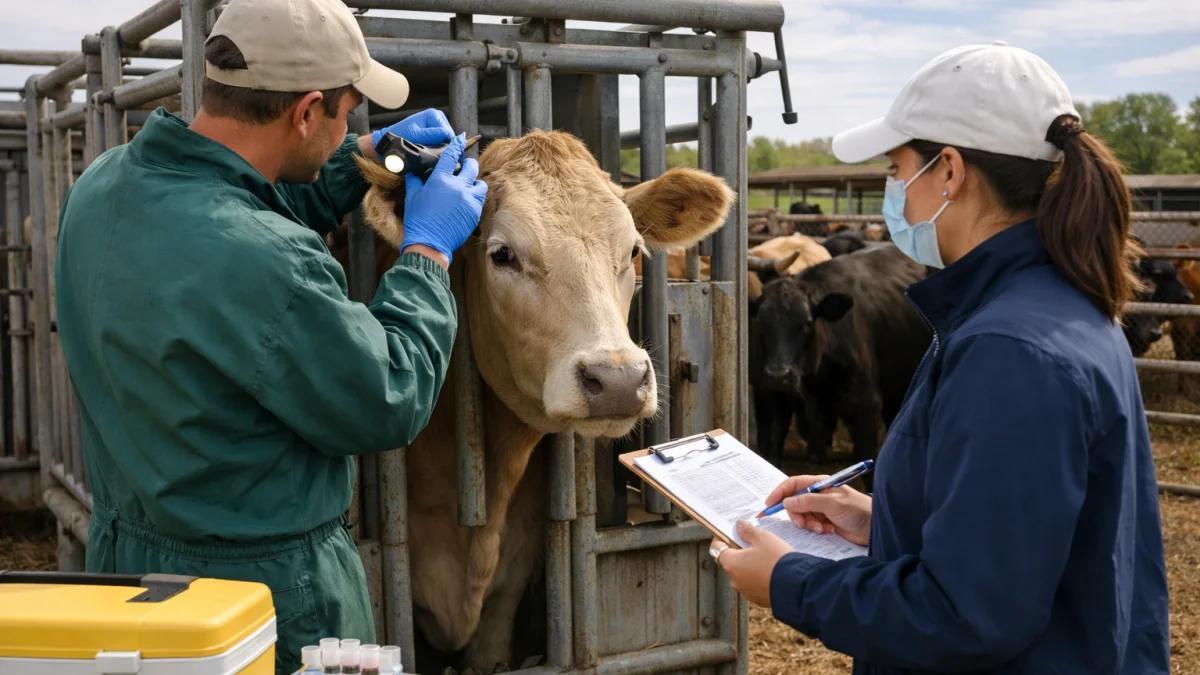


WASHINGTON — U.S. officials have confirmed multiple new cases of New World screwworm in livestock and a dog following the first detection in Texas last week, the Department of Agriculture said, as authorities expanded surveillance and containment efforts.
The USDA’s Animal and Plant Health Inspection Service (APHIS) reported the initial case on June 3 in a 3-week-old calf in Zavala County, Texas, with larvae found in the animal’s umbilical area. Subsequent confirmations brought the total to at least five cases in the United States as of June 9, including additional livestock in Texas and one in a dog in New Mexico.


New cases were identified in a calf in La Salle County, Texas, and a goat in Gillespie County, Texas, along with the dog in Lea County, New Mexico, APHIS said. The parasite, known scientifically as *Cochliomyia hominivorax*, infests living tissue of warm-blooded animals, causing severe damage and potential economic losses to the livestock industry.
New World screwworm had been eradicated from the United States in 1966 but has advanced northward through Mexico in recent years. Officials linked the current detections to that regional spread. No human cases have been reported in the U.S. outbreak.
Texas Animal Health Commission and federal partners implemented quarantines, increased sterile insect releases, and enhanced monitoring in affected areas. Sterile flies are being produced and released to disrupt the pest’s reproduction cycle, a technique successfully used in past eradications.
“Animal health officials are working quickly to protect U.S. livestock and wildlife,” a USDA statement said following the initial detection.
The cases have prompted heightened alerts for ranchers and veterinarians to inspect animals for suspicious wounds or infestations. Producers are advised to report potential cases immediately and use approved treatments such as ivermectin under veterinary guidance.
The outbreak occurs amid concerns over impacts on the U.S. cattle industry, which is already operating with historically low herd numbers. Details on the full economic impact remained unclear as assessments continued. Mexico has reported more than 185,000 cumulative animal cases in the broader regional outbreak.
As of June 10, surveillance and response operations were ongoing across South Texas and neighboring regions. Officials have not disclosed the exact number of animals under quarantine or the full scope of the current detection zone. Further cases could emerge as testing expands, authorities said.